distributor = chafurnate, 9567227611, kingconix, 9193354047, 9202804671, piannabanana, 8773340460, tf79gg, 7372951758, skinsminkey, 18003594107, 7262167081, superdave112279, tickzel, ezy8140, 3129266906, 8703903171, 7272632096, 8323461895, auldtwork, instanetsol, 2019425209, 8885905962, 8436954265, 18444946060, mez56709146, 389039235, 8885847498, 9842631014, 9107564558, 18003887000, 5204672116, 5137076994, 3372055034, 4805503207, cymboxen, cannacbana, 4234273117, 4696063080, oxelotto, imagefañ, 9733483845, 2165620588, 4142076549, 9452185392, 2705139922, 7242732030, 7203725721, 2027688469, 6099782127, gracesandy08, 5716216254, 16463611389, 8882249645, 8572821800, 9047236300, 18552132382, chaturntae, 6062401130, 8323256456, 6627789116, 7027105520, 9787672641, 6163306246, 8633193801, 6317692145, 8332053164, 7063813435, 18002286855, mstina209, 5088944588, 8178065501, aznhkpm, 2042897313, 9783551609, 7866877020, 3368046099, 8177615469, 8002743932, 6317764262, 8333952329, 8669920307, 4033425c2, 3055062319, 3132933287, ilikeocmix, 8063753039, 6085094890, 4043691986, 9154404953, 7783316933, 18662552529, 2079223193, alitaxangelic, 4842283001, 6153223900, wagershack, 8338701889, 2092553045, wzggstats, 8442066155, 2028167451, 18008300286, mbm66698001, 8324817394, 9155445800, 6105255250, 8438832246, 19057716052, 4049960554, 8554062187, 4162978362, 9123426998, yorestudiomg, 8474268085, baceracted, 3234872622, troshilly, 7135666509, 8338950348, 8442211567, 18666201302, 1800076072, ửodle, 4049394970, 8163078906, mfznⅲ, 4089185125, 6198923514, 4808347546, 3850er3040c, 6102159968, 888.904.8461, globalzone53, 2153099122, 18009132411, 8443580642, 4805465503, 7657404036, 8436121015, 3462730012, 9854250920, 18336840593, wdf48650gsp, 611247392201, 8558562511, 6782015589, 904.207.2696, 8667866682, 6237776430, ezy3377, 18556148530, 8324262067, 5168821708, 6696225537, 5712268380, 9298103988, 9548893729, 4808416993, 4330564191, 2538442114, 4373403232, 9032057164, 2087193274, 8664872643, zawatinao, 18557905018, 8014123119, 7247650023, 9085048193, 6194641731, mypremierchart, ilorultcbs94r8v, 18779773879, 4808475341, 7059801767, lasrs.statres, boecsched, 4808472619, 8594295188, brazedotcom, 8566778008, 18005680344, 8642516223, 2766344760, 8178401646, 8664425030, 8045005635, 5013000112, 6144291561, caffine64, 5043993551, 8665110793, 5164655255, ezy6521, 8602936799, 18336902260, 18333110849, 7167454490, 3604835198, 7145099696, 8888570668, 8174963036, luxuryinteriorsorg, 6143332209, 8332420718, pippypipernpc, 9152554542, 18669516592, 9854414006, 7785895126, 7176786808, 18002228794, 2142831548, bitsylowhigh, 8669360316, recuburate, 4846353028, 5704918262, khanacademyorg, 18004684743, 7158988027, 18664487098, 3392109005, 6036638908, 5735344024, 7175316640, gabbysmol, drmaureenhamilton, 6047363925, meloplaycom, 8557199695, 8448440111, 8669503840, 8443765274, 18774014764, influencersgomewd, 8599631921, 2629487300, joyuicoltd, 4079466142, 2076077881, cherrybella808, 8037663919, 64.277.120.231, syromatch, oxolado, 36000522389, 8322347988, tulkotaks, allredismyteacher, 7203584046, brianchavez85, 18003921147, oplzlepredstavy, 5049497786, ezy2140, 7243139278, 2183167675, 8017375151, 8665301092, 8774315691, 8185875547, 8653815207, 6192467477, 8556833145, 2066918065, r6tradker, 481615428, 80720963038, 2678173729, 18002410172, 18007774001, freyarose77, clearskinstudy, mgp61942301, 5132972028, 18555959055, theflixee, 6313153145, nfl66ir, chsproviderdatavalidation, freakinthesleep, 5133221008, 7023597111, morancaresys, adultowrl, 5089486999, 5034367335, 7628001252, ezy3837, melinnderr13, 4184251145, 5173181159, sp11l87222, 7037770280, 9035930589, 8662284345, 18664188154, aselrod71, 18557876733, 18664613047, 4844522186, kiamfusa, 3606265636, integrityuc.webpay.md, 7784362314, 7783282169, 8662684346, 5597817242, 8007092893, 6156966912, bn6925167b, cktest9263, 18004726066, 9163883106, 3362525903, 18559694636, edwinalucypowe, 4057192096, 8558468376, 6133666485, badwolfemjay, 6615934042, 8446227085, 8663233462, 6157131410, 8475861480, 4256553258, 3054238938, myfoxatl, 18002386279, 8055851300, lizzybee1395, bill39nc, agamycapital, 4147718228, 6198330521, 9168975029, 9093759675, 18558382118, 7137999975, 9043641318, tdb2586, hollysafara21, 7048991392, 7252988333, 5152174532, 4014068198, 8705207565, 8008225626, 6087332770, 18004231000, 5044467788, 8122320564, 18006118472, 8337931057, 18.84x18.84, al2104197, dudelegence, 18009096467, 4084987586, 7146059251, 9133123219, 6316154582, 8772137258, mo1infiniteloo, 9592050377, 6024174900, 7047026509, 8302053160, 3658732800, 7634227200, 8448371861, dl329k1a, 3044434051, benefitboutiquedamen, 370036828, 5126715039, 2096890003, 8664482002, 5169865040, 18558437208, eliebaroud23, 5122540018, 76501165180, 8169559260, ezy8052, 2074303836, 2199474151, gen85898, 6309905600, 9452285426, 2512630572, 6036075559, 6098551244, bliķk, leeeanuvz, taylorbergman17, 18007920001, 2103010293, loŵes, 9377598636

Blog

  • Asian Heritage Experiences Beyond Famous Landmarks That Feel Authentic

    Asian Heritage Experiences Beyond Famous Landmarks That Feel Authentic

    I used to think experiencing Asian heritage meant standing in front of a famous temple, palace, or monument and learning a few dates. I noticed something more interesting after paying closer attention to local traditions and communities: the strongest cultural moments often happen in ordinary places, where people still practice skills and rituals because they belong to daily life.

    I also realized that a quieter experience can tell a traveler more than a packed sightseeing schedule. A market at dawn, a family workshop, a village ceremony, or an old walking route can reveal how food, faith, work, and community shaped a place over generations. These experiences feel different because they connect heritage with people rather than treating it as something displayed behind glass.

    Look for Heritage in Everyday Places

    One of the easiest ways to find living heritage is to spend time where residents actually shop, work, eat, and gather. Traditional markets are especially revealing because they bring together food customs, regional ingredients, informal social rules, crafts, and local languages.

    Watch how vendors prepare ingredients, notice seasonal products, and look at objects made for ordinary household use. In parts of Asia, these spaces preserve knowledge that may never appear on a museum label. Traditional markets and everyday culture in Asia can show how heritage continues through routine rather than ceremony.

    Neighborhoods can offer the same insight. You may notice this most clearly in details: the way produce is displayed, how neighbors greet one another, which foods appear only during certain seasons, or how an old craft fits into a household. Those details make heritage feel lived rather than staged.

    Old lanes, family-run workshops, tea houses, community kitchens, and small religious spaces often carry layers of history. Observe without treating everyday life as a performance staged for visitors.

    Learn From People Who Keep Old Skills Alive

    Learn From People Who Keep Old Skills Alive

    Craft traditions are another doorway into Asian heritage. Instead of buying a finished souvenir and leaving, look for workshops where artisans demonstrate how an object is actually made.

    Textile weaving, pottery, wood carving, paper-making, metalwork, basketry, and natural dyeing all involve knowledge passed between generations. Watching the process makes the finished object easier to understand because you see the patience, materials, tools, and decisions behind it.

    Japan’s Ama divers offer a striking example. In the Ise-Shima region, women have practiced traditional free-diving for seafood for generations. Such traditions should be approached carefully when access is limited, or ceremonies are not intended for visitors.

    The same principle applies across the region. Indigenous traditions and cultural experiences in Asia are most meaningful when communities retain control over how visitors participate and what they are invited to see.

    Follow Food, Festivals, and Seasonal Customs

    Food can reveal heritage without requiring a formal cultural tour. A cooking class led by local residents, a family-style meal, or a regional food market can explain migration, agriculture, religion, trade, and geography through flavors and techniques.

    Seasonal traditions can add another layer. Festivals often preserve music, clothing, storytelling, religious practices, and community relationships that have evolved over long periods. Learning basic etiquette, asking before photographing people, and observing quietly can make participation more respectful.

    In Luang Prabang, Laos, the pre-dawn alms-giving tradition offers an example of a living Buddhist practice woven into the rhythm of the city. Visitors may witness monks receiving food from residents, but the ceremony is not a tourist performance. Distance, quiet behavior, and respect for participants matter.

    Take the Slow Route

    Japan’s Shikoku pilgrimage connects 88 temples across rural landscapes, mountain paths, and villages. Walking sections of the route can reveal a side of the island that disappears when travel is reduced to major cities and quick transfers.

    Slow travel also creates room for conversations. A local guide may explain why a shrine matters, how a neighborhood changed, or which foods are associated with a particular season. Those details can provide context that a landmark alone cannot.

    Penang offers another useful example. George Town’s clan houses and Peranakan heritage reflect the cultural exchanges that shaped the Straits region. Architecture, household objects, religious spaces, and food traditions show how different communities influenced one another.

    Vietnam’s traditional incense-making villages offer a similarly visual experience. Families arrange brightly colored incense bundles to dry, making an everyday production process a striking expression of craft and continuity.

    Choose Experiences With Care

    Choose Experiences With Care

    A popular destination can offer a genuine cultural experience, while a remote village can still be superficial if the community has little control over tourism.

    Indonesia offers a strong example of how village traditions can remain closely connected to community life.

    Indonesia’s village rituals and living cultural heritage can reveal how ceremonies, local knowledge, and intergenerational practices continue beyond major tourist landmarks, especially when travelers approach them with respect and avoid treating sacred traditions as performances.

    Look for experiences that explain who organizes them, where the money goes, and what participation involves. Community-led tours, local homestays, artisan cooperatives, and small-group workshops can provide context while keeping benefits closer to tradition bearers.

    Respect also means accepting limits. Some ceremonies, sacred spaces, and indigenous practices are not appropriate for photography. A good traveler does not assume access simply because a tradition appears online.

    Why Quiet Experiences Stay With You

    The most memorable Asian heritage experiences often leave no dramatic photograph. They might be a craftsperson explaining a difficult technique, a market opening before sunrise, or a quiet village walk where an old tradition still fits naturally into modern life. These moments show heritage as active, adaptable, and human.

    That is the real value of traveling beyond famous landmarks. You are not simply collecting lesser-known attractions. You are seeing how history survives through skills, relationships, beliefs, food, and ordinary routines.

    Frequently Asked Questions 

    1. What counts as an authentic heritage experience in Asia?

    An authentic experience connects visitors with living traditions, local knowledge, crafts, foodways, rituals, or community life rather than simply displaying historical objects.

    2. How can travelers experience culture respectfully?

    Research local etiquette, ask permission before photographing people, follow community guidelines, and choose experiences where residents have meaningful control and benefit.

    3. Are rural experiences always more authentic?

    No. Authenticity depends on how a tradition is practiced and presented, not whether a place is remote. Cities can preserve vibrant living heritage too.

    4. How can travelers find lesser-known cultural experiences?

    Look for local guides, community tourism groups, artisan workshops, cultural organizations, and regional tourism resources rather than relying only on major attractions.

    What Makes These Experiences Worth Seeking

    Travel becomes richer when heritage stops being something you only look at and becomes something you can understand through context. A market, workshop, pilgrimage path, meal, or community ritual can reveal connections between generations that a famous landmark may only hint at.

    The best experiences do not need to feel hidden or exclusive. They simply give you enough time to notice the people, skills, and traditions that keep a place culturally alive.


  • Forgotten Traditions Still Alive in Asia That Connect Generations

    Forgotten Traditions Still Alive in Asia That Connect Generations

    I’ve noticed that some of the most meaningful cultural experiences happen away from famous landmarks nearby. They unfold when relatives gather to prepare a meal, neighbors rehearse an old song, or a grandparent explains why a ceremony follows a particular order. These moments can look ordinary to outsiders, yet they carry memories and values that families have protected for decades.

    I’ve also found that a tradition doesn’t need to remain unchanged to stay alive. Young people may move to cities, use phones to record elders, or adapt a craft for new audiences. What matters is whether the knowledge still travels between people, giving the next generation a reason to understand where it came from.

    What Makes a Tradition Worth Preserving?

    A living tradition is more than an old custom performed on special occasions. It can include music, food, seasonal ceremonies, storytelling, craftsmanship, and the unwritten rules that help a community live together. These practices hold local knowledge that rarely fits neatly into a textbook: how to recognize a season, welcome a guest, honor ancestors, or work as a group.

    Traditions also change. Communities may adjust a ceremony to reflect new beliefs, different livelihoods, or changing family roles. That doesn’t automatically make the practice less authentic. The key is that community members continue to recognize its meaning and decide how it should be passed on.

    Forgotten Traditions Still Practiced Across Asia

    Forgotten Traditions Still Practiced Across Asia

    The Amis Harvest Festival in Taiwan

    Among Taiwan’s Indigenous Amis people, the annual Ilisin, or Harvest Festival, brings together ceremony, song, dance, feasting, and community responsibilities. The timing and customs vary between villages, but the festival honors ancestors and gives thanks for the harvest. People who live elsewhere may return home to take part.

    Age groups have specific responsibilities, and younger participants learn directly by joining the preparations and following the songs and movements of older community members. During circle dances, the order of participation can reflect the community’s age-based social structure. The festival is therefore more than a celebration: it is a way to teach shared history and cooperation.

    Visitors should remember that some ceremonies are sacred and not staged for an audience. Local guidance matters, especially around photography and participation.

    Mongolian Long Song and Nomadic Memory

    Mongolian Urtiin Duu, known as long song, uses extended syllables, ornamented melodies, and a broad vocal range. Its sound is closely connected to the pastoral life of Mongolian communities and the open grasslands where herding has shaped daily routines. The songs are performed at events such as weddings, celebrations, and Naadam.

    Traditionally, musical knowledge passes through listening, repetition, and practice. A young singer learns more than a melody: lyrics and performance styles carry images of horses, landscapes, family life, and values associated with nomadic culture. Urbanization and changes in herding life have made some of this knowledge harder to maintain, but performances and contemporary compositions keep the tradition present.

    The long song shows how a cultural archive can live in a person’s voice rather than on a page.

    Filial Piety in Chinese Family Life

    The Confucian idea of xiao, often translated as filial piety, emphasizes respect for parents and elders, family responsibility, and care across generations. Its expression varies among families and regions, but it remains visible in practices such as visiting relatives, supporting aging parents, and gathering for major holidays.

    The Spring Festival is one occasion when family ties become visible, as many people travel to reunite with relatives. Families may also remember ancestors through offerings, visits, or shared stories. These practices connect younger relatives with family histories, even when they have grown up in cities far from their ancestral homes.

    Filial piety can be interpreted differently by different generations. Some families balance traditional expectations with independence, work demands, and changing ideas about caregiving. That conversation is part of how the custom continues to evolve.

    Lanna Lantern Craft in Northern Thailand

    In northern Thailand, Lanna cultural traditions include making decorative lanterns from materials such as bamboo and paper. Lanterns are associated with seasonal celebrations and local craft knowledge, although customs vary by place and event. In some communities, artisans and apprentices keep the techniques alive through hands-on workshops.

    Making a lantern involves more than decorating its surface. The maker must understand the frame, balance, folds, and how the material responds during construction. When an experienced craftsperson demonstrates each step, younger learners gain skills that are difficult to absorb from photographs alone.

    Thoughtful celebrations can also consider environmental effects. Reusable or managed decorations and locally organized events may preserve the visual tradition without treating mass releases as the only way to participate. For travelers, a community workshop can offer an experience rather than watching a festival from the sidelines. Thailand’s local festivals and traditional community culture offer a useful starting point for understanding how celebration and everyday heritage connect.

    Why Traditions Can Be Hard to Pass On

    Why Traditions Can Be Hard to Pass On

    Migration, long working hours, changing land use, and fewer opportunities to learn from elders can interrupt cultural transmission. A craft may become difficult to sustain if it no longer provides a reliable income. A song may fade when younger people rarely hear it outside formal performances. Sacred customs can also be misunderstood when presented without context.

    Preservation works best when communities lead it. Recording songs, teaching crafts in schools, supporting local practitioners, and creating opportunities for young people to participate can all help. Documentation is valuable, but it cannot replace the relationships through which a tradition is learned.

    Experiencing Living Heritage Respectfully

    Travelers can support cultural continuity by choosing community-led experiences, buying crafts directly from makers, and asking before photographing ceremonies or people. It helps to learn what a practice means locally instead of assuming that every ritual is open to visitors. Living heritage experiences across Asia are most meaningful when visitors approach them with curiosity and respect rather than treating culture as a performance arranged for them.

    The Connections That Remain

    These traditions differ in language, setting, and purpose, yet each depends on people showing up for one another. A dance teaches social roles through movement. A long song carries landscapes and memories in its melody. Family rituals make care and belonging visible, while a handmade lantern passes a skill from practiced hands to curious ones. None is frozen in the past; each survives through choices made in the present.

    Lasting heritage is not simply what people remember. It is what they continue to share.

    FAQs: Forgotten Traditions Still Alive in Asia That Connect Generations

    1. What are some forgotten traditions still alive in Asia?

    Examples include the Amis Harvest Festival in Taiwan, Mongolian long singing, family ancestor rituals, and traditional lantern craftsmanship in northern Thailand.

    2. Why are traditional customs important to younger generations?

    They connect young people with family history, community values, local knowledge, and cultural identity. Taking part also creates opportunities to learn directly from older generations.

    3. Are Asian traditions disappearing because of modernization?

    Some practices face pressure from urbanization, migration, and changing lifestyles. Others adapt through workshops, schools, community events, and digital documentation.

    4. How can travelers experience traditional Asian culture respectfully?

    Choose community-led activities, purchase authentic local crafts, follow photography rules, and ask permission before joining ceremonies. Respect practices that are private or sacred.

  • How to Plan an Accessible Trip to Asia Without Booking Surprises

    How to Plan an Accessible Trip to Asia Without Booking Surprises

    A hotel bathroom photograph would tell me more than a hundred promises of a comfortable stay. When thinking about how to plan an accessible trip to Asia, I would start with those everyday details: entering the room, using the shower, and reaching dinner comfortably. 

    Temples, markets, and scenic train journeys would follow. My goal would be a trip built around my actual requirements, with enough verified information to make confident decisions before paying.

    Define What Accessibility Means for You

    Start by describing the facilities and support you require. Wheelchair users may need step-free entrances, suitable turning space, and specific bathroom layouts. Other travelers may prioritize visual announcements, audio information, quieter environments, or frequent seating.

    Write a short access profile to share with hotels, airlines, and transport providers. Include equipment dimensions, transfer requirements, walking limits, and communication preferences where relevant.

    Distinguish essential arrangements from preferences. A missing shower seat might prevent a stay, while a longer restaurant journey could remain manageable with suitable transport.

    Choose Destinations Through Practical Research

    Choose Destinations Through Practical Research

    Compare destinations using the services your journey requires. Research airport transfers, suitable accommodation, public transport, accessible toilets, and attractions before committing to a route.

    Singapore, Tokyo, Taipei, and Seoul are potential starting points for research. However, a city’s reputation does not confirm that every neighborhood, station exit, or hotel suits your needs.

    Read recent accounts from travelers with similar requirements. Look for photographs, route descriptions, and explanations of barriers. A manual wheelchair user’s experience may differ considerably from that of someone using a larger powered chair.

    For your first journey, consider fewer accommodation changes. Staying longer in one base reduces repeated transfers and room checks.

    Arrange Flights and Airport Assistance Early

    Contact the operating airline before booking when equipment or assistance requirements could affect your journey. Explain whether you need help through the terminal, boarding assistance, or support reaching your seat.

    For powered mobility equipment, provide the model, dimensions, weight, and battery specifications. Ask the airline to confirm its current carriage requirements and handling process.

    Choose connections that leave realistic time for assistance and equipment return. Confirm arrangements at departure, connecting, and arrival airports.

    Keep written confirmations accessible offline. Photograph your equipment before handing it over and attach clear handling instructions, including how staff should move it safely.

    Verify Your Hotel Beyond Its Accessibility Label

    Verify Your Hotel Beyond Its Accessibility Label

    An “accessible room” description does not explain whether the room works for you. Contact the property directly and ask about the exact room category available for your dates.

    Check the Bedroom and Bathroom

    Request clear photographs and relevant measurements. Ask about doorway clearance, bed height, space beside the bed, toilet transfer space, shower access, grab bars, and suitable seating.

    If you require a hoist, confirm clearance beneath the bed and equipment availability. Establish whether promised equipment will be reserved.

    Check the Complete Hotel Route

    Confirm access from the vehicle drop-off point to reception, the elevator, and your room. Ask whether breakfast areas, restaurants, and other essential facilities share a step-free route.

    Request written confirmation that your required room features are guaranteed, and check cancellation terms before paying.

    Plan Every Transport Connection

    Check the journey between services. An accessible train provides limited reassurance if the station exit leads to stairs or an unsuitable pavement.

    For private transfers, ask whether the vehicle accommodates your equipment and whether you can remain seated in your wheelchair. Confirm boarding arrangements, capacity, securement, luggage space, and pickup instructions.

    If you prefer to rely on public transport and private transfers rather than driving, this guide on how to plan an Asia trip without renting a car can help you consider your transportation options before finalizing the itinerary.

    When considering trains, identify suitable station entrances and exits. Ask about boarding assistance and any reservation requirements.

    Save an alternative transfer provider. For ferries and boats, confirm the boarding method and onboard facilities individually.

    Build Comfortable Days With Realistic Buffers

    Build Comfortable Days With Realistic Buffers

    Group attractions by area and assess the route connecting them. Include suitable toilets, meal stops, seating, shade, and opportunities to return to your accommodation.

    Check attraction entrances, internal routes, and access to the specific experience you want. An accessible reception area does not guarantee access throughout a historic site.

    Consider sensory conditions, captions, audio descriptions, quiet spaces, and crowd levels where relevant.

    Leave breathing room between activities. Heat, rain, queues, and assistance delays can extend journeys. Choose a nearby alternative for each essential outing.

    Leave breathing room between activities. Heat, rain, queues, and assistance delays can extend journeys. For additional practical guidance on preparing for your first solo trip to Asia, consider planning arrival details, connectivity, backup money, and other essentials before departure. Choose a nearby alternative for each essential outing.

    Prepare Equipment and Communication Backups

    Check charging compatibility and pack essential equipment instructions. Identify repair contacts or rental options where available.

    Create translated messages explaining your access requirements and preferred assistance. Download maps, booking confirmations, and provider contacts.

    Create translated messages explaining your access requirements and preferred assistance. If your itinerary includes multiple countries, learn how to choose a travel eSIM for multiple Asian countries before departure. Download maps, booking confirmations, and provider contacts so essential information remains accessible offline.

    Review insurance terms for equipment and relevant support. Reconfirm essential arrangements shortly before departure.

    Frequently Asked Questions

    1. What comes first when learning how to plan an accessible trip to asia?

    Define your essential access requirements before choosing destinations. Use that profile to verify accommodation, transfers, flights, and activities.

    2. Can I organize the journey independently?

    Yes, depending on your requirements and available services. Specialist support may help when transport or equipment arrangements are difficult to verify.

    3. How can I check a hotel’s accessibility?

    Request current photographs, relevant measurements, and written confirmation for the exact room. Check shared facilities and entrance routes too.

    4. Should I book every activity beforehand?

    Reserve essential assistance and limited-capacity services early. Keep flexible activities available for days when weather, energy, or access conditions change.

    My Final Take

    I would consider the trip ready when its essential arrangements had clear answers and workable backups. Before leaving, I would reconfirm my room, transfers, and assistance so I could arrive feeling prepared.

    I would also leave room in my itinerary to rest, adjust my pace, or change plans when needed.
    That preparation would give me more freedom to enjoy unfamiliar places and choose experiences with confidence. With the practical details covered, I could spend more time enjoying the journey.

  • Top Scenic Destinations in Eastern Taiwan: An Insider’s Coastal and Valley Guide

    Top Scenic Destinations in Eastern Taiwan: An Insider’s Coastal and Valley Guide

    I stood on the edge of the Chongde viewing platform at dawn, watching the Pacific surf crash against a wall of stone 2,600 feet high. The morning mist clung to the marble precipices, turning the water into three shades of electric blue. Eastern Taiwan holds this rare kind of power. If you want to explore the top scenic destinations in eastern taiwan, you must look beyond Taipei’s skyline and embrace the quiet, unvarnished wilderness of Hualien and Taitung.

    Unlike the dense urban sprawl of western Taiwan, this eastern corridor remains sheltered behind the Central Mountain Range. Two distinct geographic corridors run south between Hualien and Taitung: the wild Pacific cliffs along Highway 11, and the tranquil agricultural corridor of the East Rift Valley along Highway 9. Having explored both routes extensively, I have compiled this practical guide to help you navigate the region’s most striking landscapes.

    The Pacific Edge: Rugged Coastal Marvels Along Highway 11

    Provincial Highway 11 is Taiwan’s premier coastal road trip. The route delivers continuous views of crashing surf, black sand bays, and indigenous Amis communities, all maintained under the stewardship of the East Coast National Scenic Area.

    Qingshui Cliff: Where Sheer Marble Meets Deep Ocean

    Located just north of Hualien along the Suhua Highway corridor, Qingshui Cliff plunges straight into the Philippine Sea. Standing atop the viewing platforms, you can see the abrupt shelf where light turquoise shallows drop off into cobalt ocean depths. 

    For a closer look, take an early morning guided sea-kayaking session right off Chongde Beach. Watching the sun break over open water while floating below these massive walls reveals the true tectonic scale of the island.

    Shihtiping: Exploring Giant Marine Terraces and Tidal Pools

    Shihtiping: Exploring Giant Marine Terraces and Tidal Pools

    Further down the coast in Fengbin Township, marine erosion has carved a dramatic landscape known as Shihtiping (Stone Steps). Over millennia, colliding plates pushed white volcanic tuff above the waves, forming a 55-foot stepped cuesta sloping directly into the sea. 

    Walking across the expansive rock platforms feels like traversing an alien plateau. Natural potholes across the shelf hold miniature marine ecosystems filled with hermit crabs, blennies, and sea urchins.

    Sanxiantai: Dragon Bridges and Sunrise Views

    Sanxiantai: Dragon Bridges and Sunrise Views

    Sanxiantai sits in Taitung’s Chenggong Township and remains the east coast’s defining landmark. A striking eight-arch pedestrian footbridge stretches out across the tidal reef, resembling a dragon arching toward a small offshore volcanic islet. 

    Arrive here before daybreak. Watching the sunrise paint the sea behind the arch bridge justifies the early alarm. After crossing, follow the wooden boardwalk around the island to inspect hidden sea caves and sea-carved trenches.

    East Rift Valley: Cycling Through Taiwan’s Golden Rice Country

    Turning inland brings an immediate change in rhythm. The East Rift Valley sits squeezed between two mountain ranges, creating a sheltered basin filled with freshwater springs and organic farmland. Much like the pastoral farm trails you encounter during Hokkaido summer travel, the valley offers an unhurried, pastoral side of East Asia.

    Brown Boulevard in Chishang: Pure Agricultural Splendor

    Brown Boulevard in Chishang: Pure Agricultural Splendor

    Chishang is famous across Taiwan for growing its most prized, award-winning rice, and Mr. Brown Avenue (Brown Boulevard) forms its scenic core. This 1.4-mile paved path cuts straight through vast rice fields without a single utility pole, power line, or commercial sign in sight.

    Renting an electric bicycle from one of the shops near the Chishang train station lets you glide peacefully through the fields. Time your visit for late May or late October, right before harvest, when the entire valley turns into an undulating sea of golden grain. 

    To beat tour groups and midday heat, hit the path before 7:30 AM. Afterward, pick up a classic Chishang bento box served inside a traditional wooden balsa wood container.

    Luye Highland and Ruisui: Hot Springs and High Teas

    Luye Highland and Ruisui: Hot Springs and High Teas

    Heading south toward Taitung City brings you to Luye Highland (Luye Gaotai). Perched on an elevated plateau, this region is celebrated for organic red oolong tea and panoramic views over the valley floor. In July and August, the plateau hosts the International Hot Air Balloon Festival.

    If you prefer relaxing after a long day of cycling, stop in Ruisui Township. Ruisui features mineral-rich hot spring water containing iron carbonate, leaving the outdoor soaking pools tinted a characteristic amber-gold.

    The Reality of Visiting Taroko Gorge Today

    No discussion of eastern Taiwan is complete without Taroko National Park, famous for vertical marble gorges carved out by the Liwu River. Following the significant April 2024 earthquake, the park landscape underwent severe disruption.

    The park is engaged in a long-term, phased reopening process. While deep gorge trails like Shakadang and Swallow Grotto remain closed for safety stabilization, outer recreational segments, the classic Taroko Arch, visitor center trails, and sections around Tianxiang continue to open under controlled conditions.

    Before heading out, check the latest trail advisories on the Taroko National Park Administration official site. If trail closures restrict your plans, focus your itinerary further south along the East Rift Valley and Coastal Highway 11, where operations continue without disruption.

    Highway 11 Drive vs. Valley Train: Which Route Fits Your Pace?

    Deciding how to transit between Hualien and Taitung depends on your chosen pace and travel style. If your international travels previously took you through open volcanic coastlines like the places to visit in kyushu japan, you will appreciate the freedom of a coastal road trip. 

    However, Taiwan’s rail network makes public transit equally appealing. Consult the official Taiwan Tourism Administration portal to purchase rail passes or verify bus connections.

    Travel Feature Coastal Highway 11 (Rental Car / Scooter) East Rift Valley Route (TRA Train / Bike)
    Dominant Scenery Pacific horizons, marine terraces, surf breaks Rice paddies, tea orchards, river floodplains
    Travel Time 4 to 5 hours driving (excluding stops) 1.5 to 2 hours via express train (Tze-Chiang)
    Route Flexibility Total control to pull over at hidden coves and cafes Station-to-station; rental bikes needed locally
    Ideal Traveler Road trippers, photographers, independent surfers Solo travelers, cyclists, relaxed train riders

    FAQs: Planning Your Eastern Taiwan Adventure

    1. What is the best month to visit scenic spots in Eastern Taiwan?

    October and November offer pleasant temperatures, minimal typhoon risk, and golden rice fields across the valley.

    2. Can I travel Eastern Taiwan without renting a car?

    Yes; express trains easily link Hualien and Taitung stations, where you can rent bicycles and scooters directly outside.

    3. How many days do I need for Hualien and Taitung?

    Plan at least four full days: spend two days on the coast and two days within the East Rift Valley.

    4. Is it safe to drive Highway 11?

    Highway 11 is well-paved, multi-lane, and safe, though you should exercise extra caution during heavy summer rainfall.

    Pack Your Bags, Drop the Throttle, and Head East

    Eastern Taiwan is not a place for frantic checklist tourism. Its magic surfaces when you pull over at an unnamed roadside stall for iced passion fruit tea, or spend an hour watching Pacific rollers hit black basalt stones.

    Pick one corridor for the journey south, cross through the coastal range via Route 30 (the Yuchang Highway), and loop back through the other corridor. Lock down your train tickets or car rental at least two weeks ahead, keep a light raincoat in your bag, and leave space on your memory card.

  • Cheese Trails in the USA That Turn Road Trips Into Food Adventures

    Cheese Trails in the USA That Turn Road Trips Into Food Adventures

    A wheel of cheddar in Vermont, a soft-ripened Brie in California, and a bowl of spicy beer cheese in Kentucky may seem unrelated, yet together they reveal how differently America expresses its dairy traditions. 

    That variety is what makes cheese trails in the USA worth traveling for. Each route connects flavor with place, giving travelers a chance to move beyond supermarket shelves and experience the farms, creameries, aging rooms, and regional customs behind the cheese.

    What I find most interesting is that no two routes deliver the same experience. California blends artisan cheese with vineyards and coastal farmland, Vermont leans into small-scale farmstead production, Wisconsin showcases generations of dairy heritage, and Kentucky turns one distinctive regional spread into a culinary attraction of its own. 

    These journeys are not simply about tasting cheese; they are a way to understand how geography, farming traditions, and local culture shape what ends up on the plate.

    Which American Cheese Trails Are Worth Planning a Trip Around?

    California, Vermont, Wisconsin, and Kentucky offer some of the most distinctive cheese-focused travel experiences, while Oregon, New York, Maine, Massachusetts, and Washington add even more variety. The best routes combine local cheesemakers with regional scenery, farm visits, tastings, heritage, and distinctive cheese styles.

    California Cheese Trail: Where Should You Stop?

    California Cheese Trail: Where Should You Stop?

    California’s artisan cheese scene stretches across the state, but Marin and Sonoma Counties are especially rewarding for travelers who want to combine cheese tasting with wine-country scenery and coastal landscapes.

    Marin French Cheese Co. near Petaluma should be high on the list. Founded in 1865, the company describes itself as the country’s oldest cheese company and continues making small-batch soft-ripened cheeses inspired by Brie and Camembert. Visitors can stop at its shop, cafe, picnic grounds, and historic ranch.

    Point Reyes Farmstead Cheese Co. adds a distinctly Northern California experience. Its original creamery sits beside the dairy operation near Tomales Bay, where the company produces its flagship Original Blue from milk sourced from its own herd. Its lineup also includes Toma, Bay Blue, Gouda, Brie, and other varieties.

    Nicasio Valley Cheese Company provides another worthwhile Marin County stop. The creamery uses 100% organic farmstead cow’s milk and produces artisan cheeses based on traditional recipes connected to the family’s Swiss heritage.

    Vermont Cheese Trail: Which Farms Give You the Best Experience?

    Vermont is one of the easiest states in which to turn artisan cheese into a complete road trip. The Vermont Cheese Council currently highlights more than 40 cheesemakers and provides a trail map showing which producers welcome visitors, offer tours, or have on-site sales. Its members collectively produce more than 150 varieties of artisan and farmstead cheese.

    Shelburne Farms is one of my favorite examples of cheese tourism because visitors can connect the finished product directly with the farm. Its raw-milk farmstead cheddar comes from pasture-raised Brown Swiss cows, and seasonal visitors can watch cheesemaking and join its Sun to Cheese tour.

    Plymouth Artisan Cheese adds history to the route. Its factory dates to 1890, and the company still connects its present-day cheesemaking with the original granular-curd cheddar tradition associated with the historic Plymouth site.

    Farther north, von Trapp Farmstead produces organic European-style cheeses including Oma and Mt. Alice. The farm’s current lineup also includes Mad River Blue and Savage, adding washed-rind, bloomy-rind, blue, and Alpine-style cheeses to a Vermont tasting itinerary.

    Wisconsin Cheese Country: Where Can You Combine Cheese and a Real Trail?

    Wisconsin deserves more than a quick tasting stop. America’s Dairyland combines traditional cheesemaking, historic factories, local cheese curds, and an actual recreational trail named for the state’s dairy identity.

    Widmer’s Cheese Cellars in Theresa preserves one of the most unusual traditional methods in American cheesemaking. The company says it still uses the same bricks once used by the founder’s family to press whey from its Brick cheese, maintaining a technique that has largely disappeared elsewhere.

    Travelers looking for a literal trail can head toward southwest Wisconsin. The Cheese Country Recreation Trail runs roughly 47 miles between Monroe and Mineral Point through the Driftless Area. It is a multi-use rail trail that crosses rural landscapes and former mining communities, although Travel Wisconsin notes that portions receive heavy motorized use.

    Monroe makes a logical food stop along the way because of its deep Swiss cheesemaking heritage and long association with Wisconsin dairy culture.

    Kentucky Beer Cheese Trail: Why Is It Different From Other Cheese Routes?

    Kentucky Beer Cheese Trail: Why Is It Different From Other Cheese Routes

    Kentucky offers a completely different interpretation of a cheese trail.

    Winchester and Clark County celebrate beer cheese, the savory regional spread traditionally made with cheese, beer, garlic, spices, and varying levels of heat. The official Beer Cheese Trail currently connects 15 stops and uses a digital passport that rewards travelers as they visit participating locations.

    The annual Beer Cheese Festival in downtown Winchester adds another reason to time a trip carefully. Rather than touring dairy farms, travelers move between restaurants, shops, and specialty food businesses while sampling different versions of one Kentucky favorite.

    That diversity is exactly why cheese trails in the USA are more interesting than a simple list of creameries.

    Where Else Can Cheese Lovers Take a US Road Trip?

    Oregon works especially well for travelers who want to combine artisan creameries with coastal drives, breweries, vineyards, farmers’ markets, and farm stands.

    New York’s Finger Lakes region offers another natural pairing because wineries, orchards, dairy farms, and small food producers sit within a scenic road-trip network.

    Maine provides a more intimate farmstead experience, with small producers making cow, goat, and sheep milk cheeses alongside coastal food traditions.

    Western Massachusetts, particularly the Berkshires, combines artisan food, small towns, farm stores, cultural attractions, and rural scenery.

    Washington State also deserves attention because its cheese producers can be incorporated into itineraries involving wineries, islands, orchards, seafood, and Pacific Northwest farm country.

    How Should You Plan an Artisan Cheese Road Trip?

    I prefer planning three or four meaningful stops per day instead of trying to visit every producer on a map.

    Working farms do not operate like conventional tourist attractions. Some welcome walk-ins, while others require reservations or restrict visitor access completely. The Vermont Cheese Trail, for example, distinguishes between producers open to visitors, those that ask travelers to call ahead, and farms that do not offer tours or retail sales.

    Always check current hours directly before driving, especially for seasonal farms. I also carry an insulated cooler when I expect to buy fresh or soft cheeses.

    When Is the Best Time for a Cheese Trail Road Trip?

    When Is the Best Time for a Cheese Trail Road Trip?

    Late spring through early fall usually provides the easiest combination of open farm stores, scenic driving, markets, and agricultural experiences.

    Vermont becomes particularly attractive during fall foliage season, while Northern California works well when travelers want to combine farm visits with wine country. Wisconsin can be enjoyable throughout much of the year, although outdoor trail conditions vary by season.

    The right season ultimately depends on whether your priority is farm tours, festivals, fall scenery, outdoor recreation, or simply tasting as much local cheese as possible.

    Frequently Asked Questions (FAQs)

    1. What are cheese trails in the USA?

    Cheese trails in the USA are mapped or informal travel routes connecting cheesemakers, dairy farms, artisan creameries, shops, tasting rooms, and regional food attractions.

    2. Which state has the most famous cheese road trips?

    Wisconsin is one of America’s most recognizable cheese destinations, while Vermont and California have especially strong artisan cheese trail networks.

    3. Can visitors tour working cheese farms?

    Some farms offer tours, tastings, viewing areas, farm stores, or seasonal events, while others do not allow public access. Always check with the producer before visiting.

    4. What should I bring on a cheese trail?

    A cooler is useful for purchases, especially during warm weather. I also recommend comfortable shoes and enough time between stops to avoid rushing farm visits.

    My Final Take on America’s Cheese Roads

    What I enjoy most about cheese-focused travel is that every region tells a different story. California connects artisan cheesemaking with coastal agriculture and wine country. Vermont pairs farmstead cheese with New England landscapes. Wisconsin preserves generations of dairy heritage, while Kentucky turns a regional spread into an entire culinary trail. Pairing these routes with visits to ethnic food neighborhoods can add even more cultural variety to a food-focused trip.

    Instead of trying to cover the whole country in one trip, I would choose one region, pick a few distinctive cheesemakers, and leave enough time for farm stores, scenic roads, local restaurants, and unexpected discoveries along the way.

  • 3-Day Central Texas BBQ Road Trip: Austin to Driftwood

    3-Day Central Texas BBQ Road Trip: Austin to Driftwood

    By the time the first ribbon of smoke curls above a Central Texas pit, the day already feels different. There is a certain rhythm to chasing barbecue across Texas: early starts, quiet highways, paper-lined trays, and long conversations about bark, fat, wood, and fire. 

    I built this texas bbq road trip itinerary around that rhythm, choosing stops that offer genuinely different experiences rather than repeating the same plate from town to town.

    Over three days, the route moves from Austin’s modern craft barbecue scene to Taylor’s old-school smoking traditions, through Lockhart’s legendary meat-market culture, down to Luling’s distinctive sausage and sauce, and finally into Driftwood for a relaxed Hill Country finish. 

    The idea is simple: eat well, drive smart, leave room between meals, and let each town show you why Central Texas barbecue has such a strong identity.

    Day 1: How Do You Plan an Austin-to-Taylor BBQ Day?

    I would start in East Austin with Franklin Barbecue, one of the defining names of the modern Texas BBQ scene. Franklin currently opens Tuesday through Sunday at 11 a.m. and serves until sold out, often in the afternoon. Because of that, arriving early makes far more sense than casually appearing at lunchtime.

    Brisket is the essential order here. Instead of buying a huge tray, I would start with several slices so I could focus on the peppery bark, rendered fat, and smoky beef flavor without filling up too early.

    Is Terry Black’s a Good Alternative to Franklin Barbecue?

    If I wanted to avoid spending a large part of the morning waiting, I would head to Terry Black’s Barbecue on Barton Springs Road. It currently opens daily and is especially known for brisket and enormous beef ribs.

    After Austin, I would drive northeast toward Taylor for a completely different style of Central Texas BBQ.

    Why Is Louie Mueller Barbecue Worth the Drive?

    Why Is Louie Mueller Barbecue Worth the Drive?

    Louie Mueller Barbecue has been smoking meat in Taylor since 1949. Its brisket and beef ribs use an exceptionally simple pepper-heavy seasoning formula built around roughly nine parts coarse black pepper to one part salt.

    This is where I would order the massive beef short rib if my appetite allowed. It eats almost like a smoked steak, so sharing one makes more sense on a multi-stop road trip.

    Check the calendar carefully. Louie Mueller is currently closed Monday and Tuesday, which means this itinerary works best when Day 1 falls between Wednesday and Saturday.

    Day 2: What Should You Eat in Lockhart, Texas?

    Day 2 belongs to Lockhart. The town has earned official recognition as the Barbecue Capital of Texas and remains one of the most important destinations for anyone interested in traditional Central Texas barbecue.

    First Stop: Kreuz Market

    Kreuz Market traces its name back to 1900, when Charles Kreuz purchased an earlier meat market. Its barbecue philosophy remains remarkably straightforward: quality meat, salt and pepper, and post oak smoke.

    I would choose brisket, German-style sausage, or a pork chop and keep the serving modest. The old-school atmosphere is part of the reason to visit: meat takes center stage instead of heavy sauces or elaborate presentation.

    Second Stop: The Original Black’s Barbecue

    Later, I would visit The Original Black’s Barbecue. The family started its Lockhart business in 1932, and the restaurant now represents five generations of Black family barbecue history.

    This is where I would try a beef rib and a few slices of moist brisket. Ordering smaller portions also makes it easier to compare smoke intensity, bark, sausage texture, and fat rendering between Lockhart smokehouses.

    Between meals, I would walk through the historic downtown square. That break matters. Two BBQ restaurants in one day are much more enjoyable when I leave a few hours between them.

    Day 3: Can You Combine Luling BBQ With the Texas Hill Country?

    Can You Combine Luling BBQ With the Texas Hill Country?

    The final day heads south toward Luling before turning northwest into the Hill Country. This part of the Texas BBQ road trip itinerary adds variety because Luling’s sausage-and-sauce tradition feels noticeably different from the Lockhart experience.

    What Should You Order at City Market in Luling?

    City Market is where I would concentrate on sausage and ribs. Its coarse sausage, traditional smoked meats, and mustard-forward sauce have helped give Luling its own identity within Central Texas barbecue.

    I would order one sausage link, a rib, and perhaps a small amount of brisket. The goal is tasting, not seeing how much meat I can finish before dinner.

    Why Finish at The Salt Lick BBQ in Driftwood?

    From Luling, I would head northwest toward Driftwood and end the road trip at The Salt Lick.

    The Driftwood restaurant dates to 1967 and is built around its famous open stone barbecue pit. Its family history stretches much further back, giving the restaurant a distinctive identity compared with the old butcher-market tradition found earlier on the route.

    The Hill Country setting also makes this feel like a proper finale. The Driftwood location currently permits BYOB, and Salt Lick Cellars sits nearby for travelers who want local wine or beer.

    How Much BBQ Should You Order at Each Stop?

    The easiest way to ruin a Texas BBQ road trip is ordering by the pound everywhere.

    I prefer tasting portions. One or two brisket slices, one rib, or a single sausage link gives me enough food to understand a restaurant’s style without destroying my appetite.

    Sharing sides works well too. Save the giant plates for the restaurant that matters most to you.

    How Do You Avoid BBQ Lines, Closures, and Sellouts?

    How Do You Avoid BBQ Lines, Closures, and Sellouts

    I always check operating hours immediately before the trip because Texas smokehouses do not all follow normal restaurant schedules.

    Franklin serves until sold out, Louie Mueller closes Monday and Tuesday, and some famous destinations operate on extremely limited days. Snow’s BBQ in Lexington is the classic example and is strongly associated with Saturday service.

    If Lexington fits your calendar, it can become an excellent extension to this Central Texas BBQ road trip. Otherwise, I would keep the route focused instead of adding unnecessary driving.

    Should You Bring a Cooler on a Texas BBQ Road Trip?

    Absolutely. I would keep a small insulated cooler in the car for leftover brisket, sausage, or packaged meat.

    Barbecue makes a surprisingly useful road-trip souvenir, but food safety still matters. Keep leftovers properly chilled and move them into a refrigerator as soon as practical.

    Frequently Asked Questions (FAQs)

    1. How many days do you need for a Central Texas BBQ road trip?

    Three days gives you enough time to experience Austin, Taylor, Lockhart, Luling, and Driftwood without rushing from one restaurant to another.

    2. Is Austin the best place to start a Texas barbecue road trip?

    For many US travelers, Austin is extremely convenient because it offers a major airport, rental cars, hotels, and easy access to several legendary Central Texas barbecue towns.

    3. What time should you arrive at famous Texas BBQ restaurants?

    Arriving early is usually the safest strategy for restaurants known to sell out. Always verify current opening hours and service details before driving.

    4. Can you do this Texas BBQ road trip itinerary over a long weekend?

    Yes. A three-day weekend works well as long as restaurant operating days match your schedule. I would confirm every smokehouse shortly before departure because hours and availability can change.

    Final Thoughts

    What I enjoy most about this route is how clearly each stop shows a different side of Texas barbecue. Austin represents modern craft BBQ, Taylor preserves pepper-heavy old-school smoking, Lockhart delivers historic meat-market traditions, Luling brings sausage and distinctive sauce into the picture, and Driftwood finishes everything with Hill Country scenery and open-pit theater. That range of regional character is exactly what makes food road trips in the USA so rewarding.

    I would rather taste those differences at a comfortable pace than race through a dozen smokehouses. Give yourself time between meals, order smaller portions, confirm schedules, and enjoy the towns between the pits. That is what turns a barbecue crawl into a memorable Texas road trip.

  • How to Include Smaller Towns in Your Asia Travel Itinerary Without Rushing

    How to Include Smaller Towns in Your Asia Travel Itinerary Without Rushing

    An empty afternoon on my travel calendar feels like an invitation. I would rather spend it exploring a pottery workshop or lingering over a local meal than squeezing in another rushed attraction. 

    When considering how to include smaller towns in your asia travel itinerary, I start with the journey already planned. A worthwhile addition should offer something distinctive, fit the route, and leave enough time to enjoy being there.

    Start With Your Existing Route

    Mark your arrival airport, departure airport, and essential destinations on a map. Then investigate smaller places along those connections. This helps you distinguish a convenient stop from a detour that consumes an entire travel day.

    Geographic proximity alone does not guarantee easy access. Two towns may look close but require several transfers. Compare actual connections before choosing accommodation or rearranging your schedule.

    Travelers with accessibility needs can also use this guide on how to plan an accessible trip to Asia to consider transportation, accommodation, and practical route requirements before adding a smaller town to the itinerary.

    Choose an Experience Before Choosing a Town

    Decide what you want the stop to contribute. Traditional crafts, regional cooking, historic streets, countryside walks, and coastal scenery offer different reasons to leave a major city.

    Choose somewhere with activities you genuinely want to experience. A small population does not automatically mean fewer visitors, lower prices, or a peaceful atmosphere.

    Decide Between a Day Trip and an Overnight Stay

    Decide Between a Day Trip and an Overnight Stay

    A day trip works when connections are straightforward and your main interests fit comfortably between arrival and departure. Staying in your existing accommodation also avoids packing, checking out, and carrying luggage.

    An overnight visit makes sense when evening activities, early walks, or a leisurely meal form part of the appeal. It can also reduce pressure when returning transport is limited.

    Calculate Your Usable Exploring Time

    Count the complete journey, including reaching the terminal, waiting, changing services, and getting from the arrival station to town.

    Imagine arriving at noon and needing to leave at four. Lunch and local transfers could leave little time for exploring. An overnight stay might provide better value, even with the additional accommodation cost.

    Check Transport in Both Directions

    Confirm your arrival connection and onward journey before committing. Check the operator’s current timetable, whether reservations are necessary, and whether services differ on weekends or holidays.

    If your smaller-town visit falls during a busy travel period, it is also worth reviewing how to avoid crowded holiday periods when visiting Asia before finalizing transport and accommodation.

    The final bus matters as much as the first train. Save the return departure time and identify a realistic alternative if you miss it.

    Plan the Final Journey to Your Accommodation

    A station bearing the town’s name may sit outside its historic center. Ask your host about walking distance, local buses, taxis, and luggage storage.

    Download useful maps and save the property’s address in the local language. If you expect a late arrival, confirm check-in arrangements and nearby food options beforehand.

    Replace Something Instead of Adding More

    Replace Something Instead of Adding More

    The practical answer to how to include smaller towns in your asia travel itinerary often involves removing another commitment. Move a night from an existing destination, shorten a repetitive sightseeing day, or replace an inconvenient stop.

    If you are traveling independently, it also helps to review how to prepare for your first solo trip to Asia before finalizing these changes, especially when adjusting transport, accommodation, arrival plans, and daily schedules.

    For an illustrative ten-night trip, you could change two five-night city stays into four nights in each city and two nights in a smaller town. This works only when the transport connections support it.

    Protect some unscheduled time. A delayed connection should not force you to abandon everything that follows.

    Use Regional Examples to Understand What Fits

    Add Arita to a Northern Kyushu Journey

    Arita offers a focused reason to explore beyond larger destinations: porcelain heritage. Consider it when planning around Fukuoka, Saga, or Nagasaki, then check the connections for your particular starting point.

    Treat nearby villages as additional excursions requiring their own transport research. Reaching Arita does not mean every pottery attraction is equally accessible.

    Consider Kakegawa Along a Central Japan Route

    Kakegawa illustrates how a smaller destination can complement a journey between major cities. Its central castle-town attractions and tea experiences offer a different pace.

    Distinguish exploring the town center from visiting surrounding tea fields. The countryside experience may require extra transport and more time.

    Give the Kiso Valley a Clear Purpose

    Historic post towns and walking routes make the Kiso Valley appealing for travelers seeking heritage and scenery. Choose the specific town or walk first.

    Plan around local connections, luggage arrangements, and your walking ability. An overnight stay can create more breathing room than a hurried excursion.

    Frequently Asked Questions

    1. What matters most when learning how to include smaller towns in your Asia travel itinerary?

    Choose a town with a clear purpose, workable arrival and departure connections, and enough exploring time. Adjust your existing schedule to accommodate it.

    2. How many smaller towns should I add?

    Start with one that complements your route. Add more only when transfers and available nights leave sufficient time at each destination.

    3. Can I visit without renting a car?

    Often, but check access to your specific attractions. A train connection may still leave you needing a bus, bicycle, or taxi.

    4. Should I book accommodation ahead?

    Book when options are limited, arrival is late, or local events increase demand. Confirm cancellation terms and check-in instructions before paying.

    My Final Take

    I would judge a smaller-town stop by the experience it adds and the time it leaves me to enjoy it. Clear transport plans and sensible overnight choices would help me arrive feeling ready to explore. I would keep room for spontaneous discoveries while protecting my essential connections. That balance would make the journey feel more personal and less hurried.

  • Hokkaido Summer Travel Destinations: My Field Guide to Scenic Roads and Wild Lakes

    Hokkaido Summer Travel Destinations: My Field Guide to Scenic Roads and Wild Lakes

    Stepping out of New Chitose Airport into a crisp 72°F breeze instantly washed away the memory of Tokyo’s suffocating July humidity. Most travelers associate northern Japan with powdery winter slopes, yet the island delivers its best adventures under bright sunshine. If you want pristine wilderness, open roads, and endless floral valleys, these hokkaido summer travel destinations provide the ultimate seasonal blueprint.

    Why Summer in Hokkaido Beats the Honshu Heat

    While mainland Japan suffers through the muggy tsuyu rainy season, Hokkaido remains largely untouched by monsoon fronts. According to the Japan Meteorological Agency, daytime highs here hover between 68°F and 77°F (20°C to 25°C) from late June through August.

    The dry mountain air creates ideal conditions for outdoor exploration. You can drive with the windows down, hike active caldera rims, and wander outdoor food markets without drenched shirts.

    The Central Plains: Chasing Blooms in Furano and Biei

    The Central Plains: Chasing Blooms in Furano and Biei

    Central Hokkaido serves as the postcard image of a northern summer. Rolling hills run straight into the Daisetsuzan mountain range, split by agricultural plains and lavender terraces.

    Farm Tomita and Shikisai-no-oka

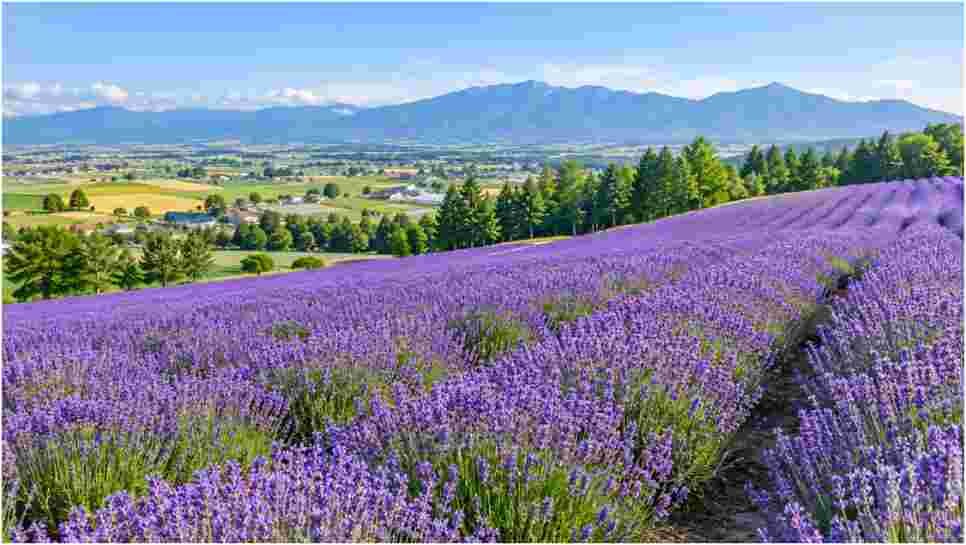
    I arrived at Farm Tomita in Nakafurano just past 7:30 AM. Arriving early is essential. By 9:30 AM, tour buses pack the parking lots. The purple lavender rows peak between mid-July and early August. Walking the hillside trails early allows you to take in the scent of blooming English lavender and sample purple soft-serve ice cream in quiet serenity.

    Ten miles north lies Shikisai-no-oka in Biei. Here, locals cultivate fifteen hectares of hills into striped bands of marigolds, dahlias, and salvia. Renting a small electric cart makes traversing the steep contours effortless.

    Shirogane Blue Pond and Shirahige Falls

    Shirogane Blue Pond and Shirahige Falls

    A short drive from Biei brings you to the Shirogane Blue Pond (Aoiike). Submerged Japanese larch trees poke through bright turquoise water, an illusion created by natural aluminum hydroxide mixing with river minerals under direct sunlight. Walk three minutes upriver to Shirahige Waterfall, where subterranean cobalt water gushes through craggy cliff crevices into the river gorge below.

    Urban Nights and Coastal Escapes: Sapporo and Otaru

    Urban Hokkaido operates differently in the summer. Cities shed their enclosed winter habits for massive open-air gatherings.

    Sapporo centers around Odori Park. From late July through mid-August, the city transforms several city blocks into an open-air beer garden for the Sapporo Summer Festival. Locals sit elbow-to-elbow eating grilled corn rubbed with sweet butter and soy sauce.

    Thirty miles west sits Otaru, an old trading port lined with stone warehouses. During the day, walking the canal is standard, but the best experience is offshore. Local operators run small skiffs to the Otaru Blue Cave along the Shakotan coastline, where clear green-blue sea shelves reflect off dramatic sea cliffs.

    Volcanic Waterways: Lake Toya and Noboribetsu

    Volcanic Waterways: Lake Toya and Noboribetsu

    Traveling southwest leads straight into the geothermal engine of Shikotsu-Toya National Park.

    Noboribetsu Jigokudani (Hell Valley) greets visitors with sulfur plumes venting from red rock canyons. Wooden boardwalks snake over the canyon floor, leading to the Oyunumagawa footbath. Soaking tired feet in a warm, natural volcanic stream deep inside a hardwood forest is unmatched.

    Further south, Lake Toya fills a massive volcanic caldera. Summer evenings here feature nightly fireworks launched from moving boats across the water between April and October. Clear mornings reveal Mount Yotei, a volcanic peak known locally as “Ezo Fuji” due to its symmetry.

    Logistics That Matter: Trains or Rental Car?

    Public transit on Japan’s northern island requires deliberate planning. While limited express trains run reliably between Hakodate, Sapporo, and Asahikawa, rural branch lines are sparse. Catching buses between Biei, the Blue Pond, and Furano often means enduring two-hour gaps between departures.

    For maximum freedom across the island, rent a car at New Chitose Airport. Driving on the left feels natural within an hour, and rural roads feature wide lanes with modest traffic.

    The Hokkaido Expressway Pass (HEP) Reality Check

    Foreign drivers can purchase the NEXCO East Hokkaido Expressway Pass (HEP), an add-on loaded onto an ETC toll card. It provides unlimited expressway driving for a flat rate. However, calculate your route before blindly buying it.

    If you spend four days circling Furano and Biei, skip the HEP. Furano is served almost entirely by scenic, toll-free national highways like Route 237. The pass only delivers substantial savings when you drive long highway stretches, such as New Chitose down to Lake Toya, Noboribetsu, and Hakodate.

    If your broader Japan itinerary includes the southern islands, researching scenic places to visit in kyushu japan will show you a dramatic contrast between southern subtropical peaks and Hokkaido’s vast northern valleys.

    Wild Frontiers: Shiretoko and the Sea of Clouds

    Wild Frontiers: Shiretoko and the Sea of Clouds

    For travelers willing to push east, Hokkaido gets truly wild.

    At the Tomamu Unkai Terrace, a gondola lifts visitors above 3,500 feet at dawn. On crisp summer mornings with the right wind conditions, cold ocean air flows inland, forming a rolling blanket of white clouds beneath the viewing decks.

    Further east lies the Shiretoko Peninsula, a protected UNESCO World Heritage Site. Summer opens the coastal boat lanes from Utoro, granting direct views of coastal cliffs where wild brown bears, sea eagles, and Ezo sika deer roam undisturbed.

    Pack Smart, Leave Late: Final Practical Rules

    • Layer for rapid shifts: A 75°F sunny afternoon can plunge into the mid-50s as soon as coastal fog rolls in. Bring a packable windbreaker.
    • Secure reservations months ahead: Domestic flights and rental cars book up quickly for the late-July summer vacation window.
    • Watch for wildlife: Sika deer frequently jump into rural roadways at dusk. Keep headlights sharp on mountain passes.

    Frequently Asked Questions About Hokkaido Summer Travel

    1. What is the best month to visit Hokkaido in summer?

    Mid-July through early August offers the best combination of blooming lavender fields and warm, rain-free weather.

    2. Do I need a car to travel around Hokkaido in summer?

    A rental car is highly recommended for visiting Furano, Biei, and remote national parks, though cities like Sapporo and Otaru are easily reached by train.

    3. How warm does Hokkaido get during July and August?

    Daytime temperatures average between 68°F and 77°F (20°C to 25°C), remaining far cooler and less humid than Tokyo.

    4. Can I see lavender in Furano during late August?

    Most lavender fields are harvested by early August, though late-blooming flowers like sunflowers and cosmos remain vibrant through autumn.

  • Things to Do in Penang Besides Eating for an Unforgettable Getaway

    Things to Do in Penang Besides Eating for an Unforgettable Getaway

    I used to think of Penang as a place where every spare hour naturally turned into another meal. Then I started looking beyond the hawker stalls and realized how much the island changes once you leave the food trail. George Town’s old streets, forested hills, temples, and coastal paths give the destination a completely different rhythm.

    I also found that Penang is easy to underestimate when you plan around restaurants alone. A morning can disappear inside a heritage district, an afternoon can involve a jungle hike, and sunset can find you high above George Town or beside the sea. For travelers who want variety, the island has plenty of reasons to put the menu aside for a while.

    Walk Through George Town’s Living Heritage

    Start in George Town. The UNESCO-listed core is filled with restored shophouses, colonial buildings, temples, churches, and narrow streets that still feel connected to everyday life. Take time to wander and notice the details.

    Street art is another easy way to explore. Murals and interactive installations appear throughout the historic center, turning a casual walk into a self-guided outdoor gallery. Armenian Street is especially rewarding, while the Clan Jetties offer a glimpse into traditional waterfront communities built on stilts.

    If the weather turns cloudy, you can still keep exploring with these things to do in Georgetown Malaysia on a cloudy day, from heritage sights and indoor attractions to slower-paced neighborhood experiences.

    A trishaw ride can add another layer to the experience, especially when the tropical heat becomes tiring. For couples planning another city break, fun things to do in Osaka for couples offer inspiration for mixing sightseeing with shared experiences.

    Ride Up Penang Hill

    Ride Up Penang Hill

    Penang Hill gives you a fast change of scenery. The funicular climbs into a cooler, greener environment, with views across George Town and the coastline.

    The hill is more than a viewpoint. Trails and forested areas make it worthwhile for travelers who want to slow down and spend several hours outdoors. The Habitat adds a more structured nature experience, with elevated walkways, canopy views, and the Curtis Crest treetop walk.

    Going early can make the visit more comfortable, particularly on hot or crowded days. It suits travelers who want nature without committing to a full-day trek.

    Hike Through Penang National Park

    For a stronger dose of wilderness, head toward Penang National Park. The trails pass through tropical forest before reaching coastal areas, creating a satisfying combination of hiking and scenery.

    Monkey Beach and Turtle Beach are among the better-known destinations within the park. Turtle Beach, also called Pantai Kerachut, is particularly interesting for travelers drawn to wildlife and conservation. Conditions can vary, so check current access and trail information before setting out.

    The journey itself is part of the experience. Shaded trails, changing terrain, and sudden water views make the walk feel more adventurous than a typical city attraction.

    Visit Penang’s Temples and Historic Homes

    Penang’s cultural landscape is remarkably diverse. Kek Lok Si Temple in Air Itam is one of the most impressive stops, spreading across a hillside with elaborate structures, gardens, a large Guanyin statue, and a distinctive pagoda.

    The Blue Mansion offers a completely different perspective. Its indigo facade and intricate design reflect the wealth and cultural influences that shaped Penang during its trading era. A guided visit helps explain architectural details that are easy to miss when simply photographing the building.

    These places reveal how Chinese, Malay, Indian, and European influences became woven into the island’s identity.

    Get Your Adrenaline Fix

    Travelers who prefer action have plenty of options. ESCAPE Penang in Teluk Bahang combines outdoor attractions with forest surroundings and is a natural choice for anyone who would rather climb, slide, zip, or race than spend another afternoon indoors.

    The park is particularly notable for its enormous water slide and zip coaster. Check operating hours, weather conditions, and attraction requirements before visiting.

    The TOP at KOMTAR offers the Rainbow Skywalk. The glass-bottom viewing area is designed for people who enjoy a little nervous laughter with their city views.

    Spend Time by the Coast

    Spend Time by the Coast

    Penang’s coastline deserves attention even if beach lounging is not the main reason for your trip. Batu Ferringhi is the most familiar beach area, with a developed resort atmosphere and plenty of space for an evening walk.

    Teluk Bahang offers a greener setting and connects naturally with several northern island attractions nearby. A coastal afternoon can mean walking, watching the changing light, and escaping the busier streets.

    Expect more atmosphere than pristine resort beaches. Penang’s coastline still adds welcome breathing room to an itinerary.

    Discover a Quieter Side of Penang

    Balik Pulau is worth considering when you want to see a slower side of the island. The countryside feels noticeably different from central George Town, with rural roads, hills, farms, and village landscapes replacing dense urban streets.

    It suits travelers who enjoy scenery more than ticking off attractions. A drive through the interior can break up busy sightseeing days and reveal the island’s geographic variety.

    Travelers planning outdoor trips elsewhere in Asia can also find ideas in the best water activities in El Nido, Palawan.

    Frequently Asked Questions 

    1. Is Penang worth visiting if I am not interested in food?

    Absolutely. George Town’s heritage streets, Penang Hill, temples, national park, beaches, and adventure attractions provide enough variety for a full trip.

    2. What is the best outdoor activity in Penang?

    It depends on your pace. Penang Hill suits scenic sightseeing, while Penang National Park is better for hiking and coastal exploration. ESCAPE is the stronger choice for thrills.

    3. Can I explore Penang without spending much?

    Yes. Walking around George Town, viewing street art, exploring public areas, and enjoying many scenic spots can cost little beyond transportation.

    4. How many days are enough for Penang?

    Three to four days gives most travelers enough time to combine George Town, a hill or nature excursion, cultural attractions, and some coastal time without rushing.

    Why Penang Is Worth Exploring Beyond the Plate

    The best Penang itinerary does not need to choose between food and everything else. Food may introduce you to the island, but its architecture, forests, temples, coastline, and communities give the trip its depth. Leaving room for unplanned walks often creates the moments that feel most personal afterward.

    Penang becomes more memorable when you give yourself permission to wander. Put down the fork, follow a trail, climb a hill, watch the city from above, and let the island show you another side.

  • Prepare a Backup Itinerary for Travel Delays in Asia

    Prepare a Backup Itinerary for Travel Delays in Asia

    The empty space between two bookings is where I would look first when checking a travel plan. A ferry arriving shortly before a flight might seem efficient, but that connection leaves little room for trouble. When I prepare a backup itinerary for travel delays in Asia, I focus on protecting the next essential commitment. 

    Knowing where I could stay, which journey I could postpone, and whom I should contact would help me make calmer decisions when the original schedule changes. A useful contingency plan combines realistic alternatives, flexible bookings, emergency funds, and information you can access offline.

    1. Find the Weakest Connections in Your Route

    Review every travel day from departure accommodation to arrival accommodation. Include airport transfers, immigration, baggage collection, station changes, check-in deadlines, and the final transport service.

    A scheduled arrival does not mean you are ready to begin the next journey. Consider how long it takes to collect luggage, find transport, and reach another terminal.

    Flag Journeys With Few Alternatives

    Pay particular attention to island ferries, mountain roads, infrequent flights, and overnight trains. Losing one departure can affect more than a single afternoon.

    Check current operator notices and destination forecasts before traveling. Asia has varied weather patterns, so assess the specific coast, city, or mountain region instead of relying on one regional seasonal calendar.

    Separate flight tickets also deserve careful planning. Check how each booking handles missed departures rather than assuming the entire connection is protected.

    2. Protect Essential Bookings and Leave Flexible Space

    2 Protect Essential Bookings and Leave Flexible Space

    Decide which commitments anchor your trip. Your international departure, a fixed event, or a limited-entry attraction may be difficult to move.

    Then identify activities you can reschedule or remove. An optional shopping afternoon offers more flexibility than a prepaid excursion with a strict departure time.

    If food experiences are an important part of your trip, this guide on how to plan a food focused trip through Asia can help you organize meals, restaurant bookings, and culinary activities without overloading the itinerary.

    Add Buffers Where Disruption Would Cost Most

    Leave additional time before expensive commitments, particularly when arriving from somewhere with limited transport. Depending on the route, returning to your departure city the previous day may be sensible.

    Avoid filling arrival days with nonrefundable activities. Choose nearby experiences that you can enjoy if you arrive on time and skip without substantial loss.

    Record cancellation deadlines in local time, and check whether refunds are full or partial, how they are issued, and how long processing takes. A flexible reservation only helps when you understand when its flexibility ends.

    3. Research Alternative Transport and Overnight Stops

    For each vulnerable journey, save one realistic replacement route and one suitable overnight option.

    Research enough detail to judge whether the alternative actually works. If your travel dates overlap with major festivals or public holidays, also review how to avoid crowded holiday periods when visiting Asia so you can account for increased demand when considering alternative transport and accommodation.

    Compare the complete journey, including station transfers, baggage allowances, travel time, accessibility, and arrival transport.

    Choose Alternatives That Avoid the Same Problem

    A different ferry may still face the weather that canceled your original service. A road transfer may also be unsuitable when flooding affects the surrounding area.

    Sometimes the better backup is to remain somewhere safe and postpone the next destination.

    Check entry and transit requirements before considering a route through another country. Verify current seat availability before canceling existing arrangements.

    For accommodation, note the address, reception hours, transport access, and booking terms. Save possibilities without treating unbooked rooms as guaranteed availability.

    4. Decide When to Activate Your Backup Plan

    4 Decide When to Activate Your Backup Plan

    Set decision points around actual deadlines. The relevant question is whether you can still reach your next commitment safely and realistically.

    For a short delay, remove an optional activity and inform your accommodation if arrival changes. For an overnight disruption, arrange somewhere to stay and review tomorrow’s transfers.

    If an entire travel leg becomes unavailable, consider dropping one stop instead of compressing every remaining day.

    When deciding which destination can be removed or rearranged, this guide on how to include smaller towns in an Asia travel itinerary can help you evaluate smaller destinations, transport connections, and the time each stop requires.

    Imagine a Canceled Island Ferry

    Suppose your ferry is canceled before a planned city stay. Your backup could involve another night near the departure port, notifying the city hotel, and moving a flexible activity.

    If the disruption continues, shortening the island portion may protect your later flight. Check operator updates before committing to replacement transport.

    Contact the original provider about available arrangements before purchasing another ticket. Keep written confirmations of agreed changes.

    5. Keep Money, Contacts, and Documents Ready

    Set aside accessible funds for an unexpected room, meals, and replacement transport. Estimate this reserve using realistic costs along your route.

    Keep a second payment method separately from your main wallet. Record provider contacts, booking references, hotel addresses, and essential deadlines together.

    Save tickets, maps, and your revised itinerary offline. Test whether you can open them without connectivity before leaving.

    Review insurance terms for your specific journey before departure. Save disruption notices, receipts, and correspondence without assuming every expense will qualify for reimbursement.

    Frequently Asked Questions

    1. How do I prepare a backup itinerary for travel delays in asia?

    Identify vulnerable transfers, protect essential bookings, research alternative routes, save overnight options, and record decision deadlines. Keep the information available offline.

    2. Should I buy replacement tickets before departure?

    Research alternatives first. Buy additional tickets only when their cost, cancellation terms, and practical value justify doing so.

    3. How much buffer time should I leave?

    Base the buffer on transport frequency, transfer complexity, baggage, and the consequences of missing your next booking.

    4. What should I change after losing a day?

    Remove optional activities first. If necessary, shorten one destination while protecting essential departures and allowing enough rest.

    My Final Take

    I would consider my itinerary ready when a missed departure had a workable next step. A saved hotel option, realistic alternative route, and clear booking deadline would give me room to adjust. That preparation would help me preserve the experiences I care about while making sensible decisions throughout the journey.