distributor = chafurnate, 9567227611, kingconix, 9193354047, 9202804671, piannabanana, 8773340460, tf79gg, 7372951758, skinsminkey, 18003594107, 7262167081, superdave112279, tickzel, ezy8140, 3129266906, 8703903171, 7272632096, 8323461895, auldtwork, instanetsol, 2019425209, 8885905962, 8436954265, 18444946060, mez56709146, 389039235, 8885847498, 9842631014, 9107564558, 18003887000, 5204672116, 5137076994, 3372055034, 4805503207, cymboxen, cannacbana, 4234273117, 4696063080, oxelotto, imagefañ, 9733483845, 2165620588, 4142076549, 9452185392, 2705139922, 7242732030, 7203725721, 2027688469, 6099782127, gracesandy08, 5716216254, 16463611389, 8882249645, 8572821800, 9047236300, 18552132382, chaturntae, 6062401130, 8323256456, 6627789116, 7027105520, 9787672641, 6163306246, 8633193801, 6317692145, 8332053164, 7063813435, 18002286855, mstina209, 5088944588, 8178065501, aznhkpm, 2042897313, 9783551609, 7866877020, 3368046099, 8177615469, 8002743932, 6317764262, 8333952329, 8669920307, 4033425c2, 3055062319, 3132933287, ilikeocmix, 8063753039, 6085094890, 4043691986, 9154404953, 7783316933, 18662552529, 2079223193, alitaxangelic, 4842283001, 6153223900, wagershack, 8338701889, 2092553045, wzggstats, 8442066155, 2028167451, 18008300286, mbm66698001, 8324817394, 9155445800, 6105255250, 8438832246, 19057716052, 4049960554, 8554062187, 4162978362, 9123426998, yorestudiomg, 8474268085, baceracted, 3234872622, troshilly, 7135666509, 8338950348, 8442211567, 18666201302, 1800076072, ửodle, 4049394970, 8163078906, mfznⅲ, 4089185125, 6198923514, 4808347546, 3850er3040c, 6102159968, 888.904.8461, globalzone53, 2153099122, 18009132411, 8443580642, 4805465503, 7657404036, 8436121015, 3462730012, 9854250920, 18336840593, wdf48650gsp, 611247392201, 8558562511, 6782015589, 904.207.2696, 8667866682, 6237776430, ezy3377, 18556148530, 8324262067, 5168821708, 6696225537, 5712268380, 9298103988, 9548893729, 4808416993, 4330564191, 2538442114, 4373403232, 9032057164, 2087193274, 8664872643, zawatinao, 18557905018, 8014123119, 7247650023, 9085048193, 6194641731, mypremierchart, ilorultcbs94r8v, 18779773879, 4808475341, 7059801767, lasrs.statres, boecsched, 4808472619, 8594295188, brazedotcom, 8566778008, 18005680344, 8642516223, 2766344760, 8178401646, 8664425030, 8045005635, 5013000112, 6144291561, caffine64, 5043993551, 8665110793, 5164655255, ezy6521, 8602936799, 18336902260, 18333110849, 7167454490, 3604835198, 7145099696, 8888570668, 8174963036, luxuryinteriorsorg, 6143332209, 8332420718, pippypipernpc, 9152554542, 18669516592, 9854414006, 7785895126, 7176786808, 18002228794, 2142831548, bitsylowhigh, 8669360316, recuburate, 4846353028, 5704918262, khanacademyorg, 18004684743, 7158988027, 18664487098, 3392109005, 6036638908, 5735344024, 7175316640, gabbysmol, drmaureenhamilton, 6047363925, meloplaycom, 8557199695, 8448440111, 8669503840, 8443765274, 18774014764, influencersgomewd, 8599631921, 2629487300, joyuicoltd, 4079466142, 2076077881, cherrybella808, 8037663919, 64.277.120.231, syromatch, oxolado, 36000522389, 8322347988, tulkotaks, allredismyteacher, 7203584046, brianchavez85, 18003921147, oplzlepredstavy, 5049497786, ezy2140, 7243139278, 2183167675, 8017375151, 8665301092, 8774315691, 8185875547, 8653815207, 6192467477, 8556833145, 2066918065, r6tradker, 481615428, 80720963038, 2678173729, 18002410172, 18007774001, freyarose77, clearskinstudy, mgp61942301, 5132972028, 18555959055, theflixee, 6313153145, nfl66ir, chsproviderdatavalidation, freakinthesleep, 5133221008, 7023597111, morancaresys, adultowrl, 5089486999, 5034367335, 7628001252, ezy3837, melinnderr13, 4184251145, 5173181159, sp11l87222, 7037770280, 9035930589, 8662284345, 18664188154, aselrod71, 18557876733, 18664613047, 4844522186, kiamfusa, 3606265636, integrityuc.webpay.md, 7784362314, 7783282169, 8662684346, 5597817242, 8007092893, 6156966912, bn6925167b, cktest9263, 18004726066, 9163883106, 3362525903, 18559694636, edwinalucypowe, 4057192096, 8558468376, 6133666485, badwolfemjay, 6615934042, 8446227085, 8663233462, 6157131410, 8475861480, 4256553258, 3054238938, myfoxatl, 18002386279, 8055851300, lizzybee1395, bill39nc, agamycapital, 4147718228, 6198330521, 9168975029, 9093759675, 18558382118, 7137999975, 9043641318, tdb2586, hollysafara21, 7048991392, 7252988333, 5152174532, 4014068198, 8705207565, 8008225626, 6087332770, 18004231000, 5044467788, 8122320564, 18006118472, 8337931057, 18.84x18.84, al2104197, dudelegence, 18009096467, 4084987586, 7146059251, 9133123219, 6316154582, 8772137258, mo1infiniteloo, 9592050377, 6024174900, 7047026509, 8302053160, 3658732800, 7634227200, 8448371861, dl329k1a, 3044434051, benefitboutiquedamen, 370036828, 5126715039, 2096890003, 8664482002, 5169865040, 18558437208, eliebaroud23, 5122540018, 76501165180, 8169559260, ezy8052, 2074303836, 2199474151, gen85898, 6309905600, 9452285426, 2512630572, 6036075559, 6098551244, bliķk, leeeanuvz, taylorbergman17, 18007920001, 2103010293, loŵes, 9377598636

Blog

  • Places to Visit in North Sumatra Indonesia: The Complete Travel Guide

    Places to Visit in North Sumatra Indonesia: The Complete Travel Guide

    When I planned my journey through western Indonesia, I wanted untamed landscapes, rare wildlife, and deep cultural roots. Finding the top places to visit in north sumatra indonesia changed how I view adventure travel. This province combines primary equatorial rainforests with the largest volcanic crater lake on Earth.

    From the quiet shores of Lake Toba to the misty canopies of Mount Leuser, North Sumatra delivers raw beauty without mass-market crowds. 

    The Wild Rainforest: Bukit Lawang and Tangkahan

    The northern stretch of Sumatra houses one of the most biodiverse ecosystems on our planet. Stepping into the jungle here feels like entering a prehistoric world.

          [Medan Gateway]

                  |

           (3.5 hrs by car)

                  |

         [Bukit Lawang Trailhead]

                  |

           (Dense Jungle Trek)

                  |

        [Gunung Leuser Canopy]

    Trekking with Orangutans in Bukit Lawang

    Trekking with Orangutans in Bukit Lawang

    Bukit Lawang sits alongside the Bohorok River on the border of Gunung Leuser National Park, a protected UNESCO World Heritage site. This rainforest is one of the last places where critically endangered Sumatran orangutans roam free in their natural habitat.

    During my two-day trek through the park, I spotted three wild orangutans swinging effortlessly across the 100-foot canopy. The trails are steep, slick with clay, and humid.

    Local Field Tip: Skip expensive imported hiking boots that take days to dry. Stop at a local village shop and buy Sepatu Getah (flexible rubber cleated shoes) for about $3. Their studded soles grip wet clay better than any luxury trail runner.

    Guides here strictly enforce ethical boundaries. Maintain a 30-foot distance from all primates and pack out every scrap of rubbish. To return to the village, hop into a linked chain of large inner tubes and float down the Bohorok River rapids directly to your eco-lodge.

    Low-Impact Sanctuary Life in Tangkahan

    Two hours over rough gravel from Bukit Lawang lies Tangkahan, an eco-village founded on community-led conservation. Once threatened by illegal logging, the village transitioned to sustainable forestry and tourism.

    Tangkahan is far quieter than Bukit Lawang. You can swim in clear natural rivers fed by hidden hot springs, walk across suspension bridges, and watch rescued elephants bathe in the river shallows alongside their mahouts. It is remote, peaceful, and refreshingly devoid of tourist crowds.

    Ancient Calderas and Volcanoes: Lake Toba to Mount Sibayak

    Moving south into the central highlands, the landscape transforms from humid lowland rainforests to cool volcanic plateaus.

    Samosir Island and Batak Culture at Lake Toba
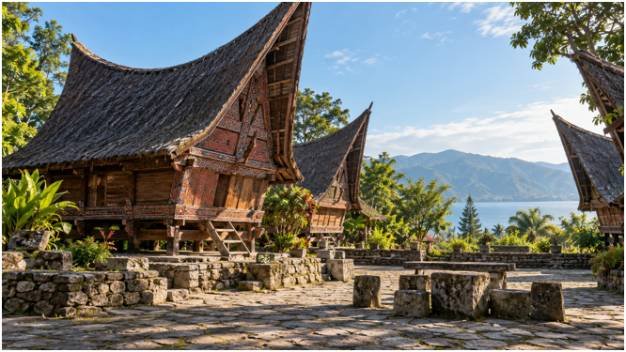
    Samosir Island and Batak Culture at Lake Toba

    Lake Toba is a geological titan. Formed by a supervolcanic eruption roughly 74,000 years ago, it remains the largest volcanic lake on Earth. In the center sits Samosir Island, an island roughly the size of Singapore.

    I based myself in Tuk Tuk, a tranquil peninsula on Samosir Island. The best way to explore is to rent a scooter and ride along the caldera perimeter:

    • Batak Architecture: Admire the horn-shaped, boat-like roofs of traditional Batak houses in villages like Tomok and Ambarita.
    • Cultural History: Visit the ancient stone chairs of King Siallagan, where tribal justice and royal councils occurred centuries ago.
    • Panoramic Vistas: Hike up Holbung Hill for unobstructed views across the shimmering blue water framed by mountain ridges.

    The water is clean, warm, and perfect for afternoon swims after a long day in the saddle.

    Sunrise Climbs up Mount Sibayak in Berastagi
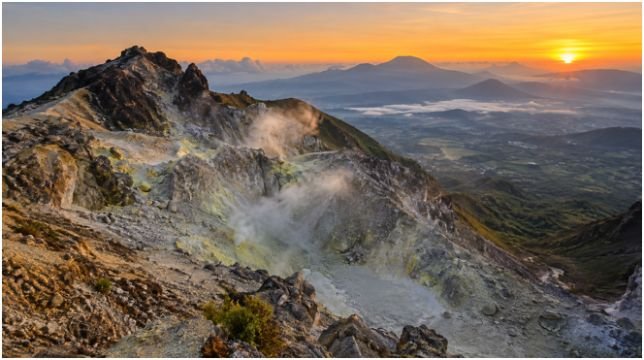
    Sunrise Climbs up Mount Sibayak in Berastagi

    Berastagi is a crisp mountain town nestled between two active volcanoes: Mount Sinabung and Mount Sibayak. While Sinabung remains unpredictable, Mount Sibayak is accessible for independent hikers.

    I started my trek at 4:30 AM from the Jaranguda trailhead. The trail climbs through mossy cloud forest before breaking onto an open volcanic landscape. By 6:00 AM, I reached the summit crater rim.

    Steam vents hiss underfoot, filling the air with sulfur clouds as the morning sun illuminates the Karo highlands below. Afterward, head down the western flank to soak in the geothermal pools of Semangat Gunung to soothe your joints.

    Cultural Gateways and Coastal Breaks: Medan to Nias Island

    Beyond the central mountain spine, North Sumatra offers rich urban architecture and legendary coastal surf.

    Culinary Stops and Colonial Heritage in Medan
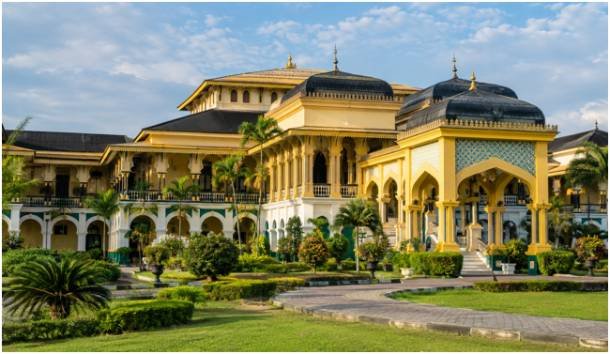
    Culinary Stops and Colonial Heritage in Medan

    Medan is Sumatra’s commercial capital and main international transit gate. Travelers often rush through it, but spending a full day here reveals incredible culinary culture and architecture reminiscent of classic historic cities to visit.

    Visit the 19th-century Maimun Palace to admire Malay, Islamic, and European design motifs. Walk through the 35-room mansion of merchant Tjong A Fie to explore Chinese-Peranakan heritage.

    Before leaving, stop at an open-air cafe for a warm bowl of Soto Medan—a rich, spiced coconut soup infused with lemongrass and galangal. For comprehensive city maps and heritage schedules, check the Indonesia Travel Official Portal.

    Megaliths and World-Class Surf on Nias Island

    Megaliths and World-Class Surf on Nias Island

    Located off the western coast in the Indian Ocean, Nias Island is famous among surfers for the legendary right-hand reef break at Sorake Beach.

    Away from the waves, Nias preserves a megalithic tribal culture. In mountain villages like Bawomataluo, young men continue the tradition of Fahombo—leaping barefoot over two-meter-high stone towers to prove their courage.

    North Sumatra Transit and Route Efficiency Breakdown

    Navigating the province requires patience. Mountain roads wind through steep topography, making point-to-point transit longer than straight-line map distances suggest.

    Route Distance Typical Drive Time Best Transit Mode Road Condition
    Kualanamu Airport (KNO) to Bukit Lawang 130 km 3.5 – 4.5 hours Private car / Shared tourist van Paved highway, narrowing to bumpy secondary roads.
    Bukit Lawang to Berastagi 140 km 4.5 – 5.5 hours Private driver Scenic, winding mountain passes; occasional roadwork.
    Berastagi to Lake Toba (Parapat) 110 km 3.5 – 4 hours Tourist shuttle or private taxi Paved; passes Sipiso-Piso waterfall viewpoint.
    Medan to Nias Island (Gunungsitoli) Island transfer 1 hour flight Regional turboprop flight Flights depart daily from Kualanamu Airport.

    To maximize your time, plan an open-jaw overland route: Medan Bukit Lawang Berastagi Lake Toba Silangit Airport (DTB). Flying out of Silangit saves you the grueling six-hour drive back to Medan. If you love discovering remote archipelagos like the island destinations in the philippines, Sumatra should be at the top of your list.

    North Sumatra Travel FAQs

    1. What is the single best month to explore North Sumatra?

    July is the driest and clearest month for both jungle trekking and crater climbs.

    2. Do I need a licensed guide for trekking in Bukit Lawang?

    Yes, national park regulations require certified local guides to protect both wildlife and visitors.

    3. How do I reach Samosir Island from the mainland?

    Take the regular passenger or car ferry from the lakeside town of Parapat directly to Tuk Tuk or Tomok.

    4. Is North Sumatra safe for independent solo travelers?

    Yes, locals are exceptionally welcoming, though booking private drivers makes remote transit far simpler.

    Ditch the Tourist Trail and Head Inward

    North Sumatra rewarded me with wild encounters and genuine cultural hospitality. Instead of rushing between sights, give each stop the time it deserves. Pack light, lace up a pair of rubber trekking shoes, and hit the jungle trail.

  • Best Water Activities in El Nido, Palawan for Ocean-Loving Travelers

    Best Water Activities in El Nido, Palawan for Ocean-Loving Travelers

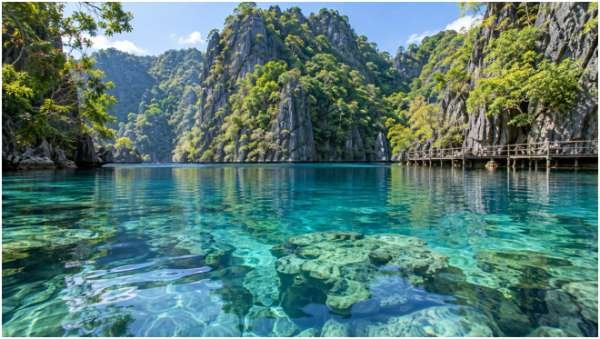
    I noticed that El Nido feels different the moment a boat leaves town. The scenery is spectacular, but the pull is water. Clear blue-green channels, limestone walls, hidden coves, and shallow reefs make even a simple swim feel special.

    I also found that choosing one or two water experiences carefully is more satisfying than squeezing every famous stop into one day. Some activities are peaceful, while others demand stronger swimming or paddling. That variety makes El Nido appealing.

    Kayak Through the Big Lagoon

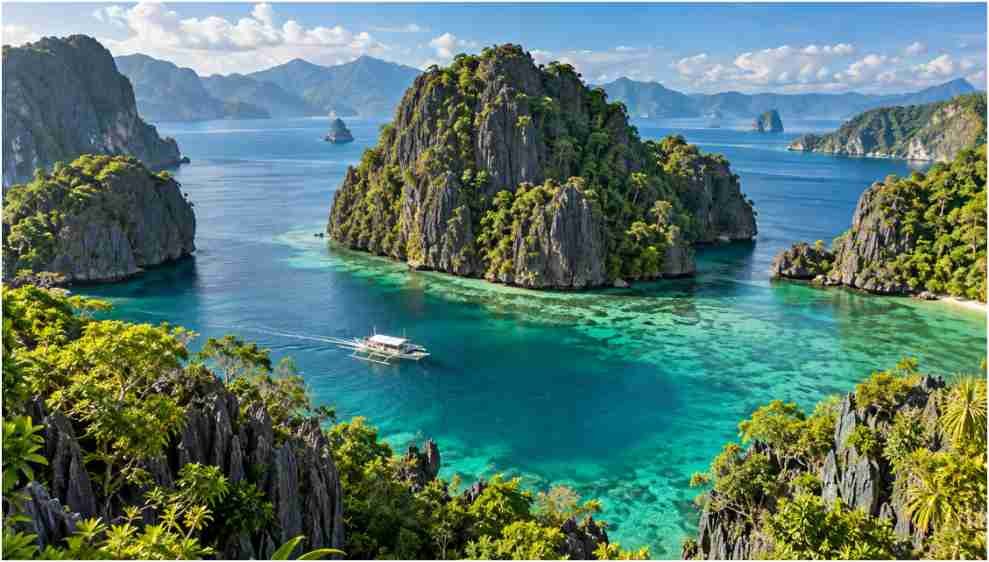
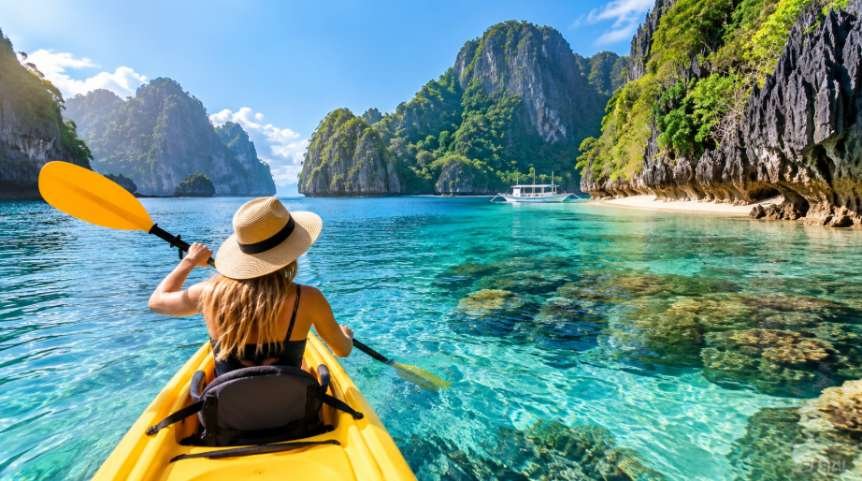
    Kayaking is a memorable way to experience El Nido because it puts you at water level. Big Lagoon is the classic choice. Limestone formations surround turquoise water, and paddling deeper reveals a quieter side of the landscape.

    The activity is gentle, although traffic and sea conditions can change the pace. Small Lagoon offers a more enclosed experience, with a narrow entrance and dramatic walls. Depending on conditions, visitors may kayak through the opening or continue by swimming.

    Snorkel Over Coral Reefs

    Snorkel Over Coral Reefs

    For travelers who want to see beneath the surface, snorkeling should be high on the list. Shimizu Island is a popular stop on Tour A, while Tour C combines hidden beaches with snorkeling opportunities around Bacuit Bay.

    The appeal is not simply the color of the water. Coral formations and tropical fish create a different landscape below the surface. Visibility varies with weather and sea conditions so that a popular spot can look different each day.

    A relaxed pace helps with snorkeling. Stay near your guide or boat, avoid touching coral, and give marine life plenty of space. A well-fitting mask matters more than expensive equipment because a clear view lets you focus on the reef.

    Swim Into Hidden Beaches and Lagoons

    Some of El Nido’s most memorable water experiences involve getting through an opening rather than simply arriving at a beach. Secret Lagoon is reached through a rocky passage, while Hidden Beach has an enclosed setting surrounded by limestone.

    These places suit confident swimmers who enjoy physical effort with sightseeing. Water levels, waves, and access conditions can change, so follow local guides.

    Water shoes are useful around rocky entries, and a waterproof pouch protects phones and small valuables.

    Choose an Island-Hopping Tour Around the Water

    El Nido’s Tour A, B, C, and D system gives travelers different ways to spend a day on the water. Tour A suits first-time visitors who want iconic lagoons, while Tour C leans toward hidden beaches and snorkeling. Tour B focuses more on caves and sandbars, and Tour D can suit travelers looking for quieter beaches and lagoon stops.

    The choice depends on what you want to do once the boat stops. Kayakers may prefer Tour A. Strong swimmers may enjoy Tour C, while relaxed travelers can choose quieter routes.

    Shared tours are practical for solo travelers and couples watching their budget. A private boat can make more sense for groups wanting greater control. Check current fees, lagoon access rules, schedules, and weather before departure.

    Go Scuba Diving for a Deeper Adventure

    Snorkeling gives you a quick view of El Nido’s marine environment, but scuba diving offers a more immersive experience. Local dive operators cater to beginners and certified divers, with trips built around reefs, walls, and marine life.

    A beginner can try an introductory dive without certification, although training and safety procedures are essential. Certified divers have more options based on experience and conditions. Travelers researching things to do in Taipei for adventure seekers may recognize the same appeal: matching an activity to comfort level matters more than chasing every thrill.

    Diving suits travelers who want to spend most of a water day below the surface, where the focus shifts from landmarks to slow exploration.

    Pack for More Than a Boat Ride

    Pack for More Than a Boat Ride

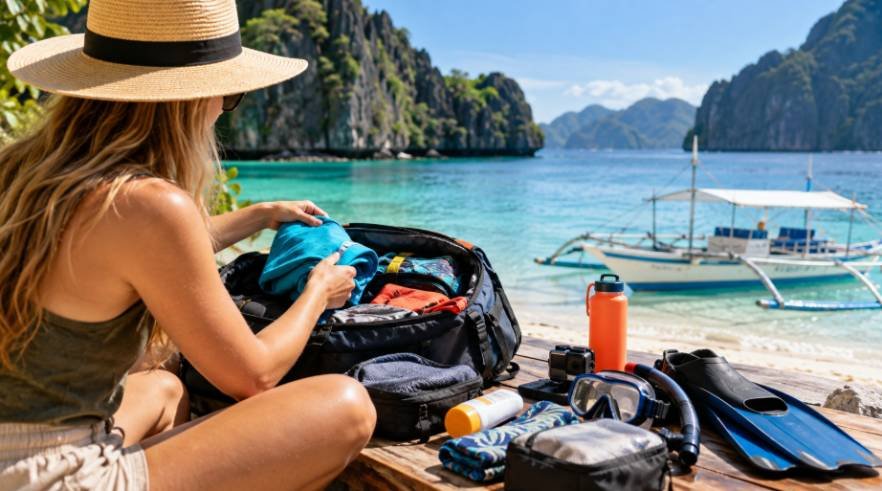
    Bring a reusable bottle, dry bag, waterproof phone protection, sun protection, and water footwear. Keep valuables to a minimum.

    Choose accredited tour operators and follow local environmental rules. El Nido is part of a protected marine environment, so avoid standing on coral, feeding fish, leaving trash, or chasing wildlife.

    The same practical mindset helps when comparing fun things to do in Osaka for couples with more active coastal destinations. A good itinerary leaves breathing room instead of rushing through a checklist.

    Match the Activity to Your Travel Style

    If calm exploration appeals most, choose kayaking and lagoon swimming. If you want colorful marine life, prioritize snorkeling. Confident swimmers may prefer hidden beaches and tighter lagoon passages, while certified divers can build a day around underwater exploration.

    Season and sea conditions also matter.

    Travelers planning a seasonal outdoor trip in Japan can also explore the top things to do in Hokkaido in autumn, when cooler weather and fall scenery create a very different setting for outdoor experiences.

    El Nido’s water activities depend heavily on weather, and rough conditions can affect boat schedules, visibility, and swimming access. Checking conditions shortly before a tour is more useful than assuming every trip will follow a fixed itinerary.

    Travelers seeking more adrenaline can look for specialized activities such as tow-based underwater boards, although availability depends on local operators. These work best as optional extras.

    Frequently Asked Questions 

    1. What is the best water activity for first-time visitors?

    Kayaking in Big Lagoon is an excellent starting point because it combines calm water, dramatic limestone scenery, and an accessible activity.

    2. Is snorkeling good in El Nido?

    Yes. Shimizu Island and several Tour C stops offer popular snorkeling opportunities, although visibility depends on weather and sea conditions.

    3. Do you need to be a strong swimmer?

    Not for every activity. Kayaking and standard boat tours are accessible to many travelers, but hidden beaches and narrow lagoon passages may require stronger swimming ability.

    4. What should you bring for water activities?

    Pack water shoes, a dry bag, waterproof phone protection, sun protection, and a reusable bottle. Keep valuables to a minimum.

    Let the Water Set the Pace

    El Nido is easy to remember as dramatic cliffs and postcard beaches, but its strongest experiences happen when you interact with the water. Paddling beneath limestone walls, floating above a reef, or swimming through a narrow opening gives the destination a physical quality that photographs cannot capture. The best days are not always the ones with the most stops. They are the ones where conditions and pace match what you enjoy.

    An active traveler might choose a morning kayak followed by snorkeling. Someone seeking a slower escape may prefer a quiet swim and unhurried boat ride. El Nido leaves room for both.

  • Underrated Food Towns in the South That Deserve a Detour

    Underrated Food Towns in the South That Deserve a Detour

    A city does not need a celebrity chef district, a packed reservation list, or national food hype to serve a meal worth crossing state lines for. In fact, some of the South’s most distinctive cooking is happening in places better known for college football, riverfronts, old downtown squares, or local industry than for culinary tourism.

    That is exactly why underrated food towns in the South are so interesting to me. These destinations often preserve the kind of regional identity that gets diluted in bigger tourist centers. In Lafayette, that might mean boudin from a neighborhood meat market. In Columbia, it could be mustard barbecue with hash and rice. 

    In Durham, fresh Carolina seafood may sit on the same weekend itinerary as modern Indian food or omakase. The appeal is not simply that these towns have good restaurants. It is that their food scenes still feel closely tied to where they are.

    Where Can You Experience Authentic Cajun Food in Lafayette, Louisiana?

    Lafayette feels like the true heart of French Louisiana and Cajun country. While many visitors head directly to New Orleans for Creole cooking, Lafayette provides a deeper introduction to everyday Acadiana food traditions.

    Boudin should be your first order. This sausage combines pork, rice, seasoning, and other ingredients, with recipes varying from one local meat market to another. Cracklins—crispy pieces of seasoned pork skin and fat—are another roadside staple. 

    Dark-roux gumbo, crawfish étouffée, plate lunches, and seasonal crawfish boils round out the experience. Lafayette Travel actively promotes a Cajun Boudin Trail covering specialty meat markets throughout the region.

    Where Should First-Time Food Travelers Start in Lafayette?

    I would make the food itself part of the drive. Visit several boudin stops rather than choosing one restaurant, then finish with gumbo, crawfish, or a casual Cajun plate lunch. Local meat markets remain especially important to Lafayette’s culinary identity.

    Why Is Columbia, South Carolina Becoming a Serious Food Destination?

    Why Is Columbia, South Carolina Becoming a Serious Food Destination?

    Columbia mixes historic Southern traditions with the youthful energy of a state capital and major college town. It is frequently overlooked in favor of Charleston, but its restaurant credentials are increasingly difficult to dismiss. Travelers exploring regional cuisine alongside ethnic food neighborhoods can also use Columbia as a strong example of how local identity shapes a city’s food culture.

    One major example is Lula Drake Wine Parlour, which won the James Beard Foundation’s 2024 award for Outstanding Wine and Other Beverages Program.

    The city’s everyday food is equally important. South Carolina-style pork barbecue commonly appears with tangy mustard-based sauce, while hash and rice remains a Midlands classic. Columbia also embraces pimento cheese so enthusiastically that its tourism organization operates a dedicated Pimento Cheese Passport.

    What Should You Eat First in Columbia?

    Start with a traditional Southern breakfast or meat-and-three-style meal at Lizard’s Thicket, then explore barbecue, pimento cheese, and Columbia’s chef-driven downtown restaurants. For barbecue enthusiasts, mustard sauce and hash and rice provide a clearer sense of place than generic barbecue platters.

    Is Durham, North Carolina One of the South’s Most Diverse Food Cities?

    Durham’s personality is completely different. The former tobacco city has evolved into a research and technology center while developing an unusually varied restaurant landscape.

    For Carolina seafood, Saltbox Seafood Joint provides one of the city’s strongest starting points. Chef Ricky Moore won the 2022 James Beard Award for Best Chef: Southeast, and his restaurant centers fresh North Carolina seafood.

    Durham also moves far beyond traditional Southern cuisine. Cheeni showcases the cooking of chef Preeti Waas, while M Sushi specializes in high-quality seasonal seafood and offers an omakase experience downtown.

    That range—from fried fish and hush puppies to Indian cooking and sushi—is exactly why Durham deserves attention from travelers who want a more contemporary definition of Southern food.

    What Makes Chattanooga, Tennessee Worth a Food Weekend?

    Chattanooga combines mountain scenery, the Tennessee River, and a strong independent restaurant culture. Nashville receives far more national food attention, but Chattanooga offers a quieter local-first experience influenced by Southern and Appalachian cooking.

    Expect dishes such as fried catfish, pimento cheeseburgers, shrimp and grits, seasonal vegetables, biscuits, and modern interpretations of Southern river cuisine. Many area restaurants source produce and meat from nearby farms, strengthening the connection between the city’s restaurants and the surrounding Tennessee Valley.

    I would explore downtown and the Southside rather than racing between famous names. Chattanooga works particularly well as part of a Southern food road trip because it can connect naturally with Nashville, Knoxville, North Georgia, and Atlanta.

    Why Does Oxford, Mississippi Have Such a Strong Restaurant Scene?

    Why Does Oxford, Mississippi Have Such a Strong Restaurant Scene

    Oxford looks like a classic Southern college town: historic streets, Ole Miss, literary history, and the courthouse Square. Its food culture, however, reaches far beyond student bars.

    The Square remains Oxford’s cultural center and supports everything from casual Southern cooking to more polished dining. Chef John Currence played a major role in building the town’s national culinary reputation, with restaurants such as City Grocery helping connect rustic Mississippi ingredients and Southern flavors with refined restaurant techniques. 

    Visit Oxford highlights Currence as a James Beard Award-winning chef whose restaurants helped establish the city as a serious food destination.

    What Should You Order in Oxford?

    Look for shrimp and grits, biscuits, fried chicken, country-fried steak, seasonal vegetables, and other Southern classics presented with more ambitious execution. I particularly like Oxford for travelers who want to combine food with bookstores, music, literature, and a walkable historic downtown.

    Where Can You Find Creative Southern Food in Athens, Georgia?

    Athens adds another college-town variation. Its music reputation may be more famous than its food scene, but the city supports independent restaurants, bakeries, coffee shops, breweries, Southern comfort food, and international cooking.

    What makes Athens useful in a broader Southern culinary itinerary is variety. You can eat a traditional Georgia-inspired lunch and then choose Mediterranean, Asian, Latin American, or chef-driven contemporary food for dinner. That mix makes the city feel younger and more experimental than many traditional Southern destinations.

    Where Should Seafood Lovers Go on the Gulf Coast?

    Pensacola, Florida, gives this list a coastal dimension. Its Gulf location means fresh shrimp, oysters, grouper, snapper, crab, and seasonal catches naturally influence local menus.

    Rather than visiting only for the beaches, I would build at least one day around seafood. The combination of Southern cooking and Gulf ingredients makes Pensacola especially useful for travelers who want a different experience from inland barbecue and Appalachian food towns.

    How Should You Plan a Southern Food Road Trip?

    How Should You Plan a Southern Food Road Trip?

    Instead of trying to cross the entire South in one trip, I recommend building regional routes. Lafayette works beautifully for a deeper Louisiana and Acadiana itinerary. Oxford and nearby parts of Mississippi and Alabama can form another route, while Durham, Columbia, Athens, and Chattanooga can anchor trips through the Carolinas, Georgia, and Tennessee.

    The most rewarding stops are not always formal restaurants. Meat markets, bakeries, farmers markets, barbecue counters, seafood shacks, diners, breweries, and neighborhood cafés often reveal more about regional Southern cuisine than an expensive tasting menu.

    Frequently Asked Questions About Southern Food Towns

    1. Which Southern town is especially good for Cajun food?

    Lafayette is one of the strongest choices because Cajun cooking remains embedded in local everyday life. Boudin, cracklins, gumbo, crawfish, étouffée, and plate lunches provide several ways to explore Acadiana’s culinary traditions.

    2. Where should barbecue lovers go in the South?

    Columbia is particularly interesting for South Carolina-style mustard barbecue, hash, and rice. Travelers interested in Texas-style smoked meats can also consider adding Lockhart, Texas, to a longer Southern barbecue itinerary.

    3. Which Southern food town has the most diverse restaurant scene?

    Durham stands out because traditional Carolina seafood sits alongside Indian restaurants, sushi, global flavors, bakeries, cocktail bars, and modern chef-driven concepts.

    4. Are these destinations suitable for weekend trips?

    Yes. Most of these cities can work well for a two- or three-day getaway, particularly if you combine restaurants with local markets, historic districts, music, outdoor attractions, and regional food producers.

    A More Flavorful Way to Explore the South

    What I enjoy most about the underrated food towns in the South is that none of them needs to imitate New Orleans, Charleston, or Nashville. Lafayette has boudin and Cajun meat markets. Columbia has mustard barbecue and pimento cheese. 

    Durham brings Carolina seafood together with global cooking. Chattanooga draws from nearby farms and Appalachian traditions, while Oxford mixes Mississippi ingredients with serious culinary ambition.

    For American travelers who build trips around meals, these smaller destinations offer something increasingly valuable: regional food that still feels connected to the people, history, and landscape that created it.

  • Unique Things to Do in Kuala Lumpur at Night That Feel Almost Unreal

    Unique Things to Do in Kuala Lumpur at Night That Feel Almost Unreal

    Kuala Lumpur is one of those cities that becomes more interesting when the obvious attractions start closing. After dark, glowing river mist drifts past historic mosques, hidden bars disguise themselves behind ordinary doors, immersive horror experiences pull visitors into interactive stories, and late-night food spots stay lively long after dinner hours.

    What makes the city especially memorable for me is the contrast. One moment I can be surrounded by futuristic lights in Bukit Bintang, and the next I can be eating roti canai in a neighborhood where the atmosphere feels completely local. 

    For American travelers looking beyond rooftop cocktails and the usual Jalan Alor stop, these unique things to do in Kuala Lumpur at night reveal a stranger, more atmospheric, and far more memorable side of the Malaysian capital.

    Where Can You See Kuala Lumpur’s Most Unusual Night Lights?

    Walk Through the Blue Mist at the River of Life

    The River of Life offers one of Kuala Lumpur’s most atmospheric free evening experiences. The landscaped waterfront sits near the meeting point of the Klang and Gombak rivers, with Masjid Jamek providing an impressive architectural backdrop.

    After dark, blue lighting and mist effects can give the riverfront an almost cinematic appearance. Recent visitor reports continue to mention the illuminated mist, although fountain and show schedules can change, so I would verify the current program before planning an evening around a specific performance time.

    I would combine this stop with Merdeka Square or Chinatown rather than treating it as an entire evening destination.

    What Is the Most Unusual Speakeasy Experience in Chinatown?

    Camp Indoors at Rimbar KL

    Rimbar KL takes the hidden-bar idea in a completely different direction. The Chinatown venue describes itself as Malaysia’s first camping-themed bar, with tents, greenery, outdoor-style seating, and plants incorporated into the bar itself.

    Instead of the polished luxury atmosphere common at KL rooftop bars, the space feels playful and immersive. It works especially well for travelers who still want cocktails but want something more memorable than a standard lounge.

    Rimbar currently lists evening opening hours from Tuesday through Sunday, with later closing on some nights. Because nightlife schedules can change, I would still check before visiting.

    Where Can You Experience Horror-Themed Nightlife in Kuala Lumpur?

    Where Can You Experience Horror-Themed Nightlife in Kuala Lumpur

    Enter The Deceased Speakeasy

    The Deceased turns a Chinatown drinking experience into something closer to horror theater.

    Hidden inside an older Jalan Sultan building, the venue uses dark stairways, red lighting, skulls, dolls, Chinese medicine cabinets, talismans, and death-inspired cocktails to build its theme. Recent 2026 visitor reviews still describe it as an immersive horror-themed speakeasy rather than simply a novelty bar.

    I would choose this over a conventional club if I wanted nightlife with storytelling and visual atmosphere.

    Try HAUNTU at The LINC KL

    Travelers who would rather participate in the horror story can try HAUNTU.

    This immersive attraction combines live actors, role-playing, theatrical performance, special effects, and decisions that can affect how the experience unfolds. Its The LINC KL storyline takes place inside a fictional colonial-era haunted hotel, creating something closer to interactive theater than a traditional haunted house.

    The official site currently lists evening operating hours until 10 PM, making it easy to schedule before a later dinner or Chinatown stop.

    What Can You Do in Bukit Bintang at Night Besides Shopping?

    Walk Into the Space & Time Cube

    Space & Time Cube Malaysia adds a futuristic option to KL night activities.

    Located inside Isetan at Lot 10 in Bukit Bintang, the attraction uses naked-eye 3D visuals, CAVE-style holographic environments, augmented-reality effects, interactive light installations, and digital themed zones. Visitors do not need VR headsets or 3D glasses.

    I like this option for families, couples, photographers, or travelers looking for an indoor activity when Kuala Lumpur’s tropical rain interrupts outdoor plans.

    If tropical weather changes your plans, you can also explore things to do in Georgetown Malaysia on a cloudy day, with indoor attractions, heritage areas, and food experiences offering a different way to enjoy Malaysia.

    Its Bukit Bintang location also makes it easy to continue toward Jalan Alor, cafés, malls, or nearby nightlife afterward.

    Is a Vespa Night Tour Worth Doing in Kuala Lumpur?

    Ride Through KL With Vespalicious

    If I wanted to see multiple neighborhoods without spending the evening staring through a car window, I would consider Vespalicious Tours’ Cooler Lumpur by Night experience.

    The operator describes it as a four-hour evening tour focused on Kuala Lumpur’s night markets, local food, and nightlife. Guests ride with experienced drivers, while helmets are provided. The tour currently starts around 7 PM and includes hotel pickup and return.

    Recent travelers describe combining city lights, hidden neighborhoods, food and cultural stops during the ride.

    For American visitors accustomed to organized food tours, this delivers a familiar guided format in a far less familiar way.

    Where Should You Go for Local Food After Dark?

    Where Should You Go for Local Food After Dark

    Cross Saloma Link Into Kampung Baru

    Saloma Link provides one of the most photogenic transitions between modern Kuala Lumpur and traditional neighborhood life.

    I would cross the illuminated bridge after sunset and continue into Kampung Baru instead of immediately returning toward KLCC. The neighborhood gives you access to Malay food, casual restaurants, grilled dishes, nasi lemak, satay, and desserts beneath a skyline dominated by modern towers.

    That contrast makes Kampung Baru far more memorable than simply taking another Petronas Towers photograph.

    If you want to extend your Malaysia itinerary beyond the city, quiet islands to visit in Malaysia can offer a much slower contrast to Kuala Lumpur’s energetic nights.

    Finish the Night at a Mamak

    One of the simplest nighttime experiences is also one of the most culturally revealing.

    Mamaks are casual restaurants where people gather late over roti canai, curries, teh tarik, conversation, and televised sports. Some remain open extremely late or around the clock.

    For travelers from the United States, I think this is one of the easiest ways to understand how Kuala Lumpur nightlife extends beyond alcohol. Ordering a hot roti canai and pulled milk tea after midnight feels less like sightseeing and more like briefly joining everyday local life.

    Are Kuala Lumpur Night Markets Worth Visiting?

    Night markets can offer a more local alternative to Jalan Alor.

    Rather than concentrating entirely on one famous food street, I would check which pasar malam is operating during my visit. These neighborhood markets can include cooked food, Malaysian sweets, fruit, clothing, drinks, snacks, and inexpensive takeaway meals.

    Schedules vary by neighborhood and day, so verify the market before traveling across the city specifically for it.

    What Can You Do in Kuala Lumpur at Night Without Drinking?

    What Can You Do in Kuala Lumpur at Night Without Drinking

    There is no need to build an evening around bars.

    You can combine the River of Life, Saloma Link, Kampung Baru, a night market, Malaysian desserts, HAUNTU, Space & Time Cube, or a late-night mamak into a full evening without ordering alcohol.

    That variety is one reason Kuala Lumpur after dark works well for families, solo travelers, couples, and visitors who simply prefer food and experiences over clubbing.

    Travelers who enjoy nature-based adventures can also look beyond the city with exciting outdoor things to do in Borneo Sabah, from wildlife experiences to rainforest and outdoor exploration.

    Frequently Asked Questions 

    1. What are the best unique things to do in Kuala Lumpur at night?

    Some of the most distinctive choices include seeing the River of Life after dark, visiting Rimbar KL or The Deceased, experiencing HAUNTU, exploring Space & Time Cube, riding on a guided Vespa night tour, crossing Saloma Link, and eating at a mamak after midnight.

    2. What area of Kuala Lumpur has the best nightlife?

    Bukit Bintang works well for entertainment and shopping, while Chinatown combines heritage streets, restaurants, and creative bars. Kampung Baru is better for local Malay food, while KLCC offers skyline views and evening walks.

    3. Is Kuala Lumpur good for nightlife without alcohol?

    Yes. Night markets, food neighborhoods, immersive attractions, digital art experiences, illuminated landmarks, cafés, mamaks, and photography walks make it easy to enjoy the city without drinking.

    4. Is Kuala Lumpur safe to explore after dark?

    Popular central districts stay active into the evening, but I would use the same precautions I use in any major city. Keep valuables secure, choose well-lit streets, monitor traffic closely, and use reputable transportation when returning late.

    Why Kuala Lumpur Feels Different After Sunset

    For me, the most memorable unique things to do in Kuala Lumpur at night are the experiences that reveal contrasts I cannot find by simply visiting another observation deck.

    In one hour, I can be beside a blue-lit historic river. The next might involve interactive horror theater, a hidden Chinatown bar, a futuristic digital room, or a helmeted ride through neighborhoods on a vintage Vespa. Later, I can sit at a mamak with roti canai while the city continues moving around me.

    That mixture of technology, food, heritage, nightlife, and neighborhood culture is what makes Kuala Lumpur after dark far more interesting than its standard tourist checklist.

  • Places to Visit in the Silk Road Uzbekistan: An Overland Journey

    Places to Visit in the Silk Road Uzbekistan: An Overland Journey

    Stepping onto the sun-baked stone of Registan Square at sunrise permanently resets your sense of architectural scale. When I mapped out my itinerary to explore the premier places to visit in the silk road uzbekistan, I expected dusty outposts and forgotten ruins. Instead, I found towering cobalt portals, vibrant open-air bazaars, and an ultra-modern rail network that makes crossing Central Asia remarkably simple.

    Centuries ago, merchant caravans loaded with Persian saffron, Chinese silk, and Venetian glass traversed these exact river valleys. Today, Uzbekistan preserves this legacy through immaculate UNESCO World Heritage landmarks anchored by everyday street life.

    The Core Oasis Cities: Where Ancient Caravans Met

    Uzbekistan’s historical spine runs directly along three historic cities: Samarkand, Bukhara, and Khiva. Each offers a distinct personality, ranging from imperial monumentalism to intact desert fortifications.

    If you are planning your first journey through Asia and deciding which destinations deserve a place on your route, this guide on how to plan your first trip to Asia can help you approach those choices with a more structured itinerary in mind.

    Samarkand: Monumental Tiles and Regal Tombs

    Samarkand was the grand showcase of Emperor Timur’s empire, engineered deliberately to humble foreign ambassadors.

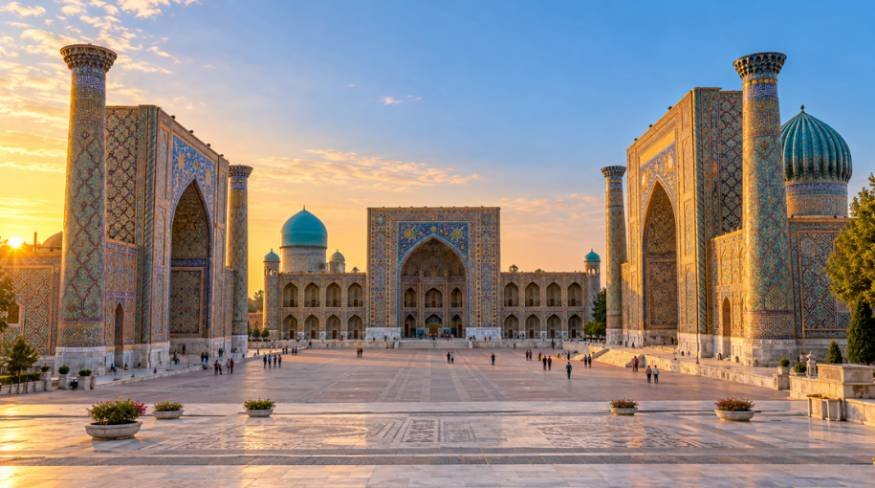
    The centerpiece is Registan Square, a public plaza framed by three towering madrasas: Ulugh Beg, Sher-Dor, and Tilla-Kari. While daytime crowds gather quickly, I found that visiting at 7:00 AM reveals the intricate lapis lazuli and gold leaf in peaceful silence. 

    Walk inside Tilla-Kari to inspect its trompe-l’œil ceiling; the gilded dome appears concave, yet sits entirely flat against the ceiling beams. Return after 8:30 PM, when warm floodlights bathe the monumental facades against the night sky.

    A twenty-minute stroll away lies the Shah-i-Zinda necropolis. This pedestrian avenue of mausoleums climbs up a hillside, housing the most vibrant mosaic tilework in Central Asia. Every archway showcases intricate variations of glazed earthenware, star-patterned relief work, and Quranic calligraphy.

    Directly across town, the Gur-i Amir mausoleum holds Timur’s jade tomb beneath a ribbed azure dome.

    ┌─────────────────────────────────────────────────────────────┐

    │ SAMARKAND AT A GLANCE                                       │

    │ • Best morning view: Shah-i-Zinda (early light on facades)   │

    │ • Best night view: Registan Square illumination             │

    │ • Essential snack: Samarkand non (dense, glazed bread)      │

    └─────────────────────────────────────────────────────────────┘

    Bukhara: Living Medieval Streets and Trade Domes

    Bukhara Living Medieval Streets and Trade Domes

    If Samarkand is a gallery of standalone monuments, Bukhara is an entire preserved ecosystem. Recognized as a premier UNESCO World Heritage Centre site, the historic center feels virtually untouched by the modern era.

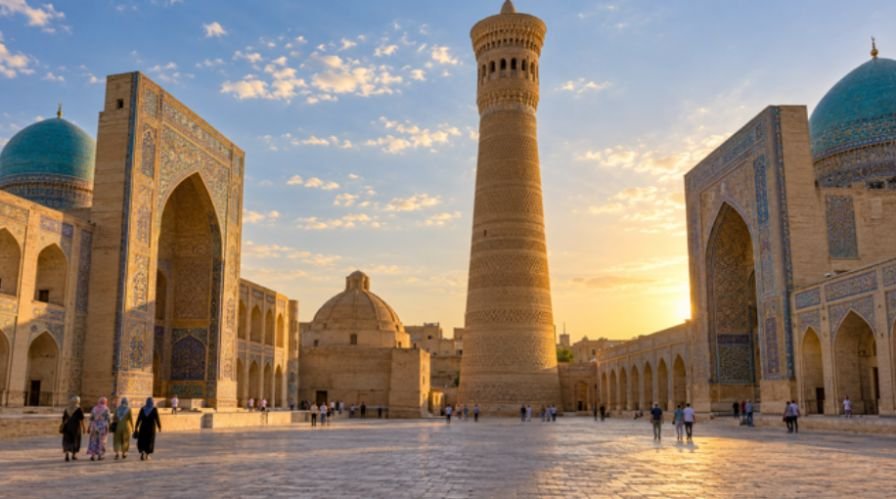
    Start your morning at the Po-i-Kalyan complex. Its centerpiece, the 157-foot Kalan Minaret, was completed in 1127. When Genghis Khan leveled Bukhara in 1220, local lore records that he gazed up at this banded relief brick tower and spared it from demolition. Stand directly below the baked-brick decorative rings to appreciate its geometric mastery.

    Wander westward into the historic domed trade markets, known locally as Toqi. Active merchants have hammered copper plates, woven wool carpets, and traded antique spices under these vaulted junctions for four centuries.

    Take a tea break at Lyabi-Hauz, a historic square centered around a tranquil stone pool shaded by ancient mulberry trees. Order hot green tea served in traditional ceramic pialas alongside dry fruits.

    Before sunset, climb the earthen ramparts of the Ark of Bukhara, a fifth-century city-within-a-city that served as the fortified residence for Bukhara’s emirs.

    Khiva: The Sun-Baked Fortress of Itchan Kala

    Khiva The Sun-Baked Fortress of Itchan Kala

    Located further west in the Khorezm region, Khiva requires more travel time, but rewards you with an open-air time capsule.

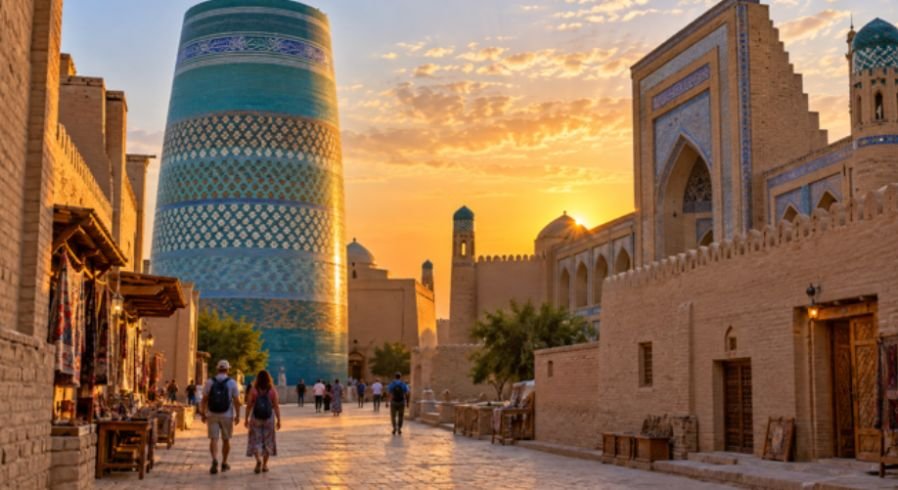
    The entire old quarter, named Itchan Kala, remains completely hemmed inside undulating mud-brick walls. Because vehicle traffic is banned inside the gates, you can explore the packed alleys entirely on foot.

    The primary visual anchor is the Kalta Minor Minaret. Commissioned in 1851, the ruler intended to build a minaret tall enough to survey the desert route to Bukhara. Construction halted abruptly upon his death, leaving a stout, turquoise-glazed cylinder that looks strikingly futuristic against its raw earthen surroundings.

    Make time for the Juma Mosque. Instead of traditional domed halls, its ceiling rests upon 218 individually carved elm columns, several dating back to the tenth century. For panoramic views, climb the watchtower atop the Kunya-Ark fortress just as dusk settles over the Karakum desert.

    Beyond the Glazed Domes: Modern Gateways and Craft Valleys

    Beyond the Glazed Domes Modern Gateways and Craft Valleys

    Many itineraries skip the modern capital and eastern valleys, missing critical chapters of the regional story.

    Tashkent: Soviet Metro Murals and Chorsu Chaos

    Tashkent is Central Asia’s main arrival hub. While reconstructed following a devastating earthquake in 1966, it balances grand Soviet planning with historic Silk Road relics.

    Descend into the Tashkent Metro, where each subterranean station functions as an underground palace decorated with carved alabaster, marble chandeliers, and ceramic cosmonaut tributes. 

    Above ground, head into the massive domed structure of Chorsu Bazaar. Beneath its turquoise concrete ribs, vendor stalls overflow with mountain pistachios, dried apricots, horse-meat sausage (qazi), and stacks of golden flatbreads fresh from clay tandoor ovens.

    In the old city quarter, the Hazrati Imam Complex houses the sacred seventh-century Uthman Quran, written upon deer parchment.

    Fergana Valley: Living Workshops of Ikat and Clay

    Travelers seeking traditional craftsmanship should take a train east into the Fergana Valley.

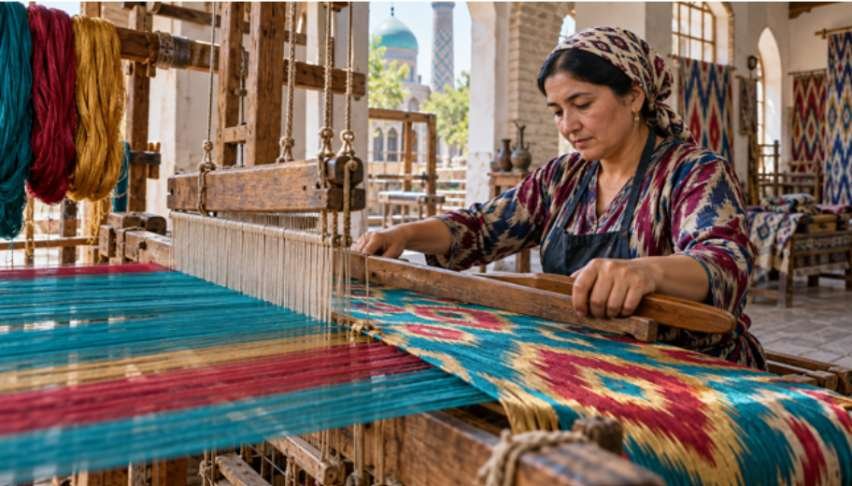
    In Margilan, the Yodgorlik Silk Factory preserves handmade silk production using centuries-old Ikat techniques. You can observe the manual boiling of silkworm cocoons, vegetable dyeing, and foot-pedal weaving. In nearby Rishtan, master potters shape local clay into ceramics glazed with distinct turquoise and sage pigments derived from natural plant ash.

    Navigating the Silk Road: Rail Secrets and Routing Logistics

    Getting between these desert cities is surprisingly modern. The high-speed Afrosiyob train connects Tashkent, Samarkand, and Bukhara at speeds reaching 155 mph.

    If you are incorporating Uzbekistan into a broader regional journey, this guide on how to create a two-week Asia travel itinerary can help you structure multiple destinations around realistic travel times and connections.

    ┌─────────────────────────────────────────────────────────────┐

    │ AFROSIYOB TRANSIT DURATIONS                                 │

    │ • Tashkent ➔ Samarkand: ~2 hours, 15 minutes                 │

    │ • Samarkand ➔ Bukhara:  ~1 hour, 30 minutes                 │

    │ • Bukhara ➔ Khiva:      ~6 hours (regional diesel train)    │

    └─────────────────────────────────────────────────────────────┘

    Train tickets open officially 45 days prior to departure on the Uzbekistan Railways Portal. Because seating capacity is low and tour operators book large blocks, tickets for peak spring and autumn dates often sell out within hours.

    Set a calendar reminder for 45 days out at midnight local time (UTC+5). If high-speed tickets are gone, check the conventional Sharq passenger train or hire a private vehicle via local services.

    Practical Rules for Central Asian Travel

    Independent travel in Uzbekistan is safe and welcoming. Because weather and seasonal conditions can significantly influence what you pack, where you travel, and how comfortably you explore, this guide on how to plan an Asia trip around monsoon seasons can help you account for regional weather patterns when preparing your itinerary.

    • Entry Regulations: Citizens of the United States can secure an electronic visa via the official government portal before departure. Confirm up-to-date entry rules via the U.S. Department of State Travel Advisory.
    • Payment Realities: Cash remains king in local bazaars and regional diners. Carry clean, uncreased U.S. dollar bills to exchange for Uzbek Som at bank kiosks. Visa and Mastercard work reliably in upscale Tashkent and Samarkand hotels.
    • Modesty and Footwear: Shrines and active mosques require covered shoulders and knees. Slip-on shoes save valuable time, as you will remove your footwear repeatedly when entering sacred prayer halls.
    • Culinary Staple: You cannot visit without sampling plov, the national dish of rice, braised beef, caramelized onions, carrots, and cumin simmered in massive cast-iron cauldrons.

    Frequently Asked Questions 

    1. What is the best month to visit Uzbekistan?

    April, May, September, and October offer mild temperatures that avoid freezing winters and scorching desert summer heat.

    2. How do I travel between Samarkand, Bukhara, and Khiva?

    Ride the high-speed Afrosiyob train between Samarkand and Bukhara, then take a regional train or private driver onward to Khiva.

    3. Is it safe to travel across Uzbekistan as an independent tourist?

    Uzbekistan ranks among the safest nations for foreign travelers, featuring dedicated tourist police and welcoming local hospitality.

    4. What should I wear when visiting mosques in Uzbekistan?

    Wear breathable pants or long skirts covering the knees, keep your shoulders covered, and bring socks for shoe-free interior carpets.

    Beyond the Turquoise Horizon: Your Next Step

    Uzbekistan rewards travelers who slow down and look past the initial dazzle of glazed tilework. The true pulse of the Silk Road lives in the laughter echoing across communal tea houses, the smoky aroma of cumin drifting from neighborhood tandoors, and the quiet dignity of desert fortresses standing against shifting sands.

    Lock in your train tickets early, pack a sturdy pair of slip-on shoes, and prepare for one of the world’s great overland journeys.

  • Best Island Destinations in the Philippines: A Field Guide

    Best Island Destinations in the Philippines: A Field Guide

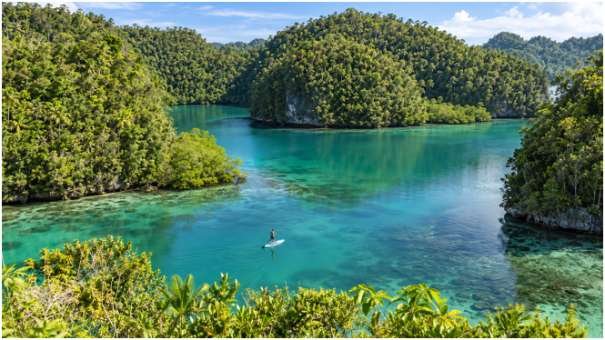
    Island hopping across the Sulu Sea taught me that paradise demands practical planning. Finding the best island destinations in the philippines is less about ticking off 7,641 islands and more about understanding how water and wind dictate your schedule.

    Too many travelers lose half their vacation stuck in airport security lines in Manila or trapped on bumpy vans. Having navigated this archipelago by outrigger bancas, ferries, and propeller planes, I learned that grouping islands by geographic sub-regions turns a chaotic journey into an effortless tropical adventure.

    Navigating the Philippine Archipelago: Real Logistics First

    The biggest mistake first-time travelers make is treating the Philippines like a compact cluster. The archipelago spans three major island groups: Luzon in the north, the Visayas in the center, and Mindanao in the south.

    Connecting between these regions often requires routing back through congested aviation hubs. When selecting historic cities to visit as transit waypoints, prioritize secondary gateways like Cebu (CEB) or Clark (CRK) over Manila (MNL) whenever possible to sidestep multi-hour runway delays.

    Balancing Domestic Flights vs. Fast Ferry Connections

    Flying between every single stop eats your daylight. If an island pair has a direct, reliable maritime connection, take the water route. The Philippine Department of Tourism actively promotes regional maritime connectivity, and local operators like OceanJet run frequent daily departures that connect major provincial hubs cleanly.

    A two-hour open-air catamaran ride beats a six-hour domestic flight sequence involving check-in windows, baggage checks, and tarmac holds.

    Palawan: Dramatic Limestone Karsts and Sunken Relics

    Palawan: Dramatic Limestone Karsts and Sunken Relics

    Palawan consistently ranks among the world’s premier island provinces, and its reputation is entirely earned. Jagged black limestone cliffs rise straight out of emerald water, hiding underwater caves and coral gardens. It easily houses some of the top scenic destinations in Southeast Asia.

    El Nido: Navigating Bacuit Bay’s Hidden Lagoons

    El Nido centers on the dramatic formations of Bacuit Bay. Standardized boat tours categorize the sights into Tours A, B, C, and D, but Tour A (Big Lagoon, Secret Lagoon) and Tour C (Hidden Beach, Shrine Island) remain the heavyweights.

    Gliding a sit-on-top kayak through the narrow opening of the Big Lagoon surrounded by sheer karst walls feels unreal. To experience these sites without dodging fifty other tour groups, hire a private banca and leave the dock by 7:30 AM, an hour ahead of the commercial flotilla.

    If you venture south toward Puerto Princesa, you can explore the famous underground river, recognized globally by the UNESCO World Heritage Centre for its navigable cavern ecosystem.

    Coron: Shipwreck Diving and Unfiltered Waters

    Coron sits north of mainland Palawan and offers a distinctly wilder edge. While El Nido wins on dramatic cliffs, Coron takes the crown for aquatic clarity and historical diving.

    In Coron Bay, a dozen Japanese World War II supply ships rest within recreational diving depths. Descending into the cargo hold of the Tangat or Olympia Maru, surrounded by black coral and schooling batfish, is humbling. For non-divers, Kayangan Lake provides brackish, glass-like water filtered naturally by surrounding limestone mountains.

    The Central Visayas: High Adrenaline and Wildlife

    The Central Visayas delivers the most logistically sound pairing for a 7-to-10-day trip. You swap domestic airports for short ferry rides while pairing open-ocean adventures with unique inland ecology.

    Cebu: Shoreline Sardines and Deep Canyons

    Cebu: Shoreline Sardines and Deep Canyons

    Cebu acts as both an international entry port and a launchpad for raw adventure. Skip urban Cebu City and head directly southwest along the coastal highway to Moalboal.

    At Panagsama Beach, you do not need a tour boat to see the famed sardine run. Simply don a mask and swim thirty yards off the sand. The sea floor drops into a deep wall where millions of sardines pulse in unison, frequently joined by feeding green sea turtles.

    An hour south lies Badian, where you can spend a morning canyoneering through the turquoise water and limestone jumps of Kawasan Falls.

    Bohol: Geological Anomalies and River Life

    A direct two-hour ferry ride from Cebu City lands you at Tagbilaran Port in Bohol. The contrast in landscape is immediate.

    Head inland to Carmen to stand before the Chocolate Hills: more than 1,200 conical mounds that turn cocoa-brown during dry periods. Stop at the Philippine Tarsier Sanctuary in Corella to spot nocturnal primates clinging quietly to leafy branches.

    Base yourself on Panglao Island, connected to mainland Bohol by bridges, to stage early-morning boat runs out to Balicasag Island’s marine sanctuary.

    Boracay: Fine Sand Meets Polished Convenience

    Boracay: Fine Sand Meets Polished Convenience

    Boracay is built for uncomplicated rest. The island measures just four miles long, but its signature White Beach remains legendary for good reason. The sand is exceptionally cool, white, and talcum-soft underfoot, remaining comfortable even under intense midday sun.

    Boracay operates more like a walkable beach town than an isolated wilderness. Station 1 houses quiet, high-end beachfront resorts; Station 2 bustles with open-air dining and night markets; and Station 3 caters to budget travelers and dive shops.

    If you want world-class sunset sailing on an unmotorized paraw followed by great dining without packing your bags every forty-eight hours, Boracay delivers.

    Siargao: Surf Breaks and Bohemian Outposts

    Siargao: Surf Breaks and Bohemian Outposts

    Siargao sits off northeastern Mindanao, shaped by heavy Pacific swells and a thriving café culture. The timber boardwalk of Cloud 9 remains the epicentre of Philippine surfing, offering hollow, barrelling right-hand reef breaks.

    The island’s appeal stretches far beyond wave riders. Renting a scooter to navigate the coconut palm corridors of the north reveals a different pace entirely.

    Spend an afternoon floating in the natural tidal pools of Magpupungko at low tide, or take a day cruise to Sugba Lagoon to paddleboard through quiet mangrove waters. Siargao retains an unhurried, community-led pulse that makes departures remarkably difficult.

    Realistic Transit Matrix: What Guidebooks Skip

    Planning multi-destination trips across the Philippines requires respecting physical transit days. A domestic flight does not simply consume an hour; door-to-door, it consumes five.

    Route Combination Transit Method Real Door-to-Door Time Friction Level
    Cebu to Bohol OceanJet Fast Ferry 2.5 to 3.5 hours total Low (Walk-on boarding)
    El Nido to Coron High-speed ferry 4.5 to 5.5 hours total Moderate (Sea-swell dependent)
    Cebu to Siargao Direct domestic prop flight 4.0 to 5.0 hours total Low (Airport waiting)
    Boracay to El Nido Flight via Manila or direct charter 5.0 to 8.0 hours total High (Flight connections/layovers)
    Cebu to Moalboal Overland private car/bus 3.5 to 4.5 hours total Moderate (Provincial traffic)

    Frequently Asked Questions About Philippine Islands

    1. When is the ideal season to tour the islands?

    Target the dry season between December and April, when calm seas simplify ferry transit and diving visibility peaks.

    2. Which island destination is best for absolute beginners?

    Boracay offers the smoothest experience with modern amenities, walkable beaches, and direct infrastructure requiring zero technical transit.

    3. How many islands should I plan to visit in ten days?

    Stick to a maximum of two island bases to avoid spending your vacation in transit halls and ferry docks.

    4. Do I need physical cash on the smaller islands?

    Yes, bring plenty of Philippine Pesos because ATMs on islands like Siargao and Coron frequently run out of bills or lose network power.

    Ditch the Over-Packed Itinerary and Anchor Down

    The secret to exploring the best island destinations in the philippines is pruning your travel bucket list ruthlessly. Rather than racing through five different airports to check off names, pick one complementary pairing like Cebu and Bohol, or El Nido and Coron. Anchor down, learn the local tide charts, and let the rhythm of the Visayan tides set your pace.

  • Best Hill Stations to Visit in Southern India: An Expert Travel Guide

    Best Hill Stations to Visit in Southern India: An Expert Travel Guide

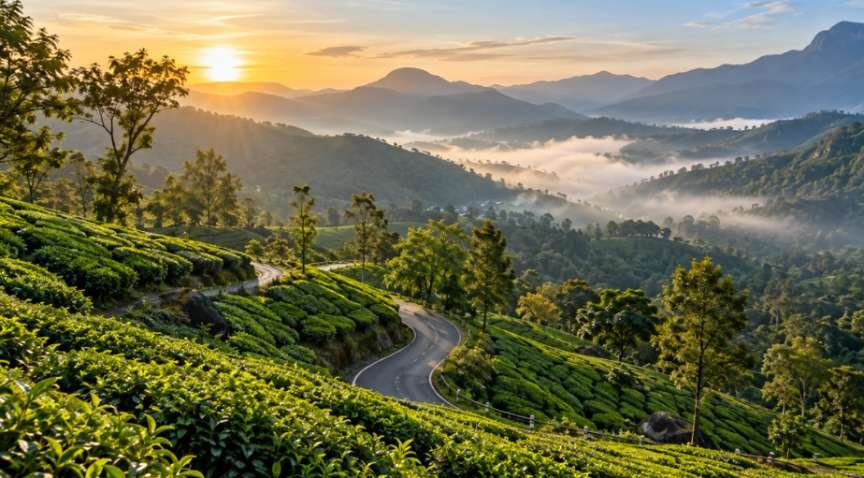
    Rolling mist over emerald tea slopes clears the mind faster than any meditation retreat. Southern India’s high-altitude ridges offer dramatic relief from the tropical heat below. I spent years navigating the winding switchbacks of the Western and Eastern Ghats, and the terrain never ceases to amaze me.

    Identifying the best hill stations to visit in southern india comes down to balancing classic colonial heritage, wildlife corridors, and accessible mountain trails.

          [COIMBATORE (CJB)]                     [KOCHI (COK)]

                   |                                    |

            3.5 hrs drive                        4 hrs drive

                   v                                    v

         Ooty (Nilgiris, TN)                   Munnar (Idukki, KL)

           Elev: 7,350 ft                        Elev: 5,250 ft

    The High-Altitude Heavyweights: Tea Estates and Forest Trails

    The spine of the Western Ghats hosts the region’s three most celebrated mountain retreats. Each offers a distinct elevation, ecosystem, and regional flavor.

    If you are comparing destinations across the region before narrowing your itinerary, this guide on how to choose which Asian countries to visit provides broader context for evaluating different travel options.

    Munnar: Endless Tea Ridges and Cloud Forests

    Munnar Endless Tea Ridges and Cloud Forests

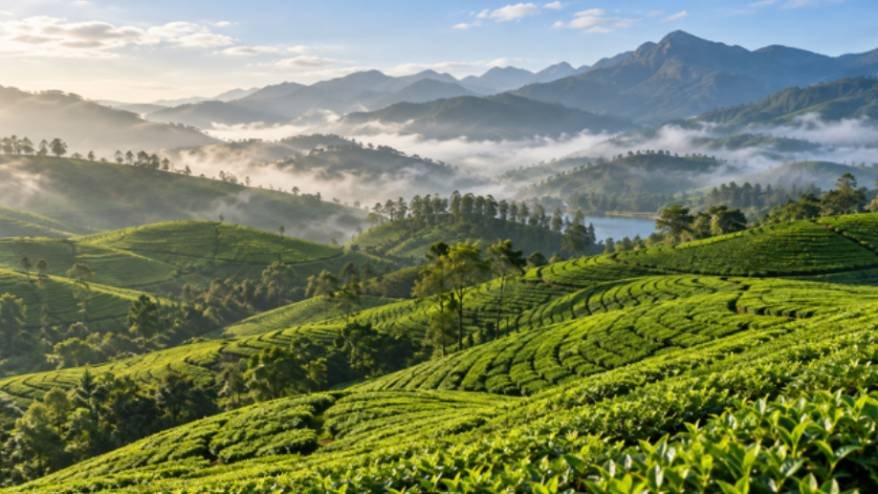
    Munnar sits at 5,250 feet in Kerala’s Idukki district. The slopes here resemble manicured emerald waves, blanketed in tea gardens established by British planters in the late 19th century.

    My favorite mornings in Munnar start along the craggy ridgelines of Eravikulam National Park, where I track the endangered Nilgiri Tahr navigating shear granite cliffs. Anamudi, South India’s tallest peak, towers above the plateau at 8,842 feet.

    Driving eastward brings you past Mattupetty Dam toward Top Station. The viewpoint perches on the border of Tamil Nadu, opening up panoramic drops into the lowlands. For lunch in Munnar town, grab flaky Malabar parottas with spicy pepper chicken at a local canteen. The meal costs under $3.

    Ooty: Heritage Rails and Mountain Charm

    Ooty Heritage Rails and Mountain Charm

    Udhagamandalam, universally known as Ooty, sits at 7,350 feet in Tamil Nadu’s Nilgiri Hills. It has served as a mountain refuge since John Sullivan established the British settlement in 1819.

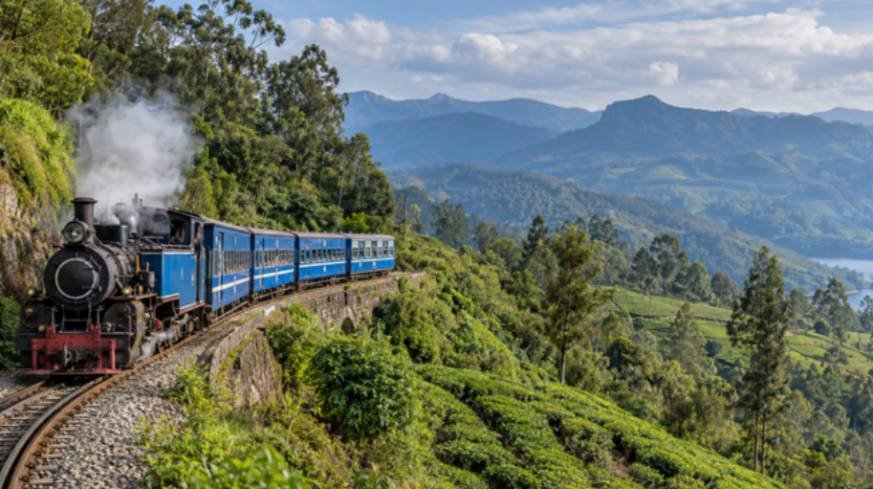
    The undisputed highlight is the Nilgiri Mountain Railway, a designated UNESCO World Heritage site. This meter-gauge rack railway uses a Swiss-engineered Abt system to climb past ravines, tunnels, and eucalyptus forests.

    Tickets sell out weeks ahead on the IRCTC ticketing portal; secure first-class tickets early to guarantee window views.

    Ooty can feel commercialized around the main artificial lake. I prefer retreating to the Government Botanical Garden, established in 1848, or driving up to Doddabetta Peak for sweeping vistas across the blue Nilgiri range.

    Kodaikanal: Lakeside Serenity and Cliffside Walks

    Kodaikanal Lakeside Serenity and Cliffside Walks

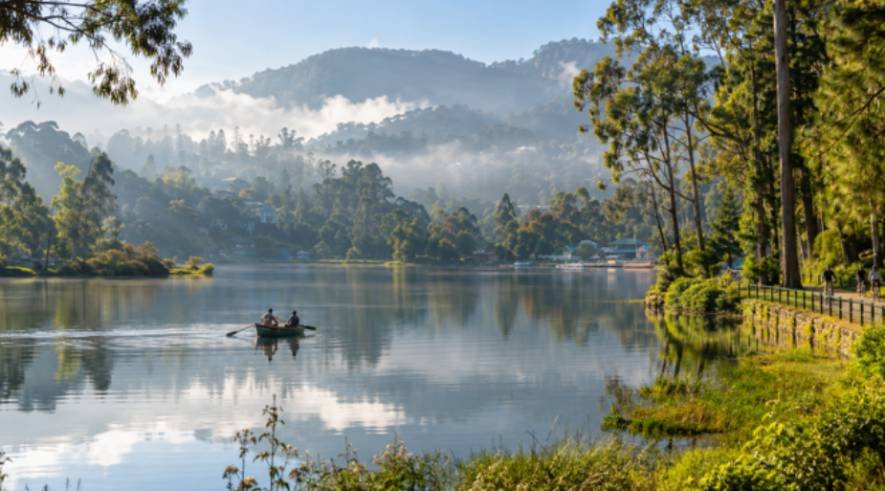
    Perched at 7,000 feet in the Palani Hills, Kodaikanal feels intimate and pedestrian-friendly. A star-shaped lake anchors the town, framed by eucalyptus groves, weeping willows, and pine forests.

    I always rent an upright bicycle to circle the 3-mile lake perimeter before midday crowds assemble. Walk along Coaker’s Walk, a paved pedestrian pathway constructed along a steep southern ridge that looks out across the plains below. When dense fog rolls in, head to the dramatic vertical granite pillars at Pillar Rocks. Warm up afterward with hot handmade chocolate and spiced tea from local bakeries.

    +——————–+————-+————+————————————-+

    | Hill Station       | State       | Elevation  | Defining Characteristic             |

    +——————–+————-+————+————————————-+

    | Munnar             | Kerala      | 5,250 ft   | Sprawling tea estates & wildlife    |

    | Ooty               | Tamil Nadu  | 7,350 ft   | Heritage steam railway & gardens    |

    | Kodaikanal         | Tamil Nadu  | 7,000 ft   | Walking trails & forested lake      |

    | Yelagiri           | Tamil Nadu  | 3,640 ft   | Low-key hiking & rural orchards     |

    | Horsley Hills      | Andhra Pr.  | 4,230 ft   | Panoramic sunrise cliffs & quiet    |

    +——————–+————-+————+————————————-+

    Serene Weekend Escapes: Off-the-Beaten-Path Getaways

    Serene Weekend Escapes Off-the-Beaten-Path Getaways

    Travelers looking to bypass high-season traffic jams will appreciate the quieter valleys in the Eastern Ghats.

    Yelagiri: The Low-Key Trekking Plateau

    Yelagiri sits at 3,640 feet in northern Tamil Nadu. Reached by navigating 14 sharp hairpin bends, it maintains a quiet, agricultural atmosphere.

    The primary attraction is the Swamimalai trek, a gentle 2.5-mile round-trip trail leading to the area’s highest vantage point. The summit provides broad valley vistas without tour bus congestion. The plateau also features fruit orchards, rose gardens, and silk-farm cooperatives that welcome curious visitors.

    Horsley Hills: Quiet Sunrises and Ancient Groves

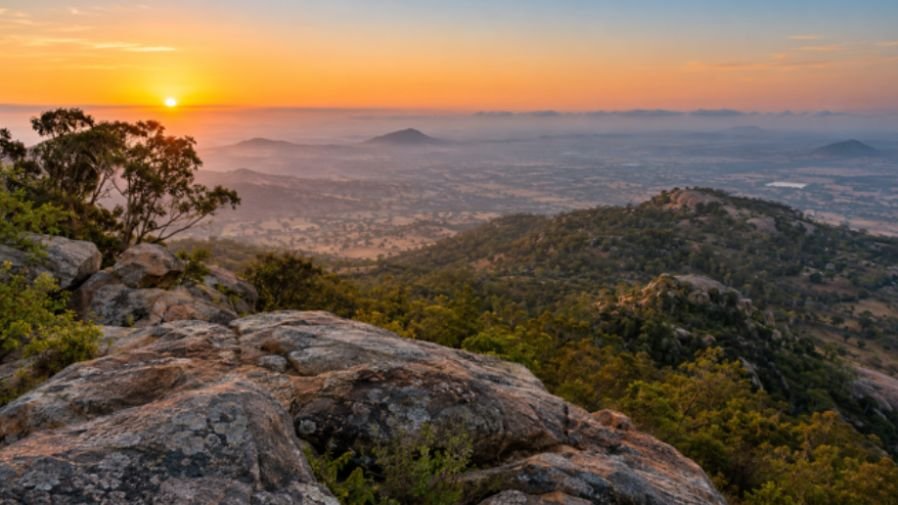
    Situated in Andhra Pradesh, Horsley Hills rises 4,230 feet above the surrounding dry plains. British collector W.D. Horsley selected the site as his summer residence in 1870.

    The town remains compact and unhurried. The main draw is Sunrise Point, where cool winds sweep up the cliffs as dawn illuminates the valley. Century-old eucalyptus trees shade the pathways, and the local environmental park preserves diverse native flora. It provides an ideal one-night escape from Bangalore or Chennai.

    Planning Your Route: Estimated Costs and Travel Logistics in USD

    South India offers exceptional value for North American visitors. You can tailor your journey from budget homestays to five-star heritage tea bungalows.

    If regional cuisine is part of your itinerary, a southern food road trip can also complement a hill-station route by adding local culinary stops between mountain destinations.

          [TYPICAL DAILY EXPENSE DISTRIBUTION (COMFORT TIER)]

           Accommodation (Heritage Stay) : $90  (53%)

           Private Chauffeur / Fuel      : $45  (26%)

           Dining & South Indian Meals   : $25  (15%)

           Park Permits & Entry Tickets  : $10  (6%)

    Daily Travel Expenses by Tier (USD)

    The table below outlines realistic daily budgets per person based on current travel costs:

    Expense Category Budget Tier (USD) Comfort Tier (USD) Luxury Tier (USD)
    Boutique Hotel / Heritage Stay $25 – $40 $60 – $110 $180 – $350+
    Private Sedan & Driver (Daily) $35 – $45 $45 – $60 $75 – $100 (SUV)
    Daily Meals & Specialties $8 – $15 $18 – $30 $40 – $75
    Entry Permits & Heritage Fees $3 – $6 $8 – $15 $20 – $40
    Total Daily Estimate (Per Person) $71 – $106 $131 – $215 $315 – $565+

    Note: Budget calculations assume two travelers sharing private ground transportation costs.

    Transit Routes and Airport Connections

    Hiring an air-conditioned car with an experienced driver represents the most efficient way to navigate the steep ghat roads. You can book authorized stays and regional transport via Tamil Nadu Tourism.

    Destination Primary Gateway Airport Drive Distance & Time Road Condition & Terrain
    Munnar Cochin International (COK) 68 miles (4.0 hrs) Paved mountain passes, waterfalls
    Ooty Coimbatore Airport (CJB) 53 miles (3.5 hrs) 36 hairpin turns via Kallar ghat
    Kodaikanal Madurai Airport (IXM) 75 miles (3.5 hrs) Winding forest ascent, good asphalt
    Yelagiri Bengaluru Airport (BLR) 105 miles (3.5 hrs) High-speed highway to 14 hairpin bends
    Horsley Hills Bengaluru Airport (BLR) 90 miles (3.0 hrs) Scenic countryside, gentle final climb

    Frequently Asked Questions 

    1. Which is the best hill station to visit in southern India for couples?

    Munnar is the premier choice for couples due to its private tea-estate cottages, misty mountain ridges, and secluded waterfall drives.

    2. What is the best time of year to visit these mountain towns?

    October through March offers clear blue skies, comfortable daytime temperatures near 68°F (20°C), and brisk, cool evenings.

    3. Are roads safe for self-driving in the Western Ghats?

    Hiring a local professional chauffeur is strongly recommended due to single-lane switchbacks, blind curves, and wandering wildlife.

    4. How many days should I spend at each destination?

    Plan for three full days in larger hubs like Munnar or Ooty, and one to two days for compact retreats like Yelagiri.

    Pack Your Fleece and Hit the Ghats

    Mountain roads in South India reward slow, intentional travel. Book your stays early if visiting between October and January, pack warm layers for crisp mountain nights, and reserve a private driver who knows how to handle the ghats. Your first sunrise over the tea valleys will justify every twist in the road.

  • Culinary Road Trips Across America: 7 Food Routes Worth Driving

    Culinary Road Trips Across America: 7 Food Routes Worth Driving

    Some of my favorite American trips start with a map but end up being remembered through food. I may plan around scenic highways and historic towns, yet it is usually the smoked brisket, coastal seafood, local cheese, warm biscuits, or chile-covered enchiladas that stay with me longest.

    The best culinary road trips in the USA do more than connect restaurants. They reveal how geography, agriculture, immigration, and local traditions shape the way different regions eat. If I am building a food-focused road trip, I want a route that mixes iconic dishes with smaller discoveries and gives me enough time to enjoy both.

    Which Lowcountry Food Road Trip Connects Charleston and Savannah?

    For historic Southern streets, fresh seafood, and soulful comfort food, I would drive from Charleston, South Carolina, through Beaufort and finish in Savannah, Georgia.

    Charleston is the natural place to begin. Lowcountry cuisine here is closely associated with shrimp and grits, she-crab soup, fried green tomatoes, rice dishes, and seafood influenced by the surrounding coast. 

    The city also makes a strong base for farm-to-table culinary experiences that connect local ingredients with regional cooking traditions. Explore Charleston highlights include shrimp and grits and she-crab soup among the city’s signature foods.

    From Charleston, US-17 carries the trip south toward Beaufort before reaching Savannah. Once there, I would shift toward Southern soul food, coastal catches, and Lowcountry boil. Savannah’s tourism resources specifically highlight traditional Southern cooking and coastal dishes, including the Lowcountry boil served around nearby Tybee Island.

    This route works especially well over three days because the historic districts deserve almost as much attention as the meals.

    What Should I Eat on a Central Texas BBQ Road Trip?

    What Should I Eat on a Central Texas BBQ Road Trip?

    If barbecue is the main reason for the trip, Central Texas deserves its own route. I would start in Austin, drive south toward Lockhart, and curve west toward Driftwood.

    Austin combines modern craft barbecue with another local obsession: breakfast tacos. Visitors can start the morning with tortillas filled with eggs, beans, cheese, chorizo, or migas before moving on to brisket later in the day. Visit Austin describes both barbecue and breakfast tacos as essential parts of the city’s food culture.

    Lockhart offers a more old-school experience. Historic meat-market-style barbecue emphasizes brisket and sausage served simply, often on butcher paper with uncomplicated sides. Driftwood changes the atmosphere again with large-scale open-pit barbecue traditions that turn the cooking process itself into part of the experience.

    I would allow two or three days and avoid scheduling several heavy barbecue meals back-to-back. The best food road trips still need breathing room.

    Is California’s Wine Country and Coast Worth a Culinary Road Trip?

    California may offer the widest mix of fine dining, wine, seafood, agriculture, and coastal scenery on one itinerary.

    I would begin in San Francisco, where sourdough, Dungeness crab, Chinatown dim sum, farmers market produce, and neighborhood restaurants provide plenty of variety. From there, I would head north toward Napa Valley and Yountville for wine-country dining and polished tasting menus built around seasonal California ingredients.

    Then I would double back toward the coast and follow Highway 1 south toward Carmel and Big Sur. Michelin’s 2026 culinary itinerary describes Highway 1 as a food-and-wine route shaped by coastal farms, vineyards, seafood, and ingredient-driven restaurants, with Big Sur forming one of its most dramatic stretches.

    This is where I would deliberately mix high and low: one elaborate tasting menu in wine country, then a casual roadside stop for chowder or seafood with an ocean view.

    Where Can I Experience Cajun and Creole Food by Car?

    Louisiana deserves several meals, not just one dinner in New Orleans.

    I would begin in New Orleans with gumbo, jambalaya, po’boys, red beans and rice, beignets, and Creole seafood dishes. From there, I would head west through Baton Rouge toward Lafayette and Cajun Country.

    The food gradually changes along the way. Boudin, cracklins, crawfish étouffée, smoked sausage, rice dishes, and roadside specialties become increasingly important as the trip moves toward Acadiana.

    Four days is a comfortable minimum. I prefer leaving space for bakeries, markets, small family restaurants, and unexpected roadside stops instead of reserving every meal at a famous address.

    Can I Build a New Mexico Road Trip Around Chile?

    Can I Build a New Mexico Road Trip Around Chile?

    Yes, and it is one of the most distinctive regional food journeys in the Southwest.

    I would connect Santa Fe, Albuquerque, and Hatch while exploring dishes built around red and green chile. Enchiladas, posole, blue corn preparations, sopaipillas, and roasted chile become recurring themes without making each meal feel identical.

    Hatch is especially important because New Mexico tourism identifies it with chile production and its annual Hatch Chile Festival. During harvest season, roasted chile becomes part of the sensory experience throughout town.

    For me, this is one of the culinary road trips in the USA where agriculture and local identity are impossible to separate.

    What Is the Classic New England Seafood Road Trip?

    For lobster, chowder, oysters, and waterfront towns, I would travel north from Boston toward Portland and continue along coastal Maine.

    Boston makes an easy starting point, but Portland is where I would slow down. Maine’s official tourism site specifically encourages visitors to sample lobster throughout Portland’s working waterfront, including lobster rolls and full lobster dinners.

    Continue beyond Portland into smaller coastal communities for lobster shacks, clam dishes, oysters, and fresh fish. Late spring through early fall usually gives travelers the broadest mix of seafood experiences and seasonal coastal businesses.

    Is Wisconsin Good for a Cheese and Supper Club Road Trip?

    Wisconsin is one of the country’s most underrated food-road-trip destinations.

    A route through Milwaukee, Madison, rural cheese country, and smaller lake communities can combine cheese curds, bratwurst, local dairy products, Friday fish fries, and classic supper clubs.

    Travel Wisconsin describes supper clubs as a defining local tradition centered around relaxed dining, prime rib, fried fish, baked potatoes, relish trays, and Old Fashioneds. The state’s tourism site also promotes artisan cheese shops, cheese curds, farms, and cheese-focused travel experiences.

    I like this route because it proves that memorable regional cuisine does not have to mean white-tablecloth dining.

    How Do I Plan a Better Food Road Trip?

    How Do I Plan a Better Food Road Trip?

    I book the icons early. Famous tasting menus and in-demand restaurants can require reservations, while popular barbecue spots may sell out before evening.

    At the same time, I never reserve every meal. The most memorable stop may be a peach cobbler stand in Georgia, a roadside seafood shack, a neighborhood bakery, or a farm shop I did not know existed.

    I also mix expensive and inexpensive meals. A serious culinary trip can include a tasting menu one night and butcher-paper barbecue the next afternoon.

    Finally, I keep driving distances realistic. A food trip becomes exhausting when every meal requires several hours behind the wheel.

    Frequently Asked Questions (FAQs)

    1. What are the best culinary road trips in the USA for first-time travelers?

    Texas barbecue, the Lowcountry between Charleston and Savannah, California’s wine-and-coast route, Louisiana’s Cajun corridor, and New England’s seafood coast are excellent starting points because each has a clear regional food identity.

    2. How many days should I allow for a food road trip?

    Three to five days works well for most regional itineraries. Longer coastal or multi-state routes usually feel more comfortable with five to seven days.

    3. Should I reserve restaurants before a culinary road trip?

    Reserve destination restaurants and tasting menus early, but keep some meals open for local discoveries. Many casual places and roadside stands work better spontaneously.

    4. What makes a good American food road trip?

    The strongest routes combine regional specialties, local producers, historic food traditions, manageable driving distances, and a mix of famous restaurants and everyday places locals actually use.

    A Final Bite Before You Hit the Road

    For me, a memorable food trip is never only about finding the most famous restaurant. It is about watching flavors change as the highway moves from one landscape to another. That sense of discovery is what makes food road trips in the USA so appealing.

    When I balance iconic meals with roadside discoveries, allow enough time between stops, and choose routes with a strong local food identity, the journey feels richer. That is what makes food-focused travel across America so rewarding.

  • Living Heritage Experiences Across Asia for Travelers Seeking Authentic Culture

    Living Heritage Experiences Across Asia for Travelers Seeking Authentic Culture

    I have found that memorable trips often begin when I stop trying to see everything. A conversation with a shopkeeper, the smell of rice steaming in a family kitchen, or the sound of a loom behind an open doorway can reveal more than rushing between landmarks. These ordinary moments carry stories visitors rarely encounter on a standard sightseeing route.

    I also notice that cultural experiences feel more meaningful when local people shape them. Watching a craft demonstration is interesting, but learning why a pattern matters adds another layer. Living heritage experiences across Asia invite travelers to learn through daily customs, traditional skills, food, celebrations, and shared community spaces.

    What Makes Heritage Feel Alive?

    Living heritage is culture practiced, taught, and adapted by people today. It includes weaving, seasonal festivals, songs, family recipes, religious observances, and knowledge used to build traditional homes. These traditions depend on people using and passing them on.

    A historic building shows how a community lived in the past, while an artisan reveals how it continues to change. Traditions are not frozen in time. Makers experiment with materials, younger generations adapt designs, and ceremonies respond to changing circumstances while retaining meaningful elements.

    Experiences That Bring Asia’s Traditions Closer

    Experiences That Bring Asia’s Traditions Closer

    Japan: Craft, tea, and hospitality

    In Kyoto, a stay at a traditional inn, or ryokan, introduces travelers to customs surrounding hospitality, seasonal meals, and architecture. A tea ceremony offers another window into Japanese culture. Its careful movements reflect years of practice and ideas about respect and concentration.

    Local studios may offer pottery, textile, or other regional craft workshops. Choose sessions led by working craftspeople, and ask before photographing their work. A short class can reveal the patience behind an object.

    Indonesia: Batik and carved traditions

    Yogyakarta is associated with batik, a textile tradition in which wax resists dye to create intricate patterns. In a workshop, travelers see how designs emerge through repeated steps. Patterns may carry regional meanings, so asking about them can turn a souvenir stop into a real exchange.

    Bali is known for woodcarving and artistic practices connected to local belief. Seek workshops that explain who makes each piece and how skills are learned. Buying directly from an artisan or cooperative can help keep traditional work viable.

    Laos: Understanding a sacred morning ritual

    In Luang Prabang, the morning alms-giving ceremony, known as Tak Bat, is a Buddhist practice with deep religious significance. It is not a performance staged for tourists. Keep a respectful distance, dress modestly, stay quiet, and avoid flash photography or stepping into the monks’ path. If you do not understand the custom, observe rather than join in.

    Vietnam: Skills passed between generations

    In Hanoi and Hoi An, travelers can look for workshops involving pottery, silk, lacquer, and other regional crafts. Demonstrations become more rewarding when makers explain the tools and decisions behind each stage. Producing a finished item can require years of practice.

    For visitors interested in Vietnam’s disappearing craft traditions and artisan villages, meet craftspeople as skilled professionals, not attractions. Ask whether beginners are welcome and whether the fee supports the maker. Some traditions face pressure from factory goods and fewer apprentices, while communities are finding new audiences and adapting their work.

    Bhutan: Festivals and community life

    In Bhutan, local festivals may bring together masked dances, music, religious observances, and neighbors dressed for the occasion. Archery matches and rural hospitality offer insight into social life. Dates vary, and some ceremonies have access rules, so check arrangements with local hosts.

    How to Travel With Respect

    Good cultural travel begins before arrival. Learn a few greetings, check clothing expectations, and ask permission before photographing people, homes, ceremonies, or workshops. A public event does not mean everyone welcomes close-up photography. During religious observances, follow local hosts and avoid interrupting the practice.

    Choose small-group experiences where residents set the terms and receive fair payment. Ask what the fee includes and whether the activity supports a community organization. When shopping, find out who made an item and how it was produced. Bargaining aggressively over handmade work can undermine the skills that attracted you.

    For travelers drawn to Thailand’s local festivals and traditional community culture, planning around a regional celebration can be rewarding when the visit respects local schedules. Festivals are living events, not guaranteed shows, and dates can change. Follow local guidance and remember that residents attend for reasons beyond tourism.

    Why Supporting Living Heritage Matters

    Why Supporting Living Heritage Matters

    Traditional knowledge survives when people have opportunities to pass it on. Paying for a workshop, buying directly from a maker, or booking a community-run tour can contribute. It does not guarantee a tradition will continue, but it can create demand for skills that take time to learn.

    Communities may change traditions, share them selectively, or move them into new settings. Respect means accepting those choices instead of expecting every encounter to match a romantic idea of the past.

    The Memories That Travel Home

    The strongest cultural encounters leave you noticing details you once overlooked: the labor behind woven cloth, the care involved in preparing tea, or the coordination of a neighborhood festival. These details make a destination more than a collection of sights. They show how people create meaning through shared knowledge and relationships across generations.

    You do not need to master a craft or join every ceremony. Arrive thoughtfully, pay fairly, ask good questions, and leave room for local life to unfold without you.

    FAQs: Living Heritage Experiences Across Asia for Travelers Seeking Authentic Culture

    1. What does living heritage mean?

    Living heritage includes traditions practiced and passed between generations, such as crafts, foodways, festivals, music, rituals, and local knowledge. These traditions remain meaningful because communities continue to use and adapt them.

    2. How can I find authentic cultural experiences?

    Look for community-run tours, working artisan studios, small workshops, and local guides who explain the people and practices behind an experience. Ask who leads the activity and how residents benefit.

    3. Is it respectful to photograph ceremonies?

    Ask first and follow local guidance. Some ceremonies restrict photography, and visitors should never interrupt participants, block a ritual, or treat worship as a staged performance.

    4. How can travelers support traditional artisans?

    Book workshops directly when possible, buy items from their makers, and pay fair prices. Ask about materials and production methods, and remember that handmade work reflects time, skill, and knowledge.

  • New Mexico Food Road Trip: A 7-Day Chile-Fueled Adventure

    New Mexico Food Road Trip: A 7-Day Chile-Fueled Adventure

    The first sign that I am eating my way across New Mexico is not a restaurant sign. It is the smoky aroma of roasting green chile drifting across a roadside parking lot. From there, the journey becomes a succession of blue corn, red chile, handmade tortillas, slow-braised pork, historic diners, and green chile cheeseburgers.

    For me, a food road trip through New Mexico works best as a seven-day drive from the chile country of southern New Mexico toward the mountain communities of the north. Rather than collecting random restaurants, this route follows the changing character of New Mexican cuisine through Las Cruces, Hatch, San Antonio, Albuquerque, Santa Fe, Chimayó, and Taos.

    Days 1–2: What Should You Eat in Las Cruces, Hatch, and San Antonio?

    Southern New Mexico is where I want to start because chile feels inseparable from the agricultural landscape. The heat can be serious, the restaurants are often refreshingly casual, and some of the state’s most recognizable foods make sense once I see where the peppers grow.

    Near Las Cruces, Chope’s Town Cafe in La Mesa is the kind of stop that turns a meal into a destination. I would order a chile relleno: a pepper stuffed with cheese, battered, fried, and served with the kind of chile heat that makes southern New Mexico memorable.

    I would also make room for Hatch rather than driving straight north. The village sits in the famous Hatch Valley, and New Mexico Tourism describes harvest time as a season when visitors can hear chile skins roasting and smell the peppers throughout town. The annual Hatch Chile Festival takes place around Labor Day, making late summer particularly appealing for chile-focused travelers.

    From Hatch, I would continue north toward San Antonio for one of the state’s great roadside traditions: the green chile cheeseburger. The Owl Bar & Cafe is specifically promoted by New Mexico Tourism for its green chile cheeseburgers. Across this small community, the long-running burger culture also makes the Buckhorn Tavern a natural comparison stop.

    Days 3–4: Where Should Food Lovers Eat in Albuquerque?

    Where Should Food Lovers Eat in Albuquerque?

    Albuquerque changes the mood completely. Route 66 diner culture, Pueblo food traditions, neighborhood institutions, and contemporary restaurants meet in New Mexico’s largest city.

    Mary & Tito’s Cafe is where I would go when carne adovada becomes the priority. The James Beard Foundation recognized the restaurant as an America’s Classics winner in 2010 and highlighted its long-braised pork in red chile. The restaurant dates to 1963, giving the meal a sense of Albuquerque history as well as flavor.

    Duran Central Pharmacy provides an entirely different experience. Part pharmacy and part old-school lunch-counter institution, it is a memorable place to pair handmade tortillas with rich New Mexican chile.

    Then I would visit Indian Pueblo Kitchen inside the Indian Pueblo Cultural Center. Owned and operated by New Mexico’s 19 Pueblos, the restaurant draws on Pueblo culinary traditions and ingredients such as blue corn, red and green chile, breads, stews, local produce, and spices.

    This Albuquerque section gives a food road trip through New Mexico something more important than another restaurant checklist: cultural context. The dishes change meaning when I understand the communities and traditions behind them.

    Days 5–6: What Are the Must-Eat Foods in Santa Fe and Chimayó?

    Santa Fe brings traditional northern New Mexican cooking into a city known for serious dining.

    I would start at The Shed, just off the Plaza. This family-run institution has operated since 1953 and is particularly associated with red chile and blue corn specialties. Its menu includes blue corn enchiladas, posole, green chile stew, carne adovada, tamales, and other northern New Mexican dishes.

    This is also the point in the trip when every first-time visitor needs to know one phrase: “Christmas.” In New Mexico, ordering chile Christmas-style means getting both red and green rather than choosing only one.

    For an unexpected break from enchiladas, I would visit Kakawa Chocolate House. Its drinking chocolate elixirs draw from recreated historical traditions ranging from pre-Columbian and Mesoamerican recipes to European and Colonial American drinking chocolates. Several use chile, herbs, and spices, making the stop surprisingly relevant to a New Mexico culinary itinerary.

    From Santa Fe, I would drive toward Chimayó and Rancho de Chimayó. The restaurant’s menu grew from local and ancestral family influences and became known for dishes including carne adovada, tamales, chile rellenos, and blue corn enchiladas. I would pair the meal with its Chimayó Cocktail, made with tequila, apple cider, apple, and crème de cassis.

    Day 7: What Should You Eat in Taos?

    What Should You Eat in Taos?

    Taos is where I would let the pace slow down.

    The mountain setting feels distinctly different from southern chile country, but blue corn, red chile, beans, enchiladas, and other New Mexican staples remain central to the experience.

    Orlando’s New Mexican Cafe is the kind of colorful local stop I would save for the finale. Stacked blue corn enchiladas make a fitting final chile-heavy meal, while its avocado pie offers a cooler finish after a week dominated by red and green chile.

    What New Mexico Food Terms Should First-Time Visitors Know?

    Understanding a few dishes makes ordering far easier.

    Food What to Expect My Tip
    Carne adovada Pork slowly cooked with red chile, garlic, and seasonings Look for tender pork that easily pulls apart
    Sopaipillas Light, puffed pieces of fried dough Tear one open and add honey
    Biscochitos Crisp anise-and-cinnamon cookies associated with New Mexico Pair them with coffee for a simple road-trip snack
    Christmas chile Red and green chile served together Order it when you genuinely cannot choose
    Green chile cheeseburger Cheeseburger topped with roasted New Mexico green chile San Antonio is an essential stop

    When Is the Best Time for a New Mexico Culinary Road Trip?

    When Is the Best Time for a New Mexico Culinary Road Trip?

    If chile is driving my itinerary, I would choose late summer or early fall. Hatch becomes particularly atmospheric around harvest season, when chile roasting is part of the experience rather than simply an ingredient on my plate.

    Spring is another comfortable road-trip period. Whenever I travel, I check restaurant hours before driving long distances because independent businesses can have limited operating days.

    FAQs About Eating Your Way Across New Mexico

    1. What food is New Mexico most famous for?

    Red and green chile define much of the state’s culinary identity. Green chile cheeseburgers, carne adovada, blue corn enchiladas, posole, sopaipillas, chile rellenos, breakfast burritos, tamales, and biscochitos are also worth seeking out.

    2. How many days do I need for a New Mexico food trip?

    I prefer seven days for this route because it leaves enough time for Las Cruces, Hatch, San Antonio, Albuquerque, Santa Fe, Chimayó, and Taos without turning every day into a race between restaurants.

    3. Is Hatch worth adding to a New Mexico food itinerary?

    Yes. Hatch gives travelers direct exposure to New Mexico’s chile-growing culture, especially around late-summer harvest and roasting season.

    Final Thoughts

    By the time I reach Taos, I have traveled from southern chile fields to Route 66 lunch counters, Pueblo culinary traditions, Santa Fe dining rooms, historic Chimayó, and northern New Mexico’s blue corn specialties.

    That variety is why I would build a food road trip through New Mexico around regions rather than simply searching for famous restaurants. The green chile cheeseburger tastes better after Hatch, carne adovada means more after Chimayó, and every decision between red, green, or Christmas becomes part of the trip itself.