distributor = chafurnate, 9567227611, kingconix, 9193354047, 9202804671, piannabanana, 8773340460, tf79gg, 7372951758, skinsminkey, 18003594107, 7262167081, superdave112279, tickzel, ezy8140, 3129266906, 8703903171, 7272632096, 8323461895, auldtwork, instanetsol, 2019425209, 8885905962, 8436954265, 18444946060, mez56709146, 389039235, 8885847498, 9842631014, 9107564558, 18003887000, 5204672116, 5137076994, 3372055034, 4805503207, cymboxen, cannacbana, 4234273117, 4696063080, oxelotto, imagefañ, 9733483845, 2165620588, 4142076549, 9452185392, 2705139922, 7242732030, 7203725721, 2027688469, 6099782127, gracesandy08, 5716216254, 16463611389, 8882249645, 8572821800, 9047236300, 18552132382, chaturntae, 6062401130, 8323256456, 6627789116, 7027105520, 9787672641, 6163306246, 8633193801, 6317692145, 8332053164, 7063813435, 18002286855, mstina209, 5088944588, 8178065501, aznhkpm, 2042897313, 9783551609, 7866877020, 3368046099, 8177615469, 8002743932, 6317764262, 8333952329, 8669920307, 4033425c2, 3055062319, 3132933287, ilikeocmix, 8063753039, 6085094890, 4043691986, 9154404953, 7783316933, 18662552529, 2079223193, alitaxangelic, 4842283001, 6153223900, wagershack, 8338701889, 2092553045, wzggstats, 8442066155, 2028167451, 18008300286, mbm66698001, 8324817394, 9155445800, 6105255250, 8438832246, 19057716052, 4049960554, 8554062187, 4162978362, 9123426998, yorestudiomg, 8474268085, baceracted, 3234872622, troshilly, 7135666509, 8338950348, 8442211567, 18666201302, 1800076072, ửodle, 4049394970, 8163078906, mfznⅲ, 4089185125, 6198923514, 4808347546, 3850er3040c, 6102159968, 888.904.8461, globalzone53, 2153099122, 18009132411, 8443580642, 4805465503, 7657404036, 8436121015, 3462730012, 9854250920, 18336840593, wdf48650gsp, 611247392201, 8558562511, 6782015589, 904.207.2696, 8667866682, 6237776430, ezy3377, 18556148530, 8324262067, 5168821708, 6696225537, 5712268380, 9298103988, 9548893729, 4808416993, 4330564191, 2538442114, 4373403232, 9032057164, 2087193274, 8664872643, zawatinao, 18557905018, 8014123119, 7247650023, 9085048193, 6194641731, mypremierchart, ilorultcbs94r8v, 18779773879, 4808475341, 7059801767, lasrs.statres, boecsched, 4808472619, 8594295188, brazedotcom, 8566778008, 18005680344, 8642516223, 2766344760, 8178401646, 8664425030, 8045005635, 5013000112, 6144291561, caffine64, 5043993551, 8665110793, 5164655255, ezy6521, 8602936799, 18336902260, 18333110849, 7167454490, 3604835198, 7145099696, 8888570668, 8174963036, luxuryinteriorsorg, 6143332209, 8332420718, pippypipernpc, 9152554542, 18669516592, 9854414006, 7785895126, 7176786808, 18002228794, 2142831548, bitsylowhigh, 8669360316, recuburate, 4846353028, 5704918262, khanacademyorg, 18004684743, 7158988027, 18664487098, 3392109005, 6036638908, 5735344024, 7175316640, gabbysmol, drmaureenhamilton, 6047363925, meloplaycom, 8557199695, 8448440111, 8669503840, 8443765274, 18774014764, influencersgomewd, 8599631921, 2629487300, joyuicoltd, 4079466142, 2076077881, cherrybella808, 8037663919, 64.277.120.231, syromatch, oxolado, 36000522389, 8322347988, tulkotaks, allredismyteacher, 7203584046, brianchavez85, 18003921147, oplzlepredstavy, 5049497786, ezy2140, 7243139278, 2183167675, 8017375151, 8665301092, 8774315691, 8185875547, 8653815207, 6192467477, 8556833145, 2066918065, r6tradker, 481615428, 80720963038, 2678173729, 18002410172, 18007774001, freyarose77, clearskinstudy, mgp61942301, 5132972028, 18555959055, theflixee, 6313153145, nfl66ir, chsproviderdatavalidation, freakinthesleep, 5133221008, 7023597111, morancaresys, adultowrl, 5089486999, 5034367335, 7628001252, ezy3837, melinnderr13, 4184251145, 5173181159, sp11l87222, 7037770280, 9035930589, 8662284345, 18664188154, aselrod71, 18557876733, 18664613047, 4844522186, kiamfusa, 3606265636, integrityuc.webpay.md, 7784362314, 7783282169, 8662684346, 5597817242, 8007092893, 6156966912, bn6925167b, cktest9263, 18004726066, 9163883106, 3362525903, 18559694636, edwinalucypowe, 4057192096, 8558468376, 6133666485, badwolfemjay, 6615934042, 8446227085, 8663233462, 6157131410, 8475861480, 4256553258, 3054238938, myfoxatl, 18002386279, 8055851300, lizzybee1395, bill39nc, agamycapital, 4147718228, 6198330521, 9168975029, 9093759675, 18558382118, 7137999975, 9043641318, tdb2586, hollysafara21, 7048991392, 7252988333, 5152174532, 4014068198, 8705207565, 8008225626, 6087332770, 18004231000, 5044467788, 8122320564, 18006118472, 8337931057, 18.84x18.84, al2104197, dudelegence, 18009096467, 4084987586, 7146059251, 9133123219, 6316154582, 8772137258, mo1infiniteloo, 9592050377, 6024174900, 7047026509, 8302053160, 3658732800, 7634227200, 8448371861, dl329k1a, 3044434051, benefitboutiquedamen, 370036828, 5126715039, 2096890003, 8664482002, 5169865040, 18558437208, eliebaroud23, 5122540018, 76501165180, 8169559260, ezy8052, 2074303836, 2199474151, gen85898, 6309905600, 9452285426, 2512630572, 6036075559, 6098551244, bliķk, leeeanuvz, taylorbergman17, 18007920001, 2103010293, loŵes, 9377598636

Blog

  • Best Things to Do in Da Nang with Kids: Family Guide

    Best Things to Do in Da Nang with Kids: Family Guide

    Planning family travel across coastal Vietnam can feel overwhelming when juggling nap schedules, tropical humidity, and theme park queues. On my first trip here with children, I wondered if this coastal city could balance beach relaxation with genuine entertainment for restless little explorers. After spending weeks testing the city’s sights on the ground, I can confirm that uncovering the best things to do in da nang with kids comes down to timing your days around the tropical sun and skipping outdated tourist traps.

    Da Nang stands out because it combines calm ocean shores, cooler mountain summits, and indoor play zones within a compact radius.

    Conquering the Mountains: Ba Na Hills Without the Meltdowns
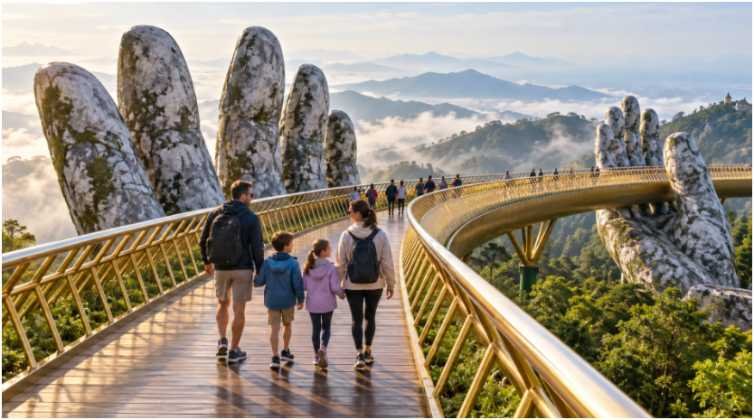
    Conquering the Mountains: Ba Na Hills Without the Meltdowns

    Perched over 4,800 feet above sea level, the resort feels like a surreal blend of a French medieval village and a high-altitude amusement park. Escaping the coastal heat is an immediate relief, but navigating the massive crowds requires a concrete strategy.

    Golden Bridge and Cable Car Timing Strategies

    I learned early that boarding the cable car after 9:30 AM guarantees shoulder-to-shoulder crowds. To experience the famous Golden Bridge—held aloft by giant fiberglass stone hands—arrive at the entrance gates by 7:45 AM. According to historical weather data tracked by WeatherSpark Da Nang Climate Guide, mountain temperatures sit 10°F to 15°F lower than the coast. Pack lightweight zip-up windbreakers for the children. 

    Strollers navigate the cable car stations with ease, but the cobblestones within the French Village create a bumpy ride. A sturdy baby carrier serves you far better here. You can book advance tickets directly through the Sun World Ba Na Hills Official Portal to bypass ticket counter lines entirely.

    Indoor Thrills Inside Fantasy Park

    When the afternoon mountain mist rolls in, head straight underground into Fantasy Park. This three-story entertainment hub is carved directly into the mountaintop. It features bumper cars, climbing walls, a drop tower, and free arcade games that delight school-aged children. If your children measure over 120 cm (roughly 47 inches), take them on the Alpine Coaster. You control the handbrakes yourself, sweeping down the forest slopes with spectacular mountain views.

    Sun, Sand, and Safety: Family Beach Days at My Khe

    Sun, Sand, and Safety: Family Beach Days at My Khe

    My Khe Beach stretches for miles along Da Nang’s eastern shore, featuring fine white sand and gentle morning breakers. It ranks among the most relaxing stretches of coastline anywhere in Central Vietnam.

    Beating the Midday Heat and Ocean Currents

    Local families never visit the beach at noon, and you should follow their lead. Central Vietnam’s midday sun is intense. I take the kids down to the water between 6:30 AM and 8:30 AM, or wait until after 4:30 PM. In the early morning, the tide remains calm and shallow, allowing toddlers to safely splash and dig in the sand.

    Lifeguards actively patrol designated swimming flags along the central promenade. Shaded loungers and woven umbrellas rent for approximately 40,000 VND ($1.60 USD) for several hours. Clean freshwater showers sit right off the sand along Vo Nguyen Giap street, making post-beach cleanups simple before heading back to your hotel.

    Weekend Spectacles: The Fiery Dragon Bridge
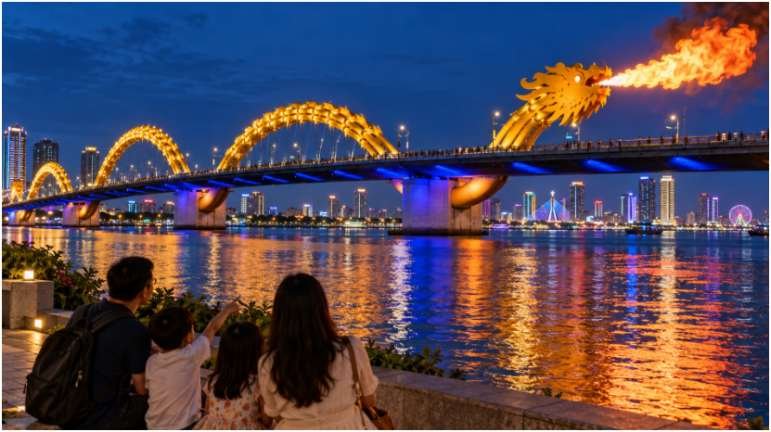
    Weekend Spectacles: The Fiery Dragon Bridge

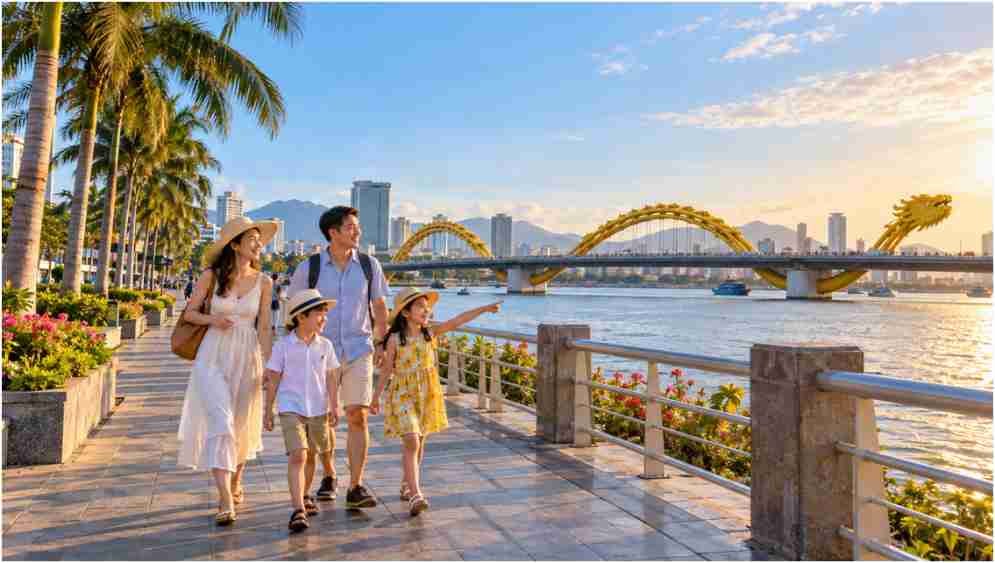
    Spanning the Han River right in the city center, the golden Dragon Bridge has become Da Nang’s proudest landmark. It transforms into an unforgettable urban theater every Friday, Saturday, and Sunday evening at exactly 9:00 PM.

    Where to Stand so Toddlers Stay Happy

    During the show, the dragon’s head breathes real bursts of fire, followed by several vigorous blasts of water vapor. Traffic shuts down completely, drawing thousands of onlookers.

    Never stand directly on the bridge span near the head if you have toddlers or sensory-sensitive kids. The blast produces sudden heat that can startle small children, and shifting winds will drench anyone standing on the northern deck. 

    Instead, stake out a spot along the waterfront promenade on Tran Hung Dao street, directly below the dragon’s neck. You will experience the full visual majesty, hear the crowd cheer, and stay completely dry.

    All-Weather Play: Indoor Escapes and Water Parks

    Tropical travel always demands a reliable rainy-day backup plan. If heavy monsoonal rain strikes or midday temperatures soar, these air-conditioned spaces keep everyone active.

    Công Viên Nước Mikazuki 365

    Located on Da Nang Bay, this Japanese-style complex features the largest indoor water park in Vietnam. The massive indoor dome houses heated wave pools, a winding lazy river, and Vietnam’s longest indoor water slide. Parents can alternate between supervising splash pools and soaking in mineral onsen baths. It completely eliminates weather worries during October and November, when coastal rain storms peak.

    3D Art in Paradise Museum

    This trick-art museum across the Han River spans over 43,000 square feet of optical illusions. With more than 130 wall-and-floor murals, it invites kids to climb into picture frames, pretend to flee prehistoric dinosaurs, or balance over painted chasms. Clear camera markers on the floor show parents exactly where to stand to capture convincing 3D photographs. Expect to spend about 90 minutes laughing and posing inside.

    Helio Center Arcades and Evening Bites

    Helio Center operates as a family complex near the city center. It houses a modern bowling alley, carnival driving games, and an expansive soft-play area tailored for toddlers. Just outside the main doors, the Helio Night Market opens every evening. Unlike rowdy party markets, this space caters directly to families with clean seating, live acoustic music, fruit juices, and skewers.

    Cultural Safaris: VinWonders Nam Hoi An

    Cultural Safaris: VinWonders Nam Hoi An

    Roughly 45 minutes south of Da Nang sits VinWonders Nam Hoi An, an expansive alternative for families seeking space and cultural activities. The Viet Nam National Authority of Tourism highlights this heritage corridor as one of the country’s most dynamic family zones.

    The absolute highlight for my family was the River Safari. You board an open boat and cruise along an artificial riverway, passing rhinos, zebras, giraffes, and wading birds grazing along the open banks. 

    Afterward, walk through the Folk Culture Island. Kids can watch artisans spin raw silk, shape clay pottery, and weave bamboo baskets. Pack wide-brim sun hats, because the open pathways offer minimal tree shade during sunny afternoons.

    Toddlers to Teens: Stress-Free Da Nang Family Logistics

    A seamless family trip depends on small daily choices. Keep these tested logistics in mind:

    • Navigating the City: Avoid renting scooters with children. Ride-hailing apps like Grab operate reliably across Da Nang. Rides within the downtown core rarely cost more than $2 to $4 USD. For day excursions to Ba Na Hills or VinWonders, arrange a fixed-price private car through your hotel concierge or Grab driver. Round-trip fares typically run between $25 and $40 USD, with the driver waiting comfortably in the parking lot.
    • Important Closure Notice: Older guidebooks often praise Asia Park (Da Nang Downtown) and its iconic Sun Wheel. This park permanently ceased operations in late 2025. Save yourself an unnecessary taxi ride and steer your itinerary toward Helio Center or Mikazuki instead.
    • Expanding Your Route: Families combining Central Vietnam with the mountain peaks of the north will find plenty of inspiration researching where to go in northern vietnam beyond hanoi.

    Da Nang with Kids: Frequently Asked Questions

    1. Is Da Nang safe for a family vacation with toddlers?

    Yes, Da Nang has low crime, pedestrian-friendly beach promenades, and calm, shallow morning surf at My Khe Beach.

    2. What is the best month to visit Da Nang with children?

    February through May offers comfortable temperatures, minimal rainfall, and clear waters before peak summer heat sets in.

    3. Is Ba Na Hills stroller-friendly?

    Cable car stations and indoor pavilions have elevators, but the outdoor French Village features steep cobblestone paths better suited for a baby carrier.

    4. How much time do you need in Da Nang with kids?

    Three to four days allows you to visit major theme parks, play at the beach, and enjoy the Dragon Bridge without rushing.

    Pack Your Bags, Dodge the Crowds, and Go

    Da Nang proves that an Asian coastal hub can deliver thrills for children without exhausting their parents. Skip the midday sun, book your private drivers in advance, and head up the mountains early. 

    If you are expanding your regional itinerary, Vietnam pairs seamlessly with other family friendly holiday destinations in southeast asia. Grab your sunscreen, lock in your morning cable car tickets, and give your family an adventure they will remember for years. 

  • Lesser-Known Cultural Heritage Sites in Asia to Add to Your Travel List

    Lesser-Known Cultural Heritage Sites in Asia to Add to Your Travel List

    I used to think the best way to understand Asia’s history was to start with its most famous landmarks. I noticed something different when I started exploring less crowded heritage places. Smaller sites make it easier to notice how temples fit landscapes, how old cities were organized, and why places still matter to nearby communities.

    I realized that “lesser-known” does not mean insignificant. Some meaningful heritage places receive far less attention than major attractions. They reveal ancient religions, royal dynasties, architecture, and living customs without following the same itinerary.

    Why lesser-known heritage places can feel more meaningful

    Heritage becomes easier to understand when the setting is part of the story. A forested temple tells a different story from a city monument. Historic neighborhoods show how people lived, traded, worshiped, and adapted.

    Strong destinations combine monuments with landscape and community. Markets, pilgrimage routes, homes, crafts, and archaeology can deepen sightseeing.

    The experience becomes even richer when travelers seek living heritage experiences across Asia, where traditional crafts, food, rituals, and community practices continue alongside historic sites. Seeing these traditions in their present-day context can make the history of a place feel more tangible and connected to everyday life.

    Lesser Known Cultural Heritage Sites in Asia

    Lesser Known Cultural Heritage Sites in Asia

    My Son Sanctuary, Vietnam

    Hidden among hills in Quang Nam, My Son Sanctuary preserves the remains of a Champa religious center. Its towers reflect centuries of Champa Hindu influence.

    The landscape makes the moss-covered structures compelling. Carved figures and tower shapes provide clues about religious life and architecture. The valley feels calm early.

    Historic Town of Sukhothai, Thailand

    Sukhothai offers a different experience. The remains of Thailand’s first Siamese kingdom spread across a historical park of temples, Buddha images, ponds, trees, and monuments.

    Travelers can appreciate how the ancient city was arranged. Water, architecture, sculpture, and open space give Sukhothai a slower rhythm.

    Rani-ki-Vav, India

    At Patan in Gujarat, Rani-ki-Vav turns a practical water structure into extraordinary architecture. Built in the eleventh century, the seven-level stepwell descends deep into the ground, with hundreds of sculptures covering its walls and pillars.

    The site shows how water management, symbolism, craftsmanship, and patronage intersected. Each level reveals new carvings, making it worth studying smaller sculptures rather than only photographing the overall structure.

    Kathmandu Valley, Nepal

    Kathmandu Valley is less a single attraction than a cultural landscape containing historic cities, temples, stupas, and sacred spaces. Its heritage reflects Buddhist and Hindu traditions alongside distinctive Newar architecture and craftsmanship.

    Swayambhunath and the valley’s historic squares show how religion and daily life overlap. Travelers can notice carved windows, shrines, courtyards, rituals, and neighborhood activity.

    Namhansanseong, South Korea

    Namhansanseong brings history into a mountain setting. The fortress was developed and expanded during the Joseon period, with defensive walls following the terrain through forests and steep slopes.

    Its fortress routes reveal why geography mattered to Korean military history. Pine-covered hills, stone walls, gates, and views make the site feel connected to its environment. It shows that heritage can preserve political and military history as vividly as religious architecture.

    Look beyond the monument

    Rewarding heritage trips involve details missing from a landmark’s headline description. Food, crafts, festivals, shrines, building techniques, and oral histories can explain cultural importance.

    Modern life does not automatically erase these traditions. Communities may adapt ceremonies, crafts, architecture, and foodways while keeping their underlying meaning. Travelers interested in how Asian traditions are adapting to modern life can therefore learn as much from contemporary neighborhoods as from ancient monuments.

    A heritage site may be sacred, archaeological, communal, or part of everyday life. That perspective changes how a destination should be visited.

    Choosing a heritage experience

    Choosing a heritage experience

    Sites suit different interests. History enthusiasts may prefer archaeological complexes and old capitals, while architecture lovers might choose stepwells, fortress walls, temples, and historic homes. Religious travelers can seek pilgrimage landscapes and sacred complexes.

    Planning matters. Check opening times, seasonal weather, local rules, dress expectations, photography restrictions, and transportation before visiting. A local guide can add context, while eating locally and buying regional crafts can support communities that help keep heritage alive.

    For travelers searching for lesser-known cultural heritage sites in Asia and Asian heritage experiences beyond famous landmarks, the goal should not be collecting obscure destinations. A place becomes memorable when its history explains the culture around it.

    Why quieter heritage places stay with you

    Their appeal is about attention. Without a packed itinerary, travelers have more room to notice landscape, craftsmanship, and connections between past and present. A weathered brick tower, a carved stepwell wall, or a fortress path can become more interesting when its purpose and cultural setting are understood.

    Asia’s heritage is too diverse to fit into a handful of famous landmarks. Less visited places can offer an invitation to slow down, look closely, and understand how history continues to shape everyday life.

    Frequently Asked Questions 

    1. What makes a heritage site lesser-known?

    It usually receives less attention than major landmarks, even when it has substantial historical or cultural importance. It may still be nationally protected, well documented, and deeply valued by local communities.

    2. Are lesser-known heritage sites worth visiting?

    Yes. They can offer deeper cultural context, quieter surroundings, architecture, and opportunities to understand local traditions. They also encourage slower observation and often reveal connections between heritage and everyday life.

    3. Are these sites suitable for first-time Asia travelers?

    Many are. However, travelers should research transport, opening times, entry rules, and cultural expectations before visiting. Some remote locations may require more planning, especially when public transportation is limited or seasonal conditions affect access.

    4. How can visitors support heritage conservation?

    Respect site rules, avoid damaging structures, use local guides when appropriate, support community businesses, and purchase local products rather than mass-produced souvenirs. Ask before photographing people or ceremonies, and leave sacred spaces exactly as you found them.

    The places worth slowing down for

    The best heritage experiences do not always come from the most recognizable name on an itinerary. Sometimes they emerge when a traveler has enough time to notice the relationship between a structure, its landscape, and the people who give it meaning.

    Quiet heritage does not mean unimportant heritage. It simply asks visitors to pay closer attention.

  • India’s Regional Traditions Beyond Major Tourist Cities That Travelers Often Miss

    India’s Regional Traditions Beyond Major Tourist Cities That Travelers Often Miss

    I’ve noticed that memorable cultural moments happen beyond familiar landmarks. In smaller towns and rural communities, daily life reveals customs that rarely make a standard itinerary: a craft practiced in a family workshop, a seasonal gathering shaped by the harvest, or a song everyone knows.

    I’ve also found that regional traditions make more sense when you understand the landscape and the people who sustain them. A festival may honor a local deity, mark a change in season, or bring neighbors together. Beyond Delhi, Agra, and Jaipur, India offers ways to see culture as something lived and passed on, rather than simply displayed for visitors.

    Why traditions change from region to region

    India’s cultural variety reflects its geography. Mountain communities developed practices around forests and steep fields. River settlements built livelihoods around fishing and waterways. In dry regions, fairs connect communities spread across large distances. Religion, migration, and trade have added further layers over generations.

    For travelers interested in how mountain landscapes shape regional experiences, exploring the best hill stations to visit in southern India can provide another perspective on the relationship between terrain, local communities, and everyday life.

    Music, clothing, food, and ritual can express a community’s relationship with its environment, beliefs, and neighbors. Looking beyond major tourist cities helps travelers notice these connections instead of treating every celebration as a similar attraction.

    Ziro Valley: Apatani knowledge and life in the fields

    Ziro Valley Apatani knowledge and life in the fields

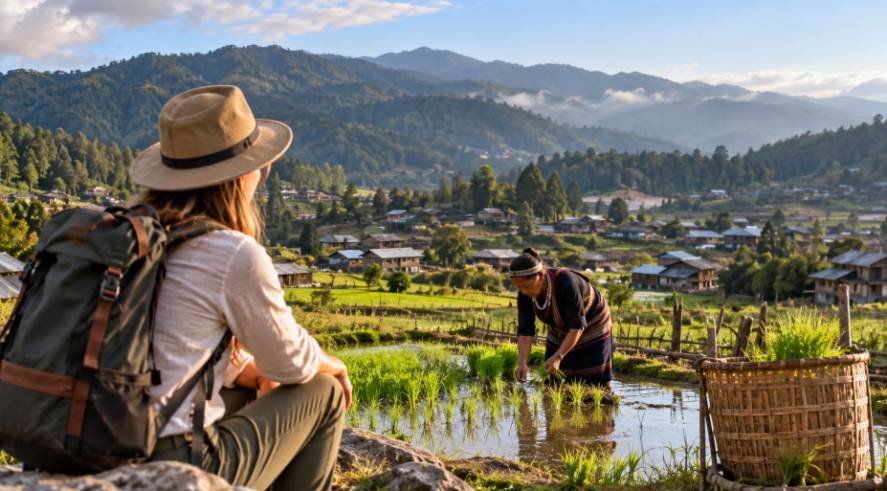
    In Arunachal Pradesh, Ziro Valley is known for paddy fields, pine-covered hills, and Apatani villages. The community’s wet-rice cultivation system integrates fish rearing into the fields, making productive use of water and land. It reflects generations of practical knowledge about local conditions.

    A visit can introduce travelers to Apatani architecture, food, festivals, and community life. Older Apatani women may still have traditional facial tattoos and nose plugs, practices to approach with respect rather than as curiosities. The annual Ziro music festival brings independent artists to the valley. Outside festival dates, the landscape and village routines take center stage.

    Majuli: Monasteries that keep art alive

    On the Brahmaputra in Assam, Majuli is associated with Assamese Neo-Vaishnavite culture. Its satras, or Vaishnavite monastic institutions, have preserved devotional music, dance, literature, and theater for centuries. They are active cultural spaces, not just historic buildings.

    At Samaguri Satra, artisans make masks used in bhaona performances, which bring stories from Hindu epics to life. Other satras are known for prayer, teaching, and artistic practices. The Raas festival, held in November, draws people to performances depicting Krishna’s life. Because floods and erosion shape the island, allow flexibility in travel plans. Ask before photographing ceremonies and follow local guidance.

    Around Varanasi: The skill behind handwoven silk

    Varanasi is famous for its temples and ghats, but nearby villages offer another view of regional culture. In Sarai Mohana, families are known for handloom silk weaving, a craft requiring patient work and knowledge passed between generations. The finished fabric may be admired in a shop, yet its detail comes from hours of preparation and weaving.

    Nearby settlements also reveal how agriculture, livestock, cooking, and family routines shape everyday life. Arrange village visits respectfully through a guide or host. Ask before entering a home or workshop, and consider buying directly from artisans. A purchase can support traditional skills, but it does not automatically permit visitors to photograph people at work.

    Travelers interested in documenting India’s cultural landscapes can also explore the best photography spots and activities in Jaipur, where historic architecture, local streets, and everyday scenes offer different opportunities for observing and photographing regional life.

    Festivals rooted in local memory

    In Bastar, Chhattisgarh, Dussehra is an extended observance centered on local deities and community rituals rather than the familiar story of Rama defeating Ravana. Processions and ceremonial objects reflect the region’s religious and cultural history.

    In Telangana, Bathukamma is a floral festival where women arrange seasonal flowers into tiered displays and gather for songs. In Uttarakhand’s Garhwal region, Ramman combines ritual, epic recitation, music, and masked dance. Each tradition belongs to a particular place and community. Learning its meaning before attending makes the experience more rewarding and helps visitors avoid treating sacred practices as performances staged for tourists.

    Food, crafts, and seasonal knowledge

    Food, crafts, and seasonal knowledge

    Culture is often easiest to understand through ordinary things. A regional meal reflects what grows nearby and what families prepare for festivals. Handwoven textiles, bamboo objects, pottery, and woodwork carry knowledge about local materials and techniques. Their survival depends on people having reasons and opportunities to keep practicing these skills.

    Planting, harvesting, monsoon rains, and religious observances can shape when communities gather and what they eat. Travelers interested in Japan’s lesser-known seasonal traditions and local festivals may recognize a similar connection between place, season, and cultural practice, even though the customs differ. Timing helps explain why a celebration happens when it does.

    How to visit with respect

    Check festival dates with local tourism offices or community hosts, since schedules can change. Dress appropriately for religious spaces, ask permission before photographing people, and never assume a ceremony is open to visitors. Listen when guides explain a custom instead of interrupting to record it.

    Choose locally run stays and guides where practical, and pay fair prices for crafts rather than bargaining aggressively over work that takes days to complete. Some traditions are private or sacred. Respectful travel means observing from a distance, following instructions, or skipping an activity entirely.

    The value of looking beyond the familiar

    Traveling beyond the best-known cities changes what visitors notice. A field system, a mask in progress, a handloom, or a village gathering may seem modest beside a monument, yet each carries a record of adaptation and shared memory. These traditions are not frozen remnants of the past. Communities continue to teach them to younger generations and adapt them to changing economic and social realities.

    The most rewarding approach is curiosity without entitlement. Go slowly, ask thoughtful questions, and let local people decide what they want to share. Often, that is where a place begins to feel less like a destination and more like a living community.

    Frequently Asked Questions 

    1. What are some lesser-known cultural destinations in India?

    Ziro Valley in Arunachal Pradesh, Majuli in Assam, and villages near Varanasi offer insight into farming, monastic arts, weaving, and local life.

    2. When should I visit Majuli?

    November is popular because of the Raas festival, but check dates and ferry conditions before traveling.

    3. Can visitors attend local festivals?

    Often, yes, but access varies. Confirm details with local organizers and follow rules about photography, dress, and participation.

    4. How can travelers support traditional artisans?

    Buy directly when possible, pay fair prices, ask about the process, and seek permission before photographing people or their work.

  • New England Seafood Road Trip: The Ultimate Coastal Food Route

    New England Seafood Road Trip: The Ultimate Coastal Food Route

    Some road trips are about mileage. This one is about what happens when the Atlantic coastline changes the food on your plate.

    I would start in Connecticut’s tidal shoreline, follow the coast through Rhode Island’s shellfish country and Massachusetts’ historic fishing towns, then keep moving north toward Maine’s rocky peninsulas and working lobster piers. A carefully planned New England seafood road trip reveals that New England seafood is far more diverse than a single lobster roll. Every state brings its own traditions, from buttery lobster and clear clam chowder to whole-belly fried clams and classic Maine lobster bakes.

    For travelers in the U.S. looking for a coastal food trip that combines scenery, maritime culture, and regional specialties, this route delivers all three.

    Where Should You Start a New England Seafood Road Trip?

    Connecticut: Start With the Hot-Buttered Lobster Roll

    Connecticut is the logical starting point, especially around Mystic, Noank, Clinton, and the eastern shoreline.

    Local tourism sources trace the lobster roll’s Connecticut roots to Milford, where hot lobster meat with melted butter became the defining preparation. Today, the Connecticut-style lobster roll usually arrives warm rather than chilled and mayonnaise-based.

    I would order one simply prepared, ideally with freshly cooked lobster, melted butter, and a toasted roll. The lack of heavy dressing allows the sweetness of the lobster to remain the focus.

    Mystic also makes a useful base because you can combine seafood with a historic waterfront, maritime attractions, and short drives to small shoreline communities.

    What Seafood Should You Eat in Rhode Island?

    Try Clear-Broth Chowder and Traditional Stuffies

    Once I cross into Rhode Island, I would shift away from lobster and focus on clams, oysters, and quahogs.

    Rhode Island’s clear clam chowder stands apart from creamy New England chowder and tomato-based versions. It leaves out both cream and tomato, allowing a clear broth and clam flavor to take center stage.

    Another essential dish is the stuffie. These baked stuffed quahogs typically combine chopped clam meat with breadcrumbs, herbs, seasonings, and, in some preparations, sausage such as chorizo. Rhode Island tourism describes quahogs as hard-shell clams closely tied to the state’s food traditions.

    Newport makes an easy road-trip stop, but I would also look beyond the city’s polished waterfront and seek smaller coastal communities where shellfish and clam-shack culture still feel closely connected to the water.

    Where Can You Find Classic Fried Clams in Massachusetts?

    Where Can You Find Classic Fried Clams in Massachusetts

    Head for Essex, Ipswich, and Gloucester on the North Shore

    North of Boston, the Massachusetts North Shore becomes one of the most important sections of the trip.

    Essex and Ipswich are particularly famous for whole-belly fried clams. Unlike clam strips cut from larger sea clams, whole-belly clams retain the soft belly and deliver a much richer, brinier flavor.

    Woodman’s of Essex is closely associated with the history of the fried clam, while the Clam Box in Ipswich remains another well-known stop in the region. Traditional preparation can involve dipping shucked clams in milk or evaporated milk, coating them in corn flour, and frying them until crisp while keeping the clam itself tender.

    Gloucester adds another dimension. Its working fishing-port atmosphere reminds me that this food culture developed around an industry, not simply tourism.

    If you have additional days, Cape Cod can add scallops, chowder, raw bars, and another layer of coastal New England dining, although summer traffic can make the detour much longer than it looks on a map.

    Is New Hampshire Worth Adding to the Seafood Route?

    New Hampshire’s coastline is short, but I would not skip it.

    A drive along coastal Route 1A through Hampton and Rye provides a pleasant break between Massachusetts and Maine. Seafood shacks, fried fish, clams, and lobster rolls fit naturally into the journey without requiring a major detour.

    Portsmouth also works well as an overnight stop before crossing into Maine.

    Why Is Portland Essential for Seafood Lovers?

    Mix Traditional Maine Lobster With a Modern Seafood Scene

    Portland offers something different from the classic roadside clam shack.

    Along the city’s working waterfront, lobster remains central, but visitors can also find oysters, mussels, scallops, locally landed fish, and modern interpretations of traditional Maine seafood. Maine’s official tourism site specifically highlights Portland’s working waterfront and its many lobster-focused experiences.

    This is where I would intentionally change the pace of the New England seafood road trip. After several casual seafood shacks, a more contemporary seafood restaurant helps showcase how New England coastal cooking continues to evolve.

    Where Should You Stop Along Midcoast Maine?

    Follow Route 1 Toward the Working Lobster Piers

    Follow Route 1 Toward the Working Lobster Piers

    From Portland, I would head north toward Boothbay Harbor, Wiscasset, Rockland, Camden, and eventually Mount Desert Island.

    This stretch delivers the classic image many travelers have in mind when they imagine a Maine seafood road trip: narrow coastal roads, fishing boats, wooded peninsulas, lobster traps, rocky coves, and simple waterfront dining.

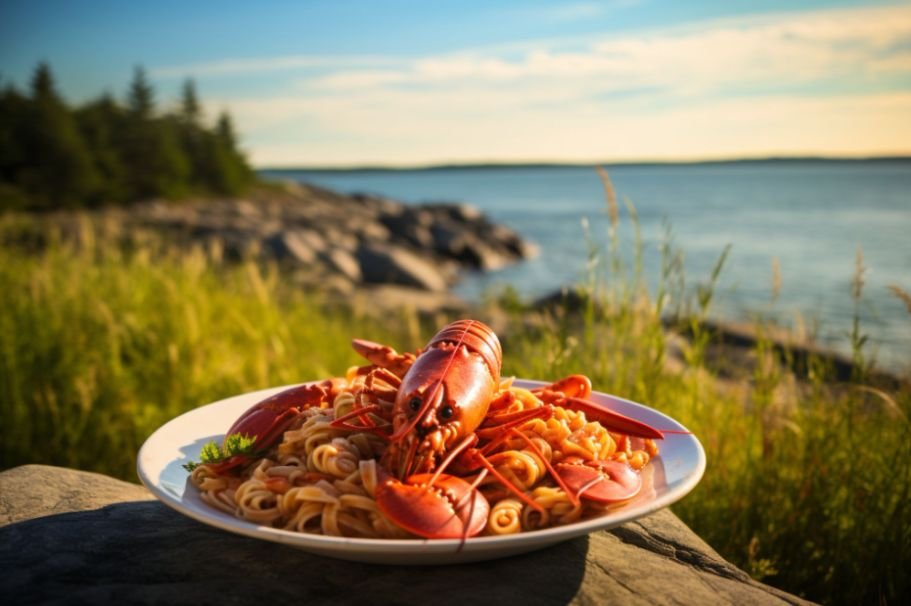
    Working lobster piers provide one of the most memorable experiences. At places such as Boothbay Lobster Wharf and Beal’s Lobster Pier, visitors can dine close to active fishing operations where boats unload their catch nearby.

    I would choose a whole steamed lobster at least once rather than eating lobster rolls throughout the entire trip.

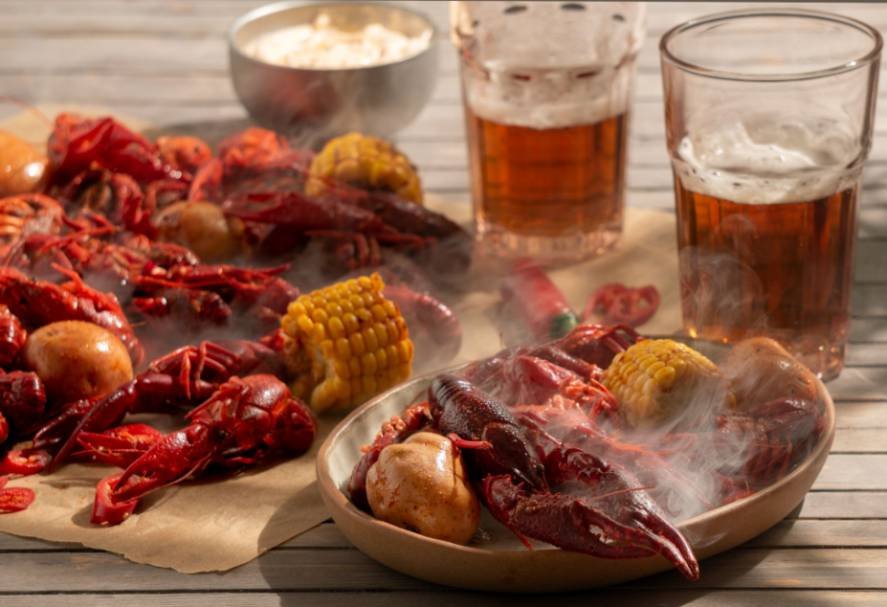
    Traditional lobster-bake experiences add another layer. Lobster, potatoes, corn, and other accompaniments may be steamed together, turning the cooking process into part of the meal itself.

    When Is the Best Time to Take This Coastal Food Trip?

    Late spring through early fall is the easiest window.

    Many classic seafood shacks, lobster docks, and waterfront restaurants operate seasonally, so I would verify opening dates before driving a long distance for a particular stop.

    June and September are especially appealing because they can offer pleasant coastal weather without the heaviest peak-summer crowds.

    Should You Carry a Cooler on the Road?

    I would.

    A cooler becomes useful if you buy smoked fish, fresh seafood, oysters, or other local products during the trip. Some small seafood establishments also have limited beverage offerings, although policies vary by business, so travelers should always check before bringing outside drinks.

    If you enjoy road trips built around regional food traditions, a Texas BBQ road trip itinerary offers another way to explore local specialties, iconic food stops, and distinct culinary communities across a single route.

    If you enjoy planning road trips around regional food traditions, the Louisiana Cajun food road trip offers another example of how a food-focused route can connect local specialties, small-town stops, and distinctive culinary traditions.

    The bigger lesson is not to stay glued to the highway.

    Some of the most memorable seafood experiences are located down side roads near working harbors, marinas, docks, and the ends of coastal peninsulas.

    How Many Days Do You Need?

    How Many Days Do You Need

    I would allow seven to ten days for the full route.

    Seven days works if you keep moving steadily from Connecticut to Maine. Ten days gives you room for Cape Cod, more time in Portland, and slower exploration of Midcoast Maine.

    Trying to complete the route in three or four days would mean spending too much time behind the wheel and not enough time exploring the communities that give the food its character.

    If you enjoy building trips around regional cuisine, culinary road trips in the USA offer plenty of other routes where local dishes, food traditions, and distinctive communities shape the journey.

    Frequently Asked Questions 

    1. What are the must-try foods on a New England seafood road trip?

    I would prioritize a Connecticut-style warm lobster roll, Rhode Island clear clam chowder and stuffies, Massachusetts whole-belly fried clams, local oysters and scallops, and a whole steamed Maine lobster.

    2. Where does the lobster roll road trip begin?

    Connecticut makes a natural starting point because the state is closely associated with the hot-buttered lobster roll, particularly along its shoreline.

    3. Is Maine the best state for lobster?

    Maine offers an exceptional concentration of lobster wharves, seafood shacks, fishing communities, and working waterfront experiences, making it an essential destination for lobster-focused travelers.

    4. Are seafood shacks open year-round in New England?

    Not always. Many traditional coastal shacks and lobster piers operate seasonally, commonly from late spring into early or mid-fall. Always confirm hours before visiting.

    Following the Flavor of the Atlantic Coast

    What makes this route memorable for me is not any single restaurant. It is the way the food changes as the coastline changes.

    Connecticut introduces warm buttered lobster, Rhode Island brings quahogs and clear chowder, Massachusetts delivers fried-clam traditions, and Maine finishes the journey with working lobster piers and dramatic coastal scenery.

    That progression is what turns a collection of seafood meals into a genuine New England seafood road trip. Instead of racing between famous restaurants, I would leave time for harbor roads, unexpected docks, small fishing towns, and those quiet peninsula stops where the Atlantic is only a few feet from the picnic table.

  • Indigenous Traditions and Cultural Experiences in Asia Worth Discovering

    Indigenous Traditions and Cultural Experiences in Asia Worth Discovering

    I’ve always found that travel becomes more meaningful when I look beyond famous landmarks and spend time learning how people live. Across Asia, traditional homes, family ceremonies, handmade crafts, and everyday customs reveal stories that architecture and guidebooks alone cannot tell. These experiences offer a closer connection to the people who keep cultural heritage alive.

    I’ve also noticed that the most memorable cultural encounters often require patience rather than a packed itinerary. Sharing a meal with a host family or listening to an artisan explain a centuries-old technique can change how a destination feels. Across Asia, Indigenous communities and ethnic groups preserve distinctive knowledge, beliefs, and traditions that deserve attention, curiosity, and respect.

    What Makes Indigenous Cultural Experiences Meaningful?

    Cultural traditions are more than performances for visitors. They connect families to their ancestors, express spiritual beliefs, and pass practical knowledge between generations. These living traditions may include agricultural practices, weaving, oral storytelling, seasonal celebrations, and ceremonies marking important stages of life.

    Asia is extraordinarily diverse, so Indigenous identity should never be treated as one shared culture. Communities have their own languages, histories, and customs, and some prefer limited contact with tourism. Choosing experiences led by local people allows visitors to learn directly from those who understand the meaning behind their traditions.

    Indigenous Traditions Worth Discovering Across Asia

    Indigenous Traditions Worth Discovering Across Asia

    Tana Toraja Rituals in Indonesia

    In the highlands of South Sulawesi, the Toraja people are known for elaborate funeral ceremonies, distinctive ancestral houses, and cliffside burial sites. Traditional Tongkonan houses feature dramatic, boat-shaped roofs and intricate decorations that reflect family identity and social history.

    Funeral ceremonies, including Rambu Solo, can involve extensive preparations and bring relatives together to honor someone who has died. Carved wooden figures called tau-tau may stand near burial sites, representing deceased family members and maintaining a symbolic connection between the living and the dead.

    Visitors can explore traditional villages such as Ke’te Kesu and learn about Toraja architecture and craftsmanship. However, funerals are family and community events, not staged attractions. Attend only when invited or clearly permitted, follow local guidance, and ask before photographing people or burial areas.

    Hmong and Red Dao Homestays in Vietnam

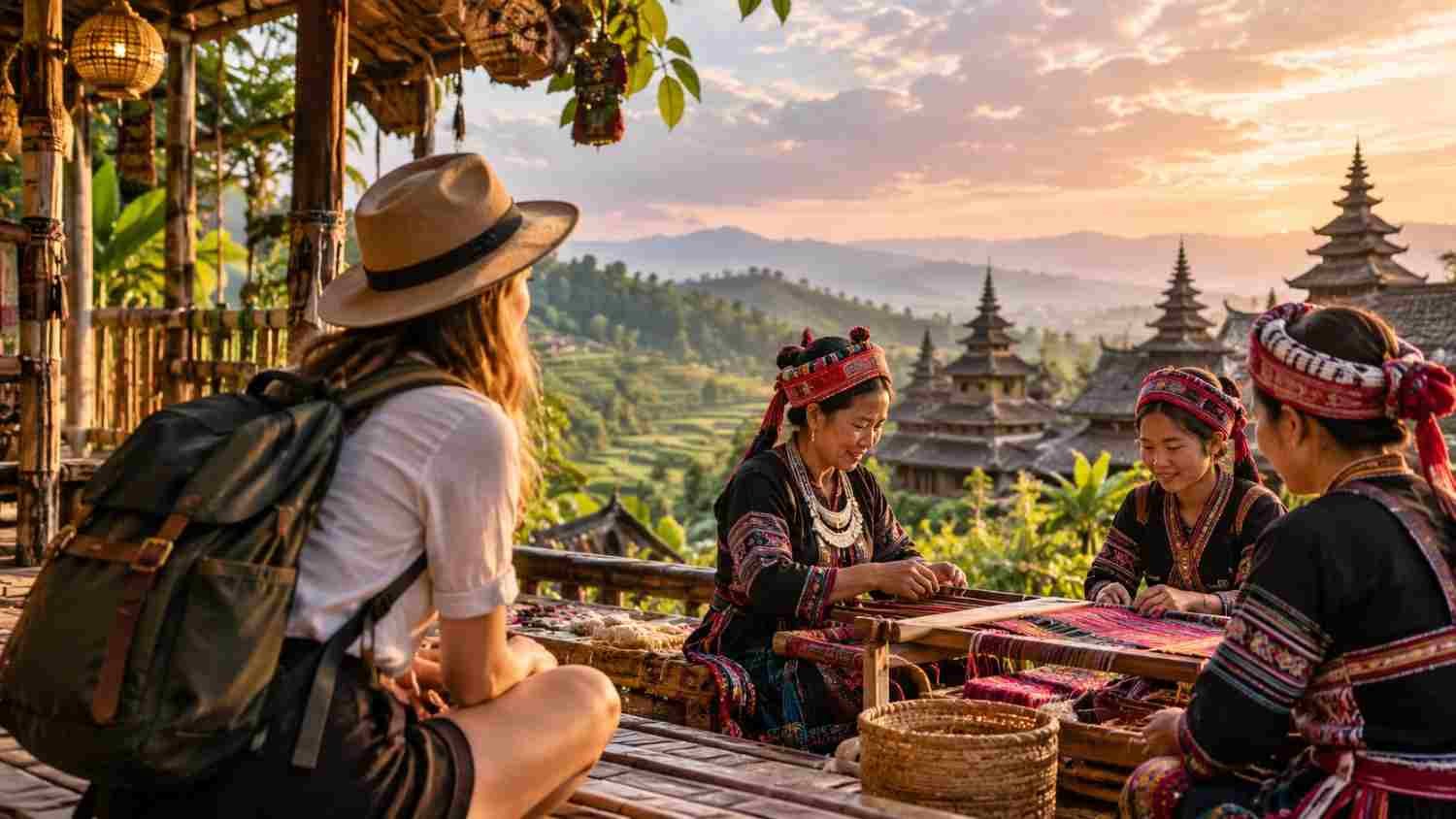
    Northern Vietnam’s Sapa region offers another perspective on living cultural heritage. Hmong and Red Dao communities maintain distinctive textile traditions, agricultural knowledge, clothing styles, and local food customs among the region’s terraced mountains.

    A locally guided trek can lead through rice fields and villages, while a family homestay provides time to share meals and hear stories about everyday life. Travelers may also learn about indigo dyeing, embroidery, traditional weaving, and the work involved in farming steep mountain slopes.

    Look for community-led experiences where local guides and host families receive fair payment. A homestay should offer a genuine exchange, not an opportunity to treat someone’s home as a display. Ask permission before taking photographs, especially of children, and respect household routines.

    Kazakh Eagle Hunting in Kazakhstan

    On Kazakhstan’s wide-open steppes, berkutchi, or traditional eagle hunters, maintain a practice rooted in Kazakh cultural heritage. Hunters train golden eagles to work alongside them, drawing on knowledge of animal behavior, horsemanship, and the landscape.

    The tradition reflects a close relationship between people, animals, and the environment. It is also a skill that requires years of learning, rather than a spectacle that can be understood through a brief photograph.

    Travelers can seek demonstrations or cultural events led by experienced practitioners. Ask how the birds are cared for and trained, and choose hosts who explain the tradition in their own words. Respectful questions can make the experience more informative than simply watching an eagle take flight.

    Morning Alms Giving in Luang Prabang, Laos

    In Luang Prabang, the Buddhist practice known as Sai Bat takes place early each morning. Monks and novices walk quietly through the streets while residents offer food, often sticky rice, as part of a longstanding religious tradition.

    The ceremony is rooted in Buddhist practice and the relationship between monastic communities and local residents. Visitors can observe, but participation should not be treated as a travel photo opportunity.

    Dress modestly, remain quiet, keep a respectful distance, and avoid flash photography. If you wish to make an offering, learn the proper method beforehand and follow local guidance. Otherwise, observe without interrupting the procession or blocking residents who have come to take part.

    Meeting Japan’s Ama Divers

    Along Japan’s Ise-Shima coastline, ama, or traditional female free divers, harvest seafood without breathing apparatus. Their knowledge includes breath control, local marine conditions, and techniques passed between generations. The practice is closely connected to coastal livelihoods and the sea.

    At an ama hut experience, visitors may share a meal, hear divers describe their work, and learn about local seafood traditions. These conversations offer insight into a demanding occupation and the knowledge required to continue it. Booking directly through established local experiences can help support the women who preserve this heritage.

    Discover Cultural Experiences Beyond the Usual Tourist Trail

    Discover Cultural Experiences Beyond the Usual Tourist Trail

    Some of Asia’s most meaningful encounters happen away from major attractions. Smaller village markets, craft workshops, locally organized walks, and seasonal celebrations can introduce travelers to traditions that remain part of ordinary life. Exploring local festivals beyond Asia’s tourist hotspots can also reveal regional music, food, dance, and community customs that receive less international attention.

    Plan around the community’s calendar rather than expecting a ceremony to happen for visitors. Ask local guides which events welcome guests, and be prepared to change plans when a gathering is private. Spending money on locally made crafts, meals, and guiding services can help cultural tourism benefit the people sharing their knowledge.

    How Modern Cities Keep Ancient Traditions Alive

    Cultural heritage does not disappear when people move to cities. Traditional crafts, religious observances, regional cuisines, and community celebrations continue in urban neighborhoods, sometimes adapting to new ways of living. Exploring modern cities preserving ancient traditions helps travelers see how heritage changes while remaining meaningful.

    Look for cultural centers, artisan cooperatives, neighborhood temples, and workshops where practitioners explain their work. These places can reveal how younger generations learn inherited skills while balancing education, employment, and modern life. Tradition is not frozen in the past; communities decide what to preserve and how to carry it forward.

    How to Experience Local Traditions Respectfully

    Before booking, find out who organizes the experience and who receives the payment. Prefer local guides, family-run homestays, and community-owned businesses when possible. Read cultural guidelines in advance, dress appropriately, and ask before photographing people, homes, ceremonies, or sacred objects.

    Avoid buying artifacts made from protected wildlife or cultural objects that may have been removed from heritage sites. Most importantly, accept that some traditions are not open to outsiders. Respecting a boundary is part of understanding a culture, not a missed travel opportunity.

    FAQs: Indigenous Traditions and Cultural Experiences in Asia Worth Discovering

    1. What are some meaningful cultural experiences in Asia?

    Consider a Toraja heritage visit, a Hmong homestay in Vietnam, Kazakh eagle hunting demonstrations, Luang Prabang’s morning alms ceremony, or an ama diver experience in Japan.

    2. How can travelers support Indigenous communities?

    Book locally led tours, stay with host families, purchase crafts directly from artisans, and follow community guidelines.

    3. Can visitors participate in traditional ceremonies?

    Sometimes, but permission varies by community and event. Ask a local host and never assume a sacred ceremony is open to tourists.

    4. When should I plan a cultural trip?

    Check local festival calendars and seasonal conditions before booking. Some ceremonies follow religious or community schedules that change annually.

    Why Living Traditions Deserve to Be Experienced With Care

    The value of cultural travel lies in understanding that every tradition belongs to people with their own priorities, beliefs, and changing lives. A thoughtful visit creates space to listen, ask questions respectfully, and appreciate the knowledge behind a ceremony, craft, or meal. When communities guide the experience, tourism can support livelihoods while giving visitors a richer understanding of Asia’s cultural diversity.

    Travel with curiosity, but leave room for humility. The most meaningful memories often come from listening well and knowing when to step back.

  • Food Road Trip Through Maine: 5 Stops Worth the Drive

    Food Road Trip Through Maine: 5 Stops Worth the Drive

    Maine has a way of turning hunger into a navigation system. I can start the morning in a tiny 1920s diner, follow the coast for oysters and duck-fat fries, debate two famous lobster rolls in Wiscasset, and finish near Acadia with a warm popover and blueberry ice cream.

    That is why I prefer building a food road trip through Maine around dishes and experiences rather than simply drawing a line between Portland and Bar Harbor. This route moves north through some of coastal Maine’s most appealing food towns while mixing historic diners, local shellfish, lobster shacks, scenic waterfronts, and distinctly Maine desserts.

    How Long Do You Need for a Maine Food Road Trip?

    I would give this Maine coastal food road trip at least three days, although four or five makes the experience much more relaxed. The basic journey runs from Biddeford through Portland and Cape Elizabeth, then follows the Midcoast toward Wiscasset and Spruce Head before ending around Bar Harbor and Acadia National Park.

    Summer provides the widest choice of seasonal seafood spots, but it also brings the biggest crowds. Early fall can be especially appealing for cooler driving weather and changing foliage. Restaurant schedules along the coast often change seasonally, so I always recommend checking current hours before setting out.

    Stop 1: Where Should You Eat Breakfast in Biddeford?

    Where Should You Eat Breakfast in Biddeford

    My first stop would be Palace Diner, before the road trip reaches Portland.

    The setting alone gives breakfast a sense of occasion. Palace occupies a Pollard diner car built in 1927 and has only 15 counter seats. The restaurant operates on a walk-in, first-come basis, so arriving early makes sense if you want one of those coveted stools.

    Flapjacks are an obvious way to begin, but I would also look for the crispy Palace Potatoes and brown-butter banana bread when available. This is exactly the type of stop that improves a Maine foodie road trip: historically interesting, locally distinctive, and memorable before you’ve even reached the state’s largest city.

    Stop 2: What Should You Eat in Portland and Cape Elizabeth?

    Roughly 30 minutes north, Portland changes the pace completely. Rather than choosing one restaurant, I would turn the city into a mini food crawl.

    Start at Duckfat, where Belgian-style hand-cut fries are twice fried in duck fat. The restaurant has served its signature frites in downtown Portland since 2005 and remains first-come, first-served. A milkshake alongside the fries makes this deliberately indulgent, which is exactly what I want from a road-trip lunch.

    Next, head toward the East End and The Shop by Island Creek Oysters. The raw bar serves a rotating selection of Maine oysters and other shellfish, making it an easy place to taste how dramatically oysters can differ depending on where they’re grown.

    Then make the short detour south of downtown to Cape Elizabeth. Bite Into Maine operates a food truck at Fort Williams Park, home of Portland Head Light. The stop combines one of coastal Maine’s most recognizable views with lobster rolls, including a warm butter preparation.

    For me, that combination of fries, oysters, lobster, and ocean scenery explains why Portland belongs near the center of any Maine culinary road trip.

    Stop 3: Red’s Eats or Sprague’s Lobster in Wiscasset?

    Red's Eats or Sprague's Lobster in Wiscasset

    Continue northeast on Route 1, and eventually you’ll reach Wiscasset, where the road-trip question becomes less about whether to eat lobster and more about which side of the street to choose.

    Red’s Eats is the town’s nationally recognizable lobster-roll landmark. Its roadside location and generously packed rolls regularly attract lines during busy travel periods. The restaurant emphasizes Maine lobster and operates seasonally.

    If you’d rather spend less time standing in line, cross over to Sprague’s Lobster. The town itself lists both Red’s Eats and Sprague’s among Wiscasset’s dining destinations, while the local chamber highlights Sprague’s outdoor waterfront dining.

    I like having both options because a road trip shouldn’t fall apart. After all, one famous restaurant is crowded.

    Stop 4: Where Can You Find a Classic Maine Waterfront Lobster Shack?

    For a more atmospheric lobster experience, leave Route 1 and drive down the peninsula toward Spruce Head Island.

    McLoons Lobster Shack sits across from a working lobster wharf, with views over the harbor and nearby islands. The restaurant describes itself as a family-owned lobster shack where visitors can watch local lobstermen bring in their catch.

    I would order the lobster roll and add a cup of lobster stew, made with lobster stock, fresh lobster, cream, tarragon, and spices. McLoons also serves steamed Maine lobster, chowders, crab rolls, local oysters, and seasonal desserts.

    This stop adds something Portland cannot: the feeling of eating seafood right beside the working waterfront that supports it.

    Stop 5: What Should You Eat Near Acadia National Park?

    The final stage brings the route to Mount Desert Island and Bar Harbor, where mountains, forest, and ocean finally meet.

    After hiking or driving Acadia’s Park Loop Road, I would stop at Jordan Pond House. Tea and popovers have been associated with the site since the 1890s, and enjoying them overlooking Jordan Pond remains one of Acadia’s enduring food traditions.

    Then head into Bar Harbor for dessert at Mt. Desert Island Ice Cream. A Maine blueberry-inspired scoop makes an appropriate ending after days of seafood, while flavors such as sea-salt caramel provide another option for anyone who has reached their blueberry limit.

    It is a much better finale than racing back to the hotel after dinner.

    What Foods Should You Try on a Maine Coastal Road Trip?

    What Foods Should You Try on a Maine Coastal Road Trip

    Lobster may dominate the photographs, but I wouldn’t build an entire food road trip through Maine around one ingredient. Travelers who also enjoy southern food road trips will find Maine offers a very different regional food experience shaped by cold-water seafood, coastal towns, and New England farming traditions.

    Fried clams, oysters, scallops, chowder, haddock, potatoes, wild blueberries, whoopie pies, craft beer, bakery goods, and seasonal farm ingredients all help explain Maine’s regional food culture. Moving slowly up the coast lets those foods change naturally with the landscape.

    FAQs About a Maine Food Road Trip

    1. What is the best route for a Maine food road trip?

    A practical route starts in Biddeford, continues through Portland and Cape Elizabeth, follows Route 1 toward Wiscasset, detours to Spruce Head, and finishes on Mount Desert Island near Bar Harbor and Acadia National Park.

    2. How many days should I spend on a Maine foodie road trip?

    Three days can cover the major stops, but four or five days gives you more time for coastal towns, Acadia, local bakeries, breweries, and unplanned seafood stops.

    3. When is the best time to take a Maine seafood road trip?

    Summer provides the widest restaurant selection, while September and early fall can offer cooler temperatures and fewer peak-season crowds. Always confirm seasonal restaurant hours before driving.

    4. Is Portland worth an overnight stay on a Maine culinary road trip?

    Yes. Portland has enough restaurants, oyster bars, bakeries, breweries, and seafood destinations to justify at least one night, especially if you want to explore beyond a single lobster roll.

    Is This Maine Foodie Road Trip Worth the Drive?

    Absolutely. What makes this itinerary work for me is the contrast between its stops. Breakfast takes place inside a 1927 diner car. Lunch in Portland can move from duck-fat fries to raw oysters. Wiscasset provides the lobster-roll rivalry, Spruce Head delivers the working-waterfront experience, and Mount Desert Island closes the journey with popovers and ice cream after Acadia.

    A successful food road trip through Maine shouldn’t feel like a race between famous restaurants. I would leave gaps in the schedule, stop when a harbor or bakery catches my attention, and allow enough time to actually enjoy the communities behind the food.

    That is when this stretch of New England becomes more than a collection of places to eat. The meals become the route itself.

  • How Asian Traditions Are Adapting to Modern Life Without Losing Their Roots

    How Asian Traditions Are Adapting to Modern Life Without Losing Their Roots

    I have always found it interesting to watch an old custom survive in a place that looks completely modern. A family may live in a high-rise apartment, rely on smartphones for nearly everything, and still gather around the same holiday meal their grandparents prepared. The setting changes, but the meaning often stays recognizable.

    I also noticed that tradition rarely survives by standing still. Younger people may shorten a ceremony, wear a traditional pattern in a modern outfit, learn an old craft through social media, or turn a family recipe into something suited to a busy weeknight. Those choices can look different from the past, yet they can keep a cultural connection alive.

    Tradition Is Becoming More Flexible

    Modernization does not always push tradition aside. In many communities, it changes how traditions are practiced, taught, and shared. Intangible cultural heritage can include rituals, knowledge, skills, foodways, crafts, and social practices that communities continue to recreate as circumstances change.

    That flexibility matters. These changes can make heritage feel usable, rather than something reserved for ceremonies or books. A tradition that requires a lifestyle most people no longer have can become difficult to maintain. Adapting the timing, setting, materials, or presentation can make participation easier without removing the values underneath.

    Family Values Are Being Reinterpreted

    Family Values Are Being Reinterpreted

    Confucian ideas such as respect for parents, responsibility toward family, and social harmony still influence parts of East Asian life, but their expression can be less hierarchical than it once was. A younger adult might see filial responsibility as staying connected, helping parents financially, or making time for family rather than following every parental decision.

    Education, migration, dual-income households, individual choice, and global communication have altered family structures. Yet the desire to care for relatives and maintain close relationships can remain strong.

    Food Keeps Old Knowledge Alive

    Food may be one of the clearest examples of cultural continuity. Traditional Asian recipes are being adapted to smaller kitchens, shorter cooking times, new ingredients, changing diets, and urban schedules.

    A dish can lose one ingredient because it is hard to find, gain another because local produce is available, or be prepared in a pressure cooker instead of over a long simmer. The result may differ from a grandmother’s version, but familiar flavors, occasions, and memories can still connect generations.

    Markets play a similar role. Shopping for ingredients can remain tied to seasonal knowledge, neighborhood relationships, and social habits. That makes traditional markets and everyday culture in Asia important for understanding how heritage survives outside formal ceremonies.

    Festivals Are Finding New Forms

    Festivals face pressures that previous generations did not have to consider. Crowded cities, environmental rules, limited free time, tourism, and waste concerns can influence how celebrations are organized.

    Some communities respond with reusable decorations, biodegradable materials, smaller neighborhood events, and digital alternatives. Thailand’s lantern and floating-light traditions, for example, have inspired efforts to reduce physical waste while experimenting with virtual or technology-assisted experiences.

    Traditional Styles Are Entering Modern Design

    Traditional Styles Are Entering Modern Design

    Clothing offers another visible example. Hanbok-inspired silhouettes, Indian textiles, Japanese patterns, Southeast Asian weaving, and other traditional elements appear in contemporary fashion and design.

    This creative mixing gives traditional aesthetics a place in contemporary culture and can create opportunities for artisans when older skills connect with new markets.

    Technology Is Becoming a Cultural Tool

    The internet has changed who can teach, document, and discover cultural practices. A craftsperson can demonstrate a technique through short videos. A young person can learn a traditional song from a relative overseas. A small cultural group can promote an event without depending entirely on local foot traffic.

    There is a risk, though. Online popularity can strip a practice of context. A symbol may become a trend while its original meaning is forgotten. Sustainable adaptation requires more than making tradition look modern. The knowledge behind it still needs to be explained and passed on.

    Cities Are Changing Everyday Heritage

    Urban development does not necessarily erase cultural identity. Modern cities preserving ancient traditions can show how historic practices, crafts, architecture, and community customs adapt to contemporary urban life while remaining connected to their original cultural roots.

    That does not automatically end cultural connection. Neighborhood restaurants, community centers, temples, festivals, craft workshops, and local shops can create new meeting points. Travelers can also discover living customs through Asian heritage experiences beyond famous landmarks, where ordinary streets and community spaces often reveal more about present-day culture than a major attraction does.

    The challenge is keeping these experiences community-led rather than turning every tradition into a performance for visitors.

    The Balance Between Change and Continuity

    Not every tradition needs to remain unchanged to remain authentic. What matters is whether the people connected to it still recognize its meaning and have a role in deciding how it develops.

    Some practices will disappear when the knowledge needed to perform them is no longer transmitted. Others will survive because someone finds a practical reason to use them again.

    Cultural continuity is less like preserving an object behind glass and more like maintaining a conversation between generations. Modern tools, new lifestyles, and fresh interpretations can become part of that conversation without erasing older voices.

    Frequently Asked Questions 

    1. Are Asian traditions disappearing because of modernization?

    Not necessarily. Many change form while retaining important values, skills, foods, rituals, and social meanings. Adaptation can help traditions remain relevant.

    2. How does technology help preserve Asian traditions?

    Digital videos, social platforms, online classes, and virtual events can document practices, connect generations, and introduce cultural knowledge to people far from their communities.

    3. Are younger Asians rejecting traditional culture?

    Some customs may be questioned, but younger people often preserve practices that feel meaningful. They may also redesign them for contemporary lifestyles.

    4. Can traditions change and still be authentic?

    Yes. Living traditions naturally evolve. Authenticity does not always require copying the past exactly. Community participation, cultural meaning, and continuity remain important.

    Why Living Traditions Continue to Matter

    The most resilient traditions are often the ones people can carry into ordinary life. They appear in meals cooked after work, conversations between generations, clothing worn for special occasions, festivals adjusted for crowded cities, and skills shared through a phone screen. Their forms may keep changing, but their ability to connect people with family, community, memory, and place gives them staying power.

    Tradition does not have to choose between the past and the present. Sometimes, adapting is exactly how it survives.

  • Top Coastal Destinations In Central Vietnam: A Local Beach Guide

    Top Coastal Destinations In Central Vietnam: A Local Beach Guide

    I spent months exploring Vietnam’s coastline, waking up to sea mist along limestone cliffs and watching wooden basket boats haul in the morning catch. If you want to experience the top coastal destinations in central vietnam, you will find far more than just standard sunbathing spots. This shoreline stretches between dramatic jungle passes and turquoise bays, combining ancient trading ports with quiet, secluded coves.

    The Northern Arc: Surf Breaks and Timeless Shorelines

    The upper stretch of Central Vietnam’s coast centers around Da Nang and Hue province, framed by towering headlands and historical river valleys.

    Da Nang: Urban Sand and Consistent Pacific Swells

    Da Nang: Urban Sand and Consistent Pacific Swells

    Da Nang is Central Vietnam’s coastal powerhouse. The city curves around My Khe Beach, a broad expanse of white sand lined with casuarina trees and modern high-rises.

    When I first walked My Khe at dawn, the entire city was already outside. Locals gather by the thousands at 5:30 AM to swim, jog, and play beach soccer before the tropical sun climbs too high. The surf here remains clean and predictable. 

    Between October and February, winter swells bring consistent breaks that draw longboarders from around the world. In the summer months, the water flattens out, offering clear, calm swimming. Across the boulevard, open-air seafood houses serve steamed razor clams and grilled squid straight off regional day boats.

    An Bang Beach: Bohemian Living Outside Hoi An

    An Bang Beach: Bohemian Living Outside Hoi An

    Just four miles north of the UNESCO World Heritage Centre registered port of Hoi An lies An Bang Beach. It feels like an entirely different planet compared to Da Nang’s glass towers.

    Renting a single-speed cruiser bicycle and pedaling through the emerald rice paddies out to An Bang became my daily ritual. Thatch-roof palapas line the sand, owned by family-run beach shacks that offer free loungers if you order a cold Saigon beer or fresh coconut. 

    The shoreline slopes gently into warm water. It carries a slower rhythm reminiscent of the laid back towns to visit in laos tucked along the Mekong. Come late afternoon, beachfront bistros set wooden tables right in the sand, serving tamarind tiger prawns as acoustic guitars take over the evening air.

    Lang Co Bay: Mountain Passes and Silent Lagoons

    Lang Co Bay: Mountain Passes and Silent Lagoons

    Lang Co sits right at the northern foot of the celebrated Hai Van Pass, roughly an hour north of Da Nang. It remains one of Vietnam’s most breathtaking geological formations.

    A narrow strip of pale sand separates the open sea from Lap An Lagoon, framed by mist-covered rainforest peaks. Most travelers only look down at Lang Co from car windows high up on the mountain highway. Staying overnight reveals an authentic fishing community completely untamed by commercial mass tourism.

     I spent an afternoon paddling a wooden canoe across the lagoon alongside oyster farmers, followed by dinner at a stilt restaurant serving local oysters dipped in roasted salt and fresh lime.

    The Wild South-Central Coast: Untouched Bays and Shallow Waters

    Heading south into Binh Dinh and Khanh Hoa provinces trades lush rainforest headlands for dry, boulder-strewn headlands and striking clarity.

    Ky Co Beach (Quy Nhon): Hidden Turquoise Coves

    Ky Co Beach (Quy Nhon): Hidden Turquoise Coves

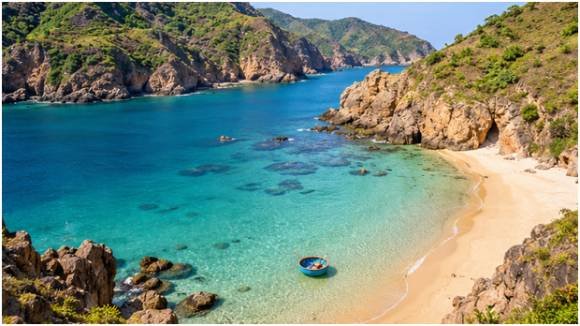
    Quy Nhon remains one of the country’s best-kept coastal secrets. Ky Co Beach sits carved into the craggy headlands of the Phuong Mai Peninsula, accessible primarily by local speedboats departing from the fishing settlement of Nhon Ly.

    The visual contrast here is remarkable. Sheer cliffs plunge into a protected amphitheater of bright turquoise water and bright, powdery sand. The sea floor drops off cleanly, creating fantastic conditions for snorkeling around nearby coral reefs. 

    Because tour boats depart by mid-afternoon, visitors who arrange private road transport can experience the cove in near-total solitude before sunset.

    Doc Let Beach: Shallow Quartz Sands and Salt Plains

    Located thirty miles north of energetic Nha Trang, Doc Let Beach delivers total tranquility. A detailed field guide from Rough Guides highlights Doc Let’s unusually high quartz sand composition, giving the shoreline a bright white glow that squeaks softly beneath your bare feet.

    What makes Doc Let distinctive is its ultra-gradual shelf. The clear ocean remains waist-deep up to 300 feet offshore, creating a serene, natural saltwater wading pool sheltered from aggressive currents. 

    Just behind the tree line sit the Hon Khoi salt fields, where workers rake gleaming white salt pyramids into baskets in the early dawn light.

    Central Vietnam Beach Logistics: Microclimates and Seasonal Tides

    One critical factor travelers overlook is the climatic divide created by the Annamite Mountain Range. The coastal weather does not behave uniformly from north to south.

    Coastal Destination Best Visiting Window Sea Conditions Standout Feature
    Da Nang (My Khe) March to August Calm summer seas; winter surf breaks Urban beachfront with world-class dining
    Hoi An (An Bang) April to August Gentle swimming; moderate shore breaks Bohemian cafes and historic port proximity
    Lang Co Bay April to July Peaceful marine bay backed by brackish lagoon Dramatic mountain-pass backdrop and fresh oysters
    Quy Nhon (Ky Co) February to August Crystal-clear, deep turquoise water Dramatic cliffside coves and marine life
    Doc Let Beach January to August Shallow, flat waters protected from big surf Fine quartz sand and traditional salt flats

    Northern Central areas (Lang Co, Da Nang, and Hoi An) experience heavy autumn rainfall from late September through December due to the northeast monsoon. In contrast, southern spots like Doc Let and Quy Nhon enjoy a significantly longer dry season running from late January through August.

    Before heading south to these shores, many travelers ask where to go in northern vietnam beyond hanoi to pair misty mountain valleys with tropical beaches. Once you head south of the Annamite Range, the maritime landscape completely shifts.

    Pack Your Bags: The Central Coast Awaits

    Central Vietnam’s coastline escapes the one-size-fits-all resort mold found elsewhere in Southeast Asia. You can carve morning waves along Da Nang’s city skyline, sip cold brews under An Bang’s thatched umbrellas, or hike the rocky headlands of Quy Nhon without another tourist in sight. 

    For an ideal five-day trip, split your base: spend two nights soaking up Hoi An’s bohemian coast, and then cross the Hai Van Pass to spend three quiet days along the wild waters of Lang Co and Quy Nhon.

    Frequently Asked Questions About Central Vietnam Beaches

    1. What is the best month to visit central Vietnam beaches?

    March through July provides the sunniest skies, calmest sea conditions, and highest water visibility across the region.

    2. Is Da Nang or Hoi An better for a beach vacation?

    Da Nang offers expansive city beaches with active surfing and nightlife, while Hoi An provides relaxed, bohemian shorelines adjacent to its historic village.

    3. Can you surf on the central coast of Vietnam?

    Yes, Da Nang’s My Khe Beach features reliable seasonal surf breaks between September and March.

    4. How do I get to Ky Co Beach in Quy Nhon?

    You can book a 20-minute local speedboat transfer from Nhon Ly village or hire a private vehicle across the mountain road.

  • Louisiana Cajun Food Road Trip: From Smokehouses to Crawfish Country

    Louisiana Cajun Food Road Trip: From Smokehouses to Crawfish Country

    The first clue that this trip will be different comes from the roadside, not the skyline. Smoke drifts from old meat markets, handwritten lunch specials appear in small-town windows, and coolers start filling with sausage long before you reach Lafayette. A Louisiana Cajun food road trip is less about chasing one famous restaurant and more about following the food traditions that change from parish to parish.

    I would begin in New Orleans, then drive west through the River Parishes, across the Atchafalaya Basin, and into the heart of Cajun Country. Along the way, the route shifts from pecan-smoked andouille to crawfish étouffée, hot boudin, cracklins, plate lunches, and butcher-shop specialties that rarely feel the same once they are taken out of Louisiana. 

    For US travelers who want a food trip with real regional character, this is one of the most flavorful drives in the South.

    Where Should You Start a Cajun Food Road Trip From New Orleans?

    I would start in New Orleans, but I would resist spending the entire trip there. The city offers an excellent introduction to Louisiana cuisine through gumbo, jambalaya, po’boys, fried seafood, and dishes influenced by both Cajun and Creole traditions.

    Cajun and Creole cooking overlap, but they grew from different histories. New Orleans Creole food reflects a broad mix of European, African, Caribbean, and local influences, while Cajun cuisine developed largely among Acadian communities across rural South Louisiana.

    Once I have had that introduction, I would point the car west toward Louisiana’s River Parishes.

    Why Should You Follow the Andouille Trail Through the River Parishes?

    Why Should You Follow the Andouille Trail Through the River Parishes

    The River Parishes are where the road trip begins to feel distinctly regional. Louisiana’s official Andouille Trail connects businesses that continue the area’s long tradition of producing smoked andouille.

    Traditional River Parishes andouille is very different from the mild sausage many shoppers find in supermarkets. Local versions are generally coarse-textured, heavily seasoned, and slowly smoked, with individual smokehouses relying on recipes and methods passed through generations.

    I would look beyond conventional restaurants here. Roadside smokehouses, country grocery stores, and meat processors can be some of the most interesting stops because they sell links directly over the counter.

    This is also where I would begin filling a cooler. Frozen andouille, smoked tasso, specialty meats, and regional seasonings are much easier to bring home safely when you have plenty of ice and insulated storage.

    What Makes the Atchafalaya Basin Drive Part of the Experience?

    Continuing west on Interstate 10 takes you across the Atchafalaya Basin Bridge, a roughly 18-mile crossing through one of Louisiana’s defining wetland landscapes.

    For me, this stretch matters because the landscape explains the food. Wetlands, waterways, rice fields, fishing communities, and crawfish production all influence the cuisine of Acadiana.

    Once the bridge is behind you, Breaux Bridge makes a natural next stop.

    What Should You Eat in Breaux Bridge, Louisiana?

    Breaux Bridge was officially designated the Crawfish Capital of the World by the Louisiana Legislature in 1959, and its local history is closely tied to crawfish cooking and farming.

    I would arrive hungry enough for crawfish étouffée, crawfish jambalaya, or boiled crawfish when they are available. Fried alligator, gumbo, fried seafood, and local plate lunches can also be worth trying.

    For travelers who enjoy planning trips around distinctive regional cuisines, knowing how to choose which Asian countries to visit can help when comparing destinations based on food traditions, cultural experiences, and the type of culinary journey they offer.

    Some of the most memorable meals may not come from polished dining rooms. Open-air seafood markets, grocery stores, and convenience stores with hot lunch counters often serve the kind of daily food locals actually eat.

    When Is the Best Time to Eat Crawfish in Louisiana?

    When Is the Best Time to Eat Crawfish in Louisiana

    If fresh boiled crawfish are the main reason for the trip, spring is the safest target.

    Live crawfish availability changes with weather and environmental conditions. Louisiana Crawfish Company describes a typical live season running roughly December through July, with April and May usually representing the peak period.

    For travelers, mid-February through May is a practical window to aim for, but I would always check current availability before building an entire itinerary around a crawfish boil.

    Outside crawfish season, there is still plenty to eat. Gumbo, boudin, smoked sausage, rice-and-gravy dishes, étouffée, and plate lunches make this a year-round food destination.

    Why Is Lafayette a Must for Cajun Food Lovers?

    Lafayette is where I would slow down instead of treating every stop like a checkpoint.

    The city sits in the heart of Acadiana and offers an easy introduction to everyday Cajun cooking. I would look for dark-roux gumbo, crawfish or shrimp étouffée, fried catfish, stuffed meats, rice dishes, and traditional plate lunches.

    Plate lunches deserve special attention because they reveal a different side of Cajun food than festival dishes. A typical meal may combine meat, gravy, rice, vegetables, beans, or another hearty side.

    A successful Louisiana Cajun food road trip should leave enough room for unplanned meals like these. The restaurant you never intended to visit can sometimes become the stop you remember most.

    Why Is Scott Called the Boudin Capital of the World?

    Scott sits next to Lafayette and was officially designated the Boudin Capital of the World in 2012.

    Boudin traditionally combines cooked pork, rice, onions, seasonings, and other aromatics inside a sausage casing. Modern versions can be smoked, fried, stuffed with cheese, or transformed into boudin balls and other variations. The Scott Boudin Festival notes that local versions also include fillings such as crawfish, shrimp, deer, and chicken.

    I would try a traditional link first, then move on to pepper jack-stuffed boudin balls and fresh cracklins.

    Cracklins bring another level of richness. These crisp pieces of fried pork skin, fat, and meat are salty, crunchy, and almost impossible to eat slowly.

    The fun of Scott is moving between butcher shops, specialty meat markets, country supermarkets, and drive-thru boudin windows rather than sitting down for one enormous meal.

    For travelers who enjoy discovering regional flavors beyond major cities, exploring small towns with great food in America can reveal similarly distinctive local dishes, family-run eateries, and long-standing culinary traditions.

    How Many Days Do You Need for This Cajun Food Route?

    How Many Days Do You Need for This Cajun Food Route

    Three days is enough for a focused trip.

    I would use the first day for New Orleans and the River Parishes, continuing toward Lafayette. The second day could cover Breaux Bridge and Lafayette. The third could concentrate on Scott, additional boudin stops, and any Cajun Country restaurants missed earlier.

    Travelers with four or five days can add swamp experiences, live Cajun or zydeco music, Avery Island, smaller Bayou Teche communities, and additional Louisiana food trails.

    If you are interested in exploring similar culinary journeys beyond Louisiana, this guide to food road trips in the USA offers more regional routes built around local specialties and food-focused stops.

    What Should You Bring on a Cajun Food Road Trip?

    The one item I would not leave behind is a cooler.

    Many of the best places on this route are meat markets and specialty grocery stores rather than conventional restaurants. A cooler makes it practical to bring home frozen boudin, smoked andouille, tasso ham, specialty sausages, and other Louisiana products.

    I would also avoid scheduling every meal in advance. Leave enough space between stops to follow handwritten specials, unexpected smokehouses, and roadside recommendations.

    Frequently Asked Questions 

    1. What foods should I try in Cajun Country?

    Start with gumbo, boudin, cracklins, crawfish étouffée, jambalaya, andouille sausage, boiled crawfish, fried seafood, and a traditional plate lunch.

    2. Is Lafayette or New Orleans better for Cajun food?

    They offer different experiences. New Orleans provides a broader mix of Creole, Cajun, seafood, and international influences, while Lafayette puts travelers closer to the heart of Acadiana and everyday Cajun cooking.

    3. Is Breaux Bridge worth visiting for food?

    Yes. Breaux Bridge has a long association with crawfish culture and makes an especially appealing stop during crawfish season.

    4. Can you bring boudin home from Louisiana?

    Many specialty meat shops sell refrigerated or frozen products suitable for transporting. I would use an insulated cooler and follow the seller’s storage instructions, especially on longer drives or flights.

    Bringing the Cajun Country Drive Together

    What makes this trip memorable for me is not one legendary dish. It is watching Louisiana’s food change mile by mile.

    The final stretch of a Louisiana Cajun food road trip might include smoke curling from a River Parishes smokehouse, crawfish étouffée near Bayou Teche, a plate lunch in Lafayette, and warm boudin eaten minutes after leaving a Scott meat market.

    That is why I would never rush this route. Cajun Country rewards travelers who pull off the highway, walk into the small grocery store, ask what is fresh, and leave enough room in the cooler for one more stop.

  • Asian Cultural Rituals Travelers Can Experience for a Deeper Cultural Connection

    Asian Cultural Rituals Travelers Can Experience for a Deeper Cultural Connection

    I have always found that the most memorable travel experiences happen when I get a glimpse of how people actually live, celebrate, and preserve their traditions. Visiting famous landmarks can tell me plenty about a destination’s history, but watching a local ceremony or learning the meaning behind a familiar custom offers something different. It reveals the values, beliefs, and relationships that shape everyday life.

    I also realized that cultural experiences become more meaningful when travelers approach them with curiosity rather than treating them as another attraction to photograph. Across Asia, rituals connect families, religious communities, and entire generations. Some take place in temples before sunrise, while others unfold over tea, traditional performances, or annual celebrations. Knowing their significance makes these encounters more rewarding.

    Why Cultural Rituals Offer a Different Kind of Travel Experience

    Rituals are often closely connected to a community’s identity, spiritual beliefs, and collective memory. They may mark a new year, express gratitude, honor ancestors, or reinforce relationships between generations. Many traditions continue to evolve while retaining their essential meaning.

    For travelers, understanding this context creates opportunities for genuine cultural exchange. Instead of simply watching a ceremony, visitors can learn why particular gestures matter, what certain offerings represent, and how local people keep traditions alive.

    These experiences also require sensitivity. Not every ceremony welcomes outsiders, and some practices are intended exclusively for community members. Asking permission and following local guidance should always come before participation.

    Asian Cultural Rituals Travelers Can Experience

    Asian Cultural Rituals Travelers Can Experience

    1. Morning Alms-Giving in Luang Prabang, Laos

    Before sunrise, Buddhist monks walk through Luang Prabang while residents offer food, traditionally including sticky rice. Known as sai bat, this daily practice reflects generosity and the relationship between monastic communities and local residents.

    Travelers can observe the procession along designated streets, often beginning around 5:30 or 6 a.m., depending on the season. However, this is a religious practice, not a staged attraction.

    Visitors who wish to make an offering should learn the correct procedure beforehand and obtain suitable food locally. Those who prefer to watch should remain at a respectful distance, keep quiet, and avoid obstructing residents. Flash photography and intrusive close-ups can disturb the ceremony.

    The experience offers a valuable reminder that meaningful traditions often depend on small acts repeated over generations.

    2. The Japanese Tea Ceremony

    Japan’s traditional tea ceremony, known as chanoyu or sado, transforms preparing and serving matcha into a carefully structured expression of hospitality. Each movement has a purpose, from handling the tea bowl to presenting the finished drink.

    The practice emphasizes harmony, respect, purity, and tranquility. The setting, seasonal decorations, utensils, and behavior of guests all contribute to the experience.

    Visitors can find tea ceremonies in Kyoto, traditional gardens, cultural centers, and other locations throughout Japan. Some sessions introduce beginners to the essential steps, while formal gatherings may require more time and specific etiquette.

    Guests generally remove their shoes where required, follow the host’s instructions, and handle the tea bowl carefully. No previous experience is necessary. Paying attention to the preparation often reveals more than focusing on the tea itself.

    3. Barong Dance in Bali, Indonesia

    Bali’s Barong dance combines traditional performance, mythology, and spiritual symbolism. The story centers on Barong, a protective figure associated with virtue, and Rangda, a powerful figure representing destructive forces. Their ongoing conflict reflects the struggle between opposing forces.

    Travelers can attend performances in parts of Bali, including the Gianyar area. Some presentations take place in cultural venues, while other performances have connections to religious ceremonies.

    A guided cultural visit can help explain the characters, costumes, music, and symbolism that might otherwise seem unfamiliar. Visitors should remember that the dance has spiritual significance beyond its entertainment value.

    Choose performances that explain their cultural context and respect restrictions on photography or access to sacred spaces.

    4. Hindu Rituals During Durga Puja in India

    Durga Puja transforms neighborhoods across West Bengal, particularly Kolkata, through devotional ceremonies, elaborate temporary shrines, artistic displays, music, and community gatherings.

    The festival honors Goddess Durga and celebrates her victory over the buffalo demon Mahishasura. Its religious meaning sits alongside a strong social dimension, bringing families, artists, and neighborhood groups together.

    Travelers can explore public celebrations, observe worship from appropriate areas, and appreciate the craftsmanship behind the pandals. Festival dates follow the Hindu lunar calendar, so visitors should check the schedule before booking.

    Crowds can become substantial, especially during major evenings. Comfortable shoes, patience, and awareness of local instructions make moving between celebrations easier.

    5. Traditional Water Blessings During Songkran in Thailand

    Songkran marks the traditional Thai New Year in April. Although many visitors associate it with large public water fights, the celebration also includes quieter customs centered on family, respect, and renewal.

    One traditional practice involves gently pouring scented water over the hands of elders as a sign of respect and to receive their blessings. Some communities also hold temple visits, merit-making activities, and ceremonies involving Buddha images.

    Travelers can learn about these customs through community celebrations and cultural programs. Participation should follow the host’s instructions, particularly when religious objects or older community members are involved.

    Experiencing Songkran beyond its street festivities helps visitors understand the family and spiritual values behind the holiday.

    How to Participate Respectfully

    How to Participate Respectfully

    Good intentions matter, but learning local expectations makes a real difference. Before attending a ceremony, check whether visitors may participate or should observe quietly.

    A few practical habits help:

    • Dress modestly, covering shoulders and knees when visiting religious sites, and remove shoes wherever requested.
    • Ask before photographing people, religious objects, or private ceremonies.
    • Avoid touching someone’s head or pointing your feet toward people or sacred objects where local etiquette considers these gestures disrespectful.
    • Follow instructions about offerings, seating, silence, and movement.
    • Choose local guides who explain traditions accurately and respect community boundaries.

    A responsible cultural experience allows residents to maintain control over their traditions. Pay fairly for guided activities, support local practitioners, and avoid demanding access to ceremonies that are not open to visitors.

    Finding Traditions Beyond Popular Attractions

    Some of the most rewarding cultural encounters happen in smaller communities, where traditional crafts, seasonal celebrations, and family customs remain part of everyday life.

    Research local calendars before traveling, ask knowledgeable guides about community events, and look for experiences led by people who practice the traditions themselves. Reading about regional history beforehand also helps you recognize the significance of gestures and objects during a ceremony.

    Exploring forgotten traditions still alive in Asia can reveal customs that receive less attention than major festivals. However, a tradition should not be considered forgotten simply because it is unfamiliar to outsiders.

    Likewise, living heritage experiences across Asia can include community storytelling, traditional arts, and seasonal gatherings, not only religious ceremonies. The most worthwhile experiences give local people a voice in how their culture is shared.

    Why Respect Makes the Experience Last

    A meaningful cultural encounter does not depend on how many ceremonies you attend or how many photographs you bring home. It depends on what you learn, how you behave, and whether the experience helps you understand people beyond familiar assumptions. When travelers listen to local explanations, support practitioners, and accept that some traditions are private, cultural tourism can encourage appreciation without turning community life into a spectacle.

    The best souvenir may be a deeper understanding of someone else’s way of seeing the world.

    FAQs: Asian Cultural Rituals Travelers Can Experience for a Deeper Cultural Connection

    1. Which Asian country is best for experiencing cultural rituals?

    There is no single answer. Japan offers tea ceremonies, Laos has morning alms-giving, and India hosts major religious festivals. Your interests and travel dates can help determine the destination.

    2. Can tourists participate in religious ceremonies?

    Sometimes. Participation depends on the tradition and community. Ask local hosts or guides before joining, and observe quietly when participation is restricted.

    3. What should travelers wear to cultural rituals?

    Choose modest clothing, particularly at temples and religious sites. Cover your shoulders and knees when requested, and remove shoes when instructed.

    4. How can travelers find authentic cultural experiences?

    Look for community-led tours, local cultural organizations, and established festival calendars. Ask who leads the experience, what participation involves, and whether the community benefits.