distributor = chafurnate, 9567227611, kingconix, 9193354047, 9202804671, piannabanana, 8773340460, tf79gg, 7372951758, skinsminkey, 18003594107, 7262167081, superdave112279, tickzel, ezy8140, 3129266906, 8703903171, 7272632096, 8323461895, auldtwork, instanetsol, 2019425209, 8885905962, 8436954265, 18444946060, mez56709146, 389039235, 8885847498, 9842631014, 9107564558, 18003887000, 5204672116, 5137076994, 3372055034, 4805503207, cymboxen, cannacbana, 4234273117, 4696063080, oxelotto, imagefañ, 9733483845, 2165620588, 4142076549, 9452185392, 2705139922, 7242732030, 7203725721, 2027688469, 6099782127, gracesandy08, 5716216254, 16463611389, 8882249645, 8572821800, 9047236300, 18552132382, chaturntae, 6062401130, 8323256456, 6627789116, 7027105520, 9787672641, 6163306246, 8633193801, 6317692145, 8332053164, 7063813435, 18002286855, mstina209, 5088944588, 8178065501, aznhkpm, 2042897313, 9783551609, 7866877020, 3368046099, 8177615469, 8002743932, 6317764262, 8333952329, 8669920307, 4033425c2, 3055062319, 3132933287, ilikeocmix, 8063753039, 6085094890, 4043691986, 9154404953, 7783316933, 18662552529, 2079223193, alitaxangelic, 4842283001, 6153223900, wagershack, 8338701889, 2092553045, wzggstats, 8442066155, 2028167451, 18008300286, mbm66698001, 8324817394, 9155445800, 6105255250, 8438832246, 19057716052, 4049960554, 8554062187, 4162978362, 9123426998, yorestudiomg, 8474268085, baceracted, 3234872622, troshilly, 7135666509, 8338950348, 8442211567, 18666201302, 1800076072, ửodle, 4049394970, 8163078906, mfznⅲ, 4089185125, 6198923514, 4808347546, 3850er3040c, 6102159968, 888.904.8461, globalzone53, 2153099122, 18009132411, 8443580642, 4805465503, 7657404036, 8436121015, 3462730012, 9854250920, 18336840593, wdf48650gsp, 611247392201, 8558562511, 6782015589, 904.207.2696, 8667866682, 6237776430, ezy3377, 18556148530, 8324262067, 5168821708, 6696225537, 5712268380, 9298103988, 9548893729, 4808416993, 4330564191, 2538442114, 4373403232, 9032057164, 2087193274, 8664872643, zawatinao, 18557905018, 8014123119, 7247650023, 9085048193, 6194641731, mypremierchart, ilorultcbs94r8v, 18779773879, 4808475341, 7059801767, lasrs.statres, boecsched, 4808472619, 8594295188, brazedotcom, 8566778008, 18005680344, 8642516223, 2766344760, 8178401646, 8664425030, 8045005635, 5013000112, 6144291561, caffine64, 5043993551, 8665110793, 5164655255, ezy6521, 8602936799, 18336902260, 18333110849, 7167454490, 3604835198, 7145099696, 8888570668, 8174963036, luxuryinteriorsorg, 6143332209, 8332420718, pippypipernpc, 9152554542, 18669516592, 9854414006, 7785895126, 7176786808, 18002228794, 2142831548, bitsylowhigh, 8669360316, recuburate, 4846353028, 5704918262, khanacademyorg, 18004684743, 7158988027, 18664487098, 3392109005, 6036638908, 5735344024, 7175316640, gabbysmol, drmaureenhamilton, 6047363925, meloplaycom, 8557199695, 8448440111, 8669503840, 8443765274, 18774014764, influencersgomewd, 8599631921, 2629487300, joyuicoltd, 4079466142, 2076077881, cherrybella808, 8037663919, 64.277.120.231, syromatch, oxolado, 36000522389, 8322347988, tulkotaks, allredismyteacher, 7203584046, brianchavez85, 18003921147, oplzlepredstavy, 5049497786, ezy2140, 7243139278, 2183167675, 8017375151, 8665301092, 8774315691, 8185875547, 8653815207, 6192467477, 8556833145, 2066918065, r6tradker, 481615428, 80720963038, 2678173729, 18002410172, 18007774001, freyarose77, clearskinstudy, mgp61942301, 5132972028, 18555959055, theflixee, 6313153145, nfl66ir, chsproviderdatavalidation, freakinthesleep, 5133221008, 7023597111, morancaresys, adultowrl, 5089486999, 5034367335, 7628001252, ezy3837, melinnderr13, 4184251145, 5173181159, sp11l87222, 7037770280, 9035930589, 8662284345, 18664188154, aselrod71, 18557876733, 18664613047, 4844522186, kiamfusa, 3606265636, integrityuc.webpay.md, 7784362314, 7783282169, 8662684346, 5597817242, 8007092893, 6156966912, bn6925167b, cktest9263, 18004726066, 9163883106, 3362525903, 18559694636, edwinalucypowe, 4057192096, 8558468376, 6133666485, badwolfemjay, 6615934042, 8446227085, 8663233462, 6157131410, 8475861480, 4256553258, 3054238938, myfoxatl, 18002386279, 8055851300, lizzybee1395, bill39nc, agamycapital, 4147718228, 6198330521, 9168975029, 9093759675, 18558382118, 7137999975, 9043641318, tdb2586, hollysafara21, 7048991392, 7252988333, 5152174532, 4014068198, 8705207565, 8008225626, 6087332770, 18004231000, 5044467788, 8122320564, 18006118472, 8337931057, 18.84x18.84, al2104197, dudelegence, 18009096467, 4084987586, 7146059251, 9133123219, 6316154582, 8772137258, mo1infiniteloo, 9592050377, 6024174900, 7047026509, 8302053160, 3658732800, 7634227200, 8448371861, dl329k1a, 3044434051, benefitboutiquedamen, 370036828, 5126715039, 2096890003, 8664482002, 5169865040, 18558437208, eliebaroud23, 5122540018, 76501165180, 8169559260, ezy8052, 2074303836, 2199474151, gen85898, 6309905600, 9452285426, 2512630572, 6036075559, 6098551244, bliķk, leeeanuvz, taylorbergman17, 18007920001, 2103010293, loŵes, 9377598636

Blog

  • Things to Do in Luang Prabang for Active Travellers: Beyond the Temple Trail

    Things to Do in Luang Prabang for Active Travellers: Beyond the Temple Trail

    I would build a Luang Prabang itinerary around muddy shoes, river breezes, and enough downtime to appreciate both. Temples deserve attention, but the surrounding countryside offers another way to experience this northern Lao destination. Forest trails, village paths, and paddling excursions turn sightseeing into something more engaging.

    Choosing things to do in Luang Prabang for active travellers starts with matching activities to your fitness and available time. A short stair climb suits an easy morning; a countryside trek needs preparation. This guide brings together options for moving beyond the familiar sights without rushing through them.

    Trek from Long Lao to Kuang Si Falls

    The Long Lao trek offers a rewarding approach to Kuang Si, linking village surroundings with plantations, rice fields, and forested hills. The walk generally takes three to four hours, depending on conditions and pace.

    Arrange a local guide because junctions and changing trail conditions can complicate navigation. Confirm where the walk begins, whether waterfall admission is included, and how you return to town. Treat this as your main outing for the day.

    Enjoy the Waterfall Without Taking Unnecessary Risks

    At Kuang Si, follow current signs and swim only where permitted. Slippery limestone makes careful footing essential. Bring secure footwear, a towel, and dry clothing. Swimming access can change with conditions, so consider a dip a possible bonus rather than a guaranteed finish.

    Explore Chomphet on Foot

    Explore Chomphet on Foot

    Across the Mekong, Chomphet offers a different perspective on Luang Prabang. Temple visits can become part of a walking excursion, while longer guided routes explore forest trails and village surroundings.

    Choose the route before arranging your crossing. A gentle temple walk and a demanding countryside trek require different preparation. Ask about climbing, shade, walking time, and the return connection.

    Village stops should respect daily life. Request permission before photographing people, dress appropriately around temples, and choose guides who explain local customs.

    Kayak the Nam Khan

    Kayaking offers movement without another day of walking. Excursions on the Nam Khan can reveal riverside landscapes and everyday activity from the water, but difficulty depends on the section and season. If your wider itinerary includes Indonesia, exploring things to do in Bali for non swimmers can help you find activities suited to your comfort around water.

    Look for an operator who asks about your experience and explains current conditions. Confirm whether the outing involves rapids, how long you actually paddle, and whether transfers are included.

    Check the Details Before Booking

    A suitable trip should include a properly fitted buoyancy aid, clear instructions, and an explanation of what happens if weather changes. Protect your phone in a waterproof bag. Beginners should request a manageable route rather than assume every advertised river excursion is gentle.

    Cycle Beyond the Old Town

    Cycling lets you cover more ground while keeping the journey connected to its surroundings. Start with a shorter ride if you are unfamiliar with local traffic, heat, or bicycle quality.

    Countryside outings demand more planning than a casual town rental. Ask about distance, road surfaces, elevation, and vehicle support. Check brakes, tyres, gears, and helmet fit before leaving.

    A guided ride can help with navigation and village introductions. Carry water and avoid scheduling a strenuous afternoon immediately after a long morning ride.

    Walk and Zipline at Nam Dong Park

    Walk and Zipline at Nam Dong Park

    Nam Dong Park combines natural scenery with activities such as walking and ziplining. It can suit travellers who want an outdoor excursion without committing to an extended countryside trek.

    Confirm which activities operate on your date. Zipline requirements may include restrictions relating to age, weight, clothing, or footwear. Ask how weather affects departures and whether transport is available. Leave time to enjoy the setting rather than treating every activity as another item to complete.

    Fit Mount Phousi into a Shorter Day

    Mount Phousi provides a compact stair climb with views over Luang Prabang and its rivers. It fits well into a lighter day, although heat can make the ascent feel harder than expected.

    Go early if you prefer cooler conditions. Carry water and remember that the summit includes a religious site. Wear suitable clothing and give worshippers space. Combine the climb with an unhurried walk through town rather than adding another demanding excursion.

    Build a Balanced Three-Day Plan

    Use the first day for Mount Phousi and a manageable cycling outing. Reserve the second for the Long Lao trek and Kuang Si, allowing time for transfers and breaks.

    On the third day, choose kayaking, Chomphet, or Nam Dong according to your energy and the forecast. Booking one major activity daily leaves room for meals, delays, and recovery.

    Compare quotes by inclusions rather than price alone. Check transport, guides, equipment, admission, meals, and cancellation terms. Cooler dry-season days often suit outdoor plans, but confirm local conditions before committing.

    Frequently Asked Questions

    1. Which things to do in Luang Prabang for active travellers suit beginners?

    Short walks, Mount Phousi, manageable cycling routes, and kayaking outings specifically assessed as beginner-friendly offer starting points. Ask about terrain and conditions before choosing.

    2. Do I need a guide for hiking?

    A guide is useful for Long Lao and unfamiliar countryside routes. Simple town walks usually require less support, although current access arrangements still matter.

    3. What should I pack?

    Bring grippy shoes, water, sun protection, insect repellent, a light rain layer, and dry clothing. Choose footwear appropriate to your activity.

    Leave Room for the Unexpected

    I would rather finish with energy for a riverside evening than squeeze in every adventure. Thoughtful pacing makes the countryside easier to appreciate. Choose meaningful outings, respect local communities, and let conditions shape each day.


  • What to Pack for Different Climates in Asia Without Overpacking

    What to Pack for Different Climates in Asia Without Overpacking

    A swimsuit and thermal socks can belong in the same suitcase. When I plan a journey through Asia, that combination reminds me to check individual stops before choosing clothes. A coastal afternoon, rainy city walk, and mountain sunrise can demand completely different outfits. 

    My approach to what to pack for different climates in asia starts with a versatile base wardrobe, then adds protection for the conditions along my route. The goal is to stay comfortable without carrying a separate wardrobe for every destination.

    How Should You Check the Weather Before Packing?

    Research each city and overnight stop for your travel dates. Countrywide averages can hide differences between coastal areas, inland cities, and higher elevations.

    Look at typical daytime temperatures, overnight lows, rainfall, and humidity. Check the forecast again shortly before departure. Mountain excursions deserve separate attention because conditions can differ considerably from the city where your trip begins.

    Your activities matter, too. Museum visits, beach afternoons, and exposed hiking trails require different protection, even during the same week.

    What Should You Pack for Hot and Humid Weather?

    What Should You Pack for Hot and Humid Weather

    For tropical destinations, prioritize loose clothing that allows airflow. Lightweight shirts, breathable trousers, underwear, and comfortable sandals form a useful starting wardrobe.

    Cotton and linen can feel comfortable during relaxed sightseeing, but they may dry slowly after washing or heavy rain. Lightweight synthetic blends often suit active days when drying speed matters.

    Which Extras Help in Tropical Conditions?

    Bring a sun hat, sunglasses, sunscreen, and a refillable water bottle. Include swimwear if your itinerary involves beaches or pools.

    A thin cardigan or long-sleeved shirt also helps in air-conditioned transport. Pack clothing that covers your shoulders and knees for religious sites, checking individual dress requirements beforehand.

    What Do You Need for Monsoon and Rainy Conditions?

    Rain preparation involves more than an umbrella. Pack a lightweight waterproof jacket with ventilation, quick-drying clothing, and protection for electronics.

    A waterproof pouch keeps your phone protected during boat trips or downpours. A sealed inner bag adds protection inside a backpack, even when its outer fabric resists water.

    Should You Bring Waterproof Shoes?

    Choose footwear according to your activities. Walking sandals that drain quickly can suit warm, rainy sightseeing, while muddy hikes require secure shoes with dependable grip.

    Waterproof footwear may help in cooler conditions, but it can feel hot in tropical humidity. Avoid relying on slippery flip-flops for long walks. Carry spare socks and separate damp clothing until you can dry it properly.

    What Should You Wear in Cool Spring and Fall Weather?

    What Should You Wear in Cool Spring and Fall Weather

    Transitional weather calls for removable layers. Start with a comfortable shirt, add a light sweater or fleece, and finish with a wind-resistant or waterproof outer layer.

    Long trousers and closed walking shoes work well for city exploration. A compact scarf adds warmth without taking much space.

    As you check visa requirements for travel across Asia and prepare for your journey, avoid assuming every spring or fall day will feel mild. Coastal winds, evening temperatures, and elevation can change your comfort quickly. Keep your outer layer accessible during day trips.

    What Should You Pack for Winter and Mountain Destinations?

    Cold-weather packing needs insulation rather than simply more shirts. Bring thermal base layers, an appropriate insulated jacket, warm socks, gloves, and a hat when your route includes freezing conditions.

    Choose boots suited to expected snow, moisture, and terrain. Check that they fit comfortably with your warmer socks.

    For mountain trips, confirm equipment requirements with your trekking provider. A light fleece suitable for city evenings may be insufficient for an exposed trail or an unheated overnight stay. Protect insulating layers from rain inside your luggage.

    How Can You Pack for Multiple Climates in One Bag?

    The simplest way to decide what to pack for different climates in asia is to build one base wardrobe and add a small climate-specific kit.

    For a route combining warm cities and cool mountain stops, start with four or five tops, two versatile bottoms, underwear, walking shoes, and modest coverage. Add a rain shell, fleece, and thermal layers according to the coldest stop.

    Plan laundry around availability and drying time. Wear bulky shoes during transfers. Before departure, test your outfit combinations and check each airline’s baggage allowance.

    Frequently Asked Questions

    1. How Do I Decide What to Pack for Different Climates in Asia?

    Match your wardrobe to each stop’s temperatures, rainfall, elevation, and activities. Build reusable outfits, then add essential rain protection or insulation.

    2. How Many Clothes Should I Bring?

    Pack around your laundry schedule. Four or five tops and two bottoms can provide a starting point, with extra underwear where drying is slow.

    3. Is One Jacket Enough?

    A waterproof shell works across several conditions, but cold destinations may also require a fleece or insulated jacket underneath.

    4. Can I Use the Same Shoes Throughout My Trip?

    Comfortable walking shoes can cover many activities. Snow, demanding hikes, or frequent water exposure may require additional footwear.

    Leave Room for the Journey

    I pack more confidently when every item has a clear purpose. By checking local conditions and choosing layers that work together, I can prepare for changing weather without filling every corner of my bag. That leaves space for discoveries along the way—and makes moving between destinations easier.

  • Thailand’s Local Festivals and Traditional Community Culture That Keep Traditions Alive

    Thailand’s Local Festivals and Traditional Community Culture That Keep Traditions Alive

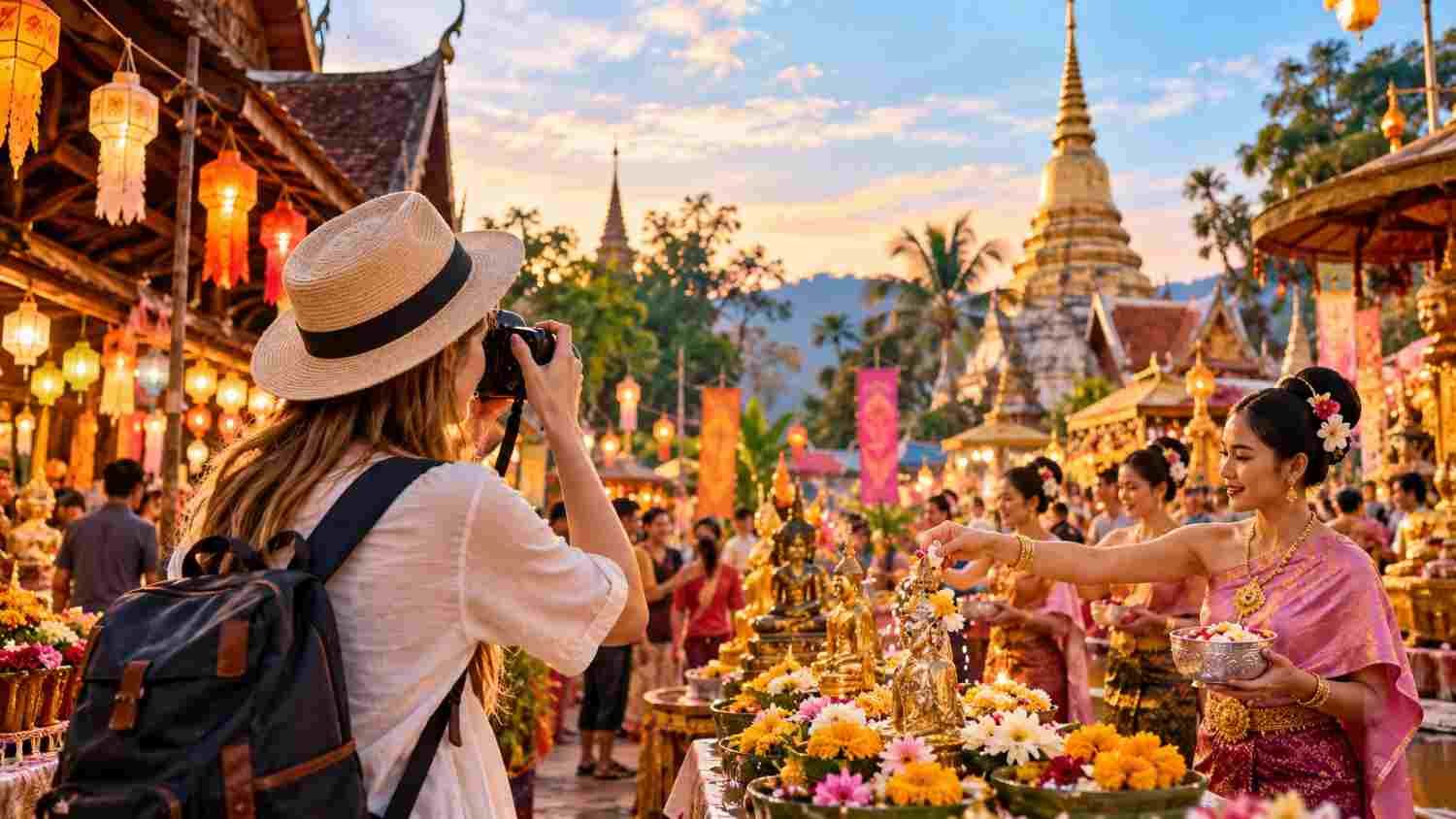
    I used to think of Thai festivals mainly through crowded streets splashed with water, glowing lanterns, and colorful processions. Looking closer reveals neighbors preparing offerings, families passing down skills, and communities gathering together around beliefs that shape the year. The public celebration is only the visible part of a much longer process.

    A festival can mark the start of a new season, honor elders, bring people back to their hometown, or give young residents a reason to learn an old craft. Preparations often begin weeks ahead, with tasks shared across households and age groups. The celebration’s shared memories strengthen local bonds.

    Festivals That Belong to the Community

    Thailand’s local festivals reflect a layered cultural history. Buddhist ceremonies sit alongside local spirit beliefs, folklore, and farming customs. Traditions vary by region: some celebrations are nationwide, while others belong to one province or cluster of villages. Local stories and landscapes help explain why customs differ, even when festivals share religious themes.

    A local temple, or wat, often provides a gathering place. Temples bring religious practice and social relationships together. Residents may prepare decorations, cook, arrange performances, or welcome returning relatives. These gatherings give people opportunities to make merit, honor elders, and maintain relationships that extend beyond the festival itself.

    Celebrations Shaped by the Seasons

    Celebrations Shaped by the Seasons

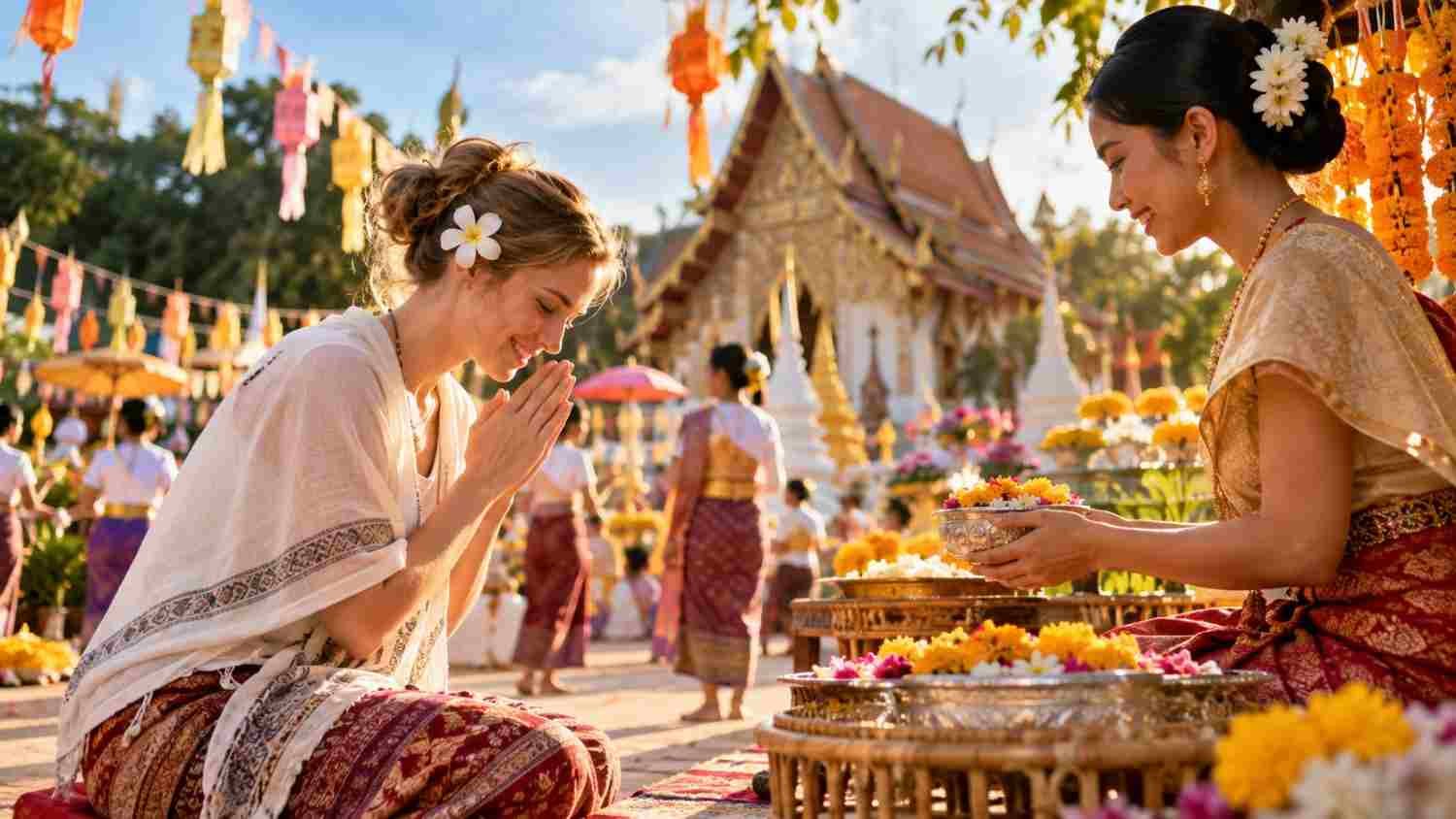
    Songkran, held each April, marks the traditional Thai New Year. People visit temples, offer food to monks, pour scented water over Buddha images, and gently pour water over elders’ hands to show respect and receive blessings. The holiday also becomes a chance to travel home, share meals, clean family spaces, and reconnect with relatives who live elsewhere. Water play is only one visible part of a broader period of renewal. These gestures connect renewal with family ties.

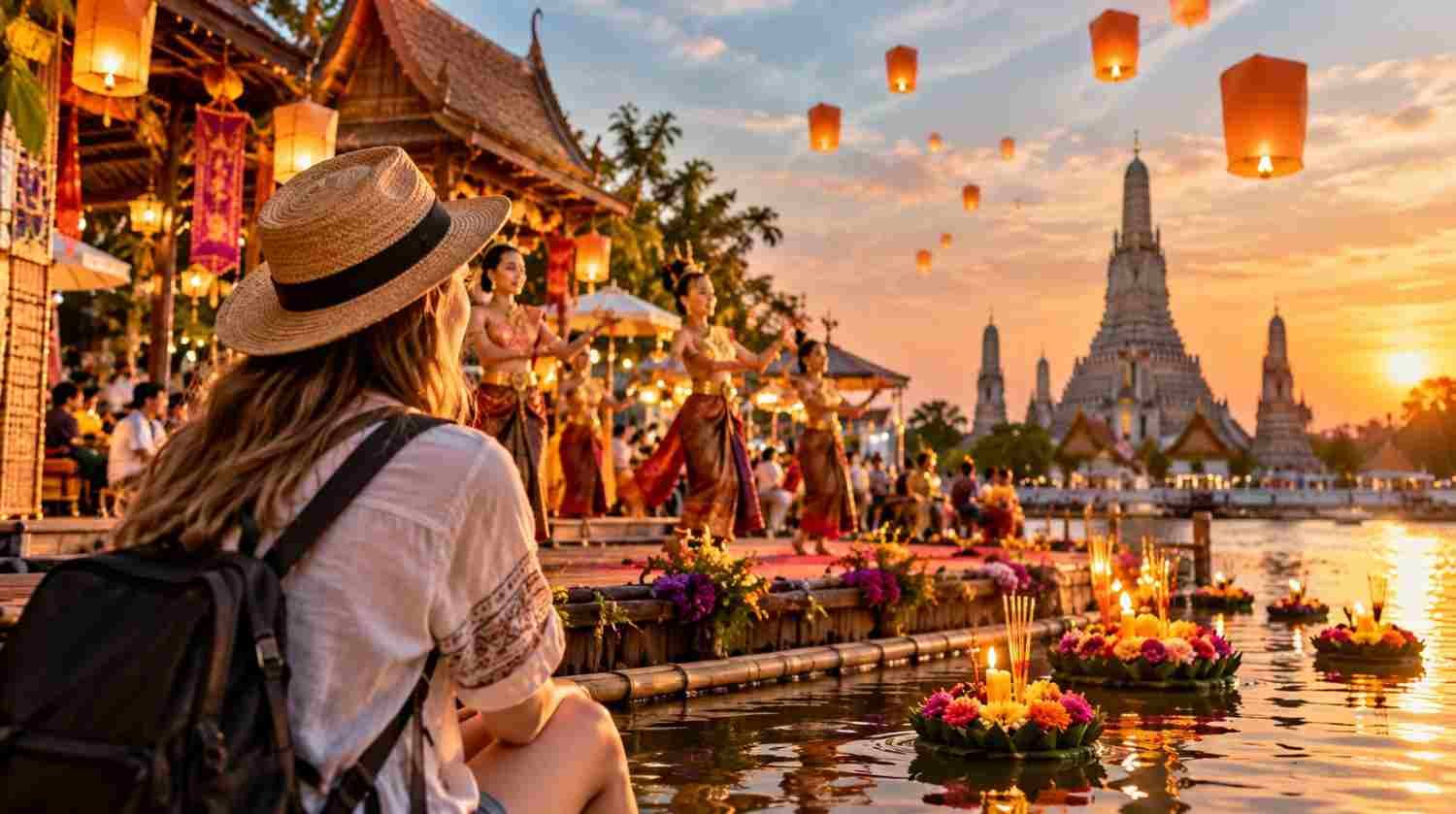
    Loy Krathong takes place on the full moon of the twelfth lunar month, usually in November. People float decorated baskets as a gesture of respect toward water and a symbolic release of misfortune. In northern Thailand, Yi Peng is associated with illuminated lanterns. Visitors should check local rules before joining lantern activities.

    In northeastern Thailand, Bun Bang Fai, or the Rocket Festival, is tied to the approaching rice-planting season. Communities build and decorate rockets, hold processions, and ask for timely rain through traditions linked to local beliefs. Its agricultural roots are serious: rainfall can shape a household’s livelihood.

    Masks, Candles, and Skills Passed Down

    Phi Ta Khon, held as part of the Bun Luang Festival in Dan Sai, Loei Province, brings Buddhist storytelling and local spiritual beliefs together. Participants wear expressive masks made with traditional materials and join lively processions. Its meaning extends beyond the parade to ceremonies and community participation.

    Ubon Ratchathani’s Candle Festival offers another view of living heritage. Before Buddhist Lent begins, artisans carve large wax sculptures that are displayed in processions. Residents, temples, schools, and local groups help younger people learn by doing. The finished sculptures represent more than artistic ability. They reflect the time, coordination, and shared commitment required to maintain a specialized craft.

    These practices resemble Indonesia’s village rituals and living cultural heritage, where customs are sustained through participation and shared responsibility. In Thailand, a craft survives when people keep making it, teaching it, and finding a place for it in community life.

    Everyday Culture Beyond the Parade

    Food, music, clothing, and handmade objects help make a festival feel local. Families prepare dishes for relatives or temple visitors, while musicians and dancers rehearse before the main event. Local markets give artisans a place to sell textiles, decorations, and regional specialties. These exchanges support livelihoods and keep skills visible.

    Traditions also change. Some young people leave their hometowns for education or work, making it harder to find time for long preparations. Festivals can create a reason to return, volunteer, and reconnect with local knowledge. Schools and community groups may help keep these skills visible, but the commitment of practicing makers remains essential. Materials may become easier to buy, younger makers may experiment with color or design, and organizers may adapt events for larger crowds. Change does not mean a tradition is lost. What matters is whether local people help decide how it develops.

    That concern connects with Vietnam’s disappearing craft traditions and artisan villages, where the survival of handmade skills depends on whether new generations can learn them and earn a living from their work. Preservation works best when it supports tradition-bearers rather than treating customs as displays.

    How to Attend With Respect

    How to Attend With Respect

    Check dates with local organizers because schedules can change. Dress appropriately, follow ceremony instructions, and ask before close-up photography. Do not touch offerings or religious objects unless invited.

    Buy from local makers, eat at neighborhood stalls, and use local services. For rocket launches and lantern events, follow safety rules and avoid releasing anything where it is prohibited. Remember that residents may attend for spiritual, family, or personal reasons, not simply entertainment.

    Why These Traditions Continue to Matter

    A festival can look spectacular from the outside, yet its lasting value often lies in ordinary acts: someone teaching a child to shape wax, neighbors preparing food together, or an elder explaining why a ceremony happens at a particular time of year. Such moments give traditions a practical place in modern life. They connect people to their surroundings and to one another, even as work, technology, and travel change how communities live.

    Memorable celebrations leave room for local life. A little patience and curiosity can reveal the relationships and skills that make each gathering meaningful across generations.

    FAQs: Thailand’s Local Festivals and Traditional Community Culture That Keep Traditions Alive

    1. Which Thai festivals show local community traditions?

    Phi Ta Khon, Bun Bang Fai, and the Ubon Ratchathani Candle Festival highlight regional beliefs, craftsmanship, and community participation. Songkran also includes family and temple customs. Each offers a different view of how local identity is maintained through shared preparation, ceremonies, and skills passed between generations.

    2. When is the best time to experience Thai festivals?

    April is associated with Songkran, while Loy Krathong usually falls in November. Other festivals follow local or lunar calendars, so confirm dates before traveling. If your dates are flexible, check provincial tourism announcements and ask accommodations about smaller events nearby.

    3. Why are temples important during festivals?

    Temples often host merit-making ceremonies, food offerings, and gatherings. They connect religious observance with relationships among families, elders, and neighbors. Residents may also use temple grounds to organize activities and teach younger participants the customs behind a celebration.

    4. How can visitors support cultural preservation?

    Follow local etiquette, ask before taking close-up photographs, buy from local artisans, and respect safety rules. Participate only when community members welcome visitors. Choosing locally run food stalls and services also helps ensure that some festival spending reaches the people who sustain the tradition.

  • Find Affordable Flights Between Asian Countries Without Costly Surprises

    Find Affordable Flights Between Asian Countries Without Costly Surprises

    A bargain flight can lose its appeal before you reach the payment screen. I pay attention to that moment when baggage, seats, and inconvenient arrival times start changing the price. When I want to find affordable flights between asian countries, I compare the complete journey rather than chase the smallest advertised number. Flexible dates help, but sensible routes and realistic connection plans matter just as much.

    What Is the Simplest Way to Compare Regional Flights?

    Start with your departure city, possible destinations, and a flexible travel window. Compare several dates before committing to hotels. Then check the same itinerary through a flight comparison platform and the operating airline.

    Keep baggage, flight times, and airports consistent across searches. Otherwise, you may compare a basic ticket with a fare that includes checked luggage and mistake the difference for savings.

    Use Search Tools for Different Tasks

    Google Flights offers a price graph for comparing dates and price tracking for monitoring changes. Skyscanner’s Whole Month search helps identify cheaper departure dates, while Everywhere searches can suggest destinations when your route remains open.

    Regional booking platforms such as Traveloka are worth checking alongside these tools. However, no website deserves automatic preference. Confirm availability and the final checkout price before deciding.

    How Can Flexible Dates Reduce Your Flight Budget?

    How Can Flexible Dates Reduce Your Flight Budget

    Search several days before and after your preferred departure. A small adjustment may reveal a better fare, especially when your schedule allows you to avoid busy departures.

    There is no universal weekday that guarantees the cheapest ticket. Compare the actual calendar rather than assuming Tuesday flights or midnight bookings always save money.

    Check local holiday periods in both countries. School breaks, major festivals, and public holidays can influence demand. Asia also has varied weather patterns, so avoid treating one month as the cheapest season everywhere.

    A cheaper date only helps if the adjustment does not create extra accommodation expenses.

    Should You Compare Different Airports and Travel Routes?

    Compare airport options before fixing the order of your destinations. Bangkok’s Suvarnabhumi and Don Mueang airports, for example, require separate attention when searching and planning transfers.

    Major cities such as Kuala Lumpur, Singapore, and Bangkok are useful starting points for route comparisons. However, a large airport is not automatically the cheapest choice for every destination.

    Compare the Whole Itinerary

    Suppose you want to visit Thailand, Vietnam, and Malaysia. Price different country orders before booking. To find affordable flights between asian countries, compare the combined cost of each sequence rather than selecting one cheap flight in isolation.

    Also compare flying into one city and leaving from another. This arrangement may reduce backtracking, but check whether ground transportation or extra nights cancel the saving.

    Are Budget Airlines Always the Cheapest Option?

    Are Budget Airlines Always the Cheapest Option

    Budget airlines can offer attractive starting fares, but the total depends on what you need. Compare checked baggage, cabin baggage allowances, seat selection, meals, and change conditions.

    Check the current airline schedule directly. Older guides can recommend discontinued services or quote baggage policies that no longer apply.

    Calculate Your Real Travel Cost

    Consider this hypothetical example: a $45 ticket becomes $80 after adding a $25 checked bag and a $10 airport transfer. A $75 alternative with baggage included and a $5 transfer costs the same.

    Arrival time may break the tie. A late landing could require a taxi or an airport hotel, increasing the journey’s cost further.

    As you pack for different climates in Asia, weigh your cabin bag before departure. Check whether the allowance covers your main bag and personal item together, and confirm the permitted dimensions.

    When Should You Book or Set Price Alerts?

    Begin comparing fares once your itinerary becomes realistic. Set alerts for flights you would actually book, including acceptable departure times and baggage requirements.

    Avoid waiting indefinitely for a perfect price. Decide what total cost fits your budget, then assess whether an available fare meets it.

    If you find a promotion, read the eligible travel dates and conditions. A sale headline may apply to limited seats or departures that do not suit your trip. Recheck the fare at checkout because search results and availability can change.

    Are Separate Tickets Worth the Savings?

    Are Separate Tickets Worth the Savings

    Separate tickets can offer flexibility, but they need careful planning. Do not assume the second airline will rebook you if a delayed first flight causes a missed departure.

    You may need to collect luggage, complete immigration procedures, change terminals, and check in again. Airport changes add another complication.

    Before booking, verify whether your connection requires permission to enter the transit country. Compare any overnight stay and transfer costs against the saving.

    For an important onward journey, a protected connection may justify a higher fare.

    Frequently Asked Questions

    1. How Can I Find Affordable Flights Between Asian Countries With Fixed Dates?

    To find affordable flights between asian countries on fixed dates, compare airports, departure times, booking platforms, and baggage-inclusive fares. Search nonstop and connecting options, then assess their complete costs.

    2. Is Booking Directly With the Airline Always Cheaper?

    No. Compare the final price and conditions offered by both the airline and booking platform. Also consider who will handle changes or cancellations.

    3. Are Last-Minute Regional Flights Usually Cheaper?

    Do not rely on last-minute discounts. Compare available fares early and monitor suitable flights. Waiting can leave fewer affordable options.

    4. Should I Reserve Hotels Before Regional Flights?

    Check flight availability first, particularly when your itinerary depends on specific connections. Flexible hotel reservations can help while you finalize the route.

    Make Every Flight Fit Your Journey

    I would rather choose a manageable flight at a fair total price than build a trip around an awkward bargain. My approach is to compare dates, routes, baggage, and connection arrangements together. That makes the booking decision clearer and leaves fewer surprises between the search screen and departure.

  • Small Town Food Festivals in America That Turn Local Flavor Into a Celebration

    Small Town Food Festivals in America That Turn Local Flavor Into a Celebration

    The most memorable food trips are not always built around famous restaurants. Sometimes they begin with a town closing its main street, farmers hauling in the season’s harvest, volunteers firing up enormous cookers, and generations of local families gathering around one food that defines their community.

    That is the real appeal of small-town food festivals in America. These events turn everyday regional ingredients into full-scale celebrations, complete with quirky contests, local music, parades, family recipes, and traditions you are unlikely to experience anywhere else. From lobster races on the Maine coast to roasting green chile in New Mexico, each festival tells a story about the people, landscape, and food culture behind the destination.

    Which Small-Town Seafood Festivals Are Worth the Drive?

    Maine Lobster Festival — Rockland, Maine

    Rockland turns Maine’s lobster heritage into a five-day coastal celebration during the first weekend of August. The Maine Lobster Festival takes place at Harbor Park and combines local seafood with entertainment, cooking events, a parade, and activities tied closely to Maine’s maritime culture.

    The unforgettable attraction, however, is the International Great Crate Race. Contestants attempt to run across a floating line of lobster storage crates in Rockland Harbor until they lose their balance and fall into the chilly water. It is exactly the kind of quirky tradition that makes a small-town festival feel different from an ordinary restaurant event.

    For travelers who enjoy extending seafood experiences beyond individual festivals, a New England seafood road trip provides another way to explore the region’s coastal communities, working fishing harbors, and distinctive seafood traditions.

    For travelers, Rockland also works well as part of a longer Maine coast itinerary, especially if fresh seafood, working harbors, and classic New England scenery are already on the agenda.

    Dungeness Crab Festival — Port Angeles, Washington

    Dungeness Crab Festival — Port Angeles, Washington

    On the opposite coast, Port Angeles celebrates the seafood of the Olympic Peninsula with its annual Dungeness Crab Festival. The 2026 event is scheduled for October 9 through 11 along the Port Angeles waterfront.

    Dungeness crab takes center stage, but the festival also incorporates regional restaurants, cooking demonstrations, local wine and craft beer, music, art, Native American activities, and the Grab-a-Crab Derby. Its location adds another reason to travel: Port Angeles sits beside Olympic National Park and overlooks the Strait of Juan de Fuca.

    Where Can You Find Classic Heartland Food Festivals?

    Cheese Curd Festival — Ellsworth, Wisconsin

    Wisconsin and cheese are nearly inseparable, so Ellsworth’s annual Cheese Curd Festival feels perfectly at home. Held each June, the event celebrates the community’s designation as the Cheese Curd Capital of Wisconsin.

    Fresh curds are the attraction, but vendors push far beyond a plain bag of squeaky cheese. Festival rules encourage creative cheese-curd-centered dishes, while other attractions include live music, tasting events, an artisan market, a cheese curd eating contest, and a classic car show.

    This is one of those regional food festivals where the featured ingredient makes sense because it belongs to the area’s identity rather than being chosen merely as a marketing theme.

    Rush Springs Watermelon Festival — Rush Springs, Oklahoma

    Few summer events sound more refreshing than cold watermelon in August. Rush Springs turns its local watermelon crop into a community-wide celebration featuring a parade, rodeo, 5K, seed-spitting competition, and one especially memorable tradition: an enormous free watermelon feed.

    Oklahoma tourism materials describe organizers handing out more than 25 tons of free melon during the festival.

    For me, that is exactly why small-town food festivals in America deserve space on a road-trip calendar. They can take an ordinary regional crop and turn it into an experience travelers remember years later.

    Which Southern Food Festivals Celebrate Local Traditions?

    Which Southern Food Festivals Celebrate Local Traditions

    National Cornbread Festival — South Pittsburg, Tennessee

    South Pittsburg does not simply serve cornbread for a weekend. The town builds an entire celebration around one of the South’s most recognizable comfort foods.

    The National Cornbread Festival takes place during the last full weekend of April and includes Cornbread Alley, music, historic-town activities, eating contests, artisan vendors, and tours connected with local cast-iron manufacturing. The festival began in the 1990s partly as a way to promote civic engagement and highlight South Pittsburg’s connection with Lodge Manufacturing.

    One of the signature events is the Lodge Cast Iron National Cornbread Cook-Off. Finalists prepare original main-dish cornbread recipes in Lodge cast-iron cookware, creating a particularly strong connection between local manufacturing and Southern cooking culture.

    Which Southwest Food Festival Is Best for Chile Lovers?

    Hatch Chile Festival — Hatch, New Mexico

    If there is one festival where the smell alone could convince me to stop the car, it is Hatch.

    The Hatch Chile Festival traces its beginnings to 1971, when local farmers gathered to celebrate the annual chile harvest. It has since grown into a Labor Day weekend event featuring chile roasting, music, parades, local culture, and the agricultural traditions of the Hatch Valley.

    Walk through town during the celebration, and roasted green chile becomes part of the atmosphere. Travelers can sample chile-focused dishes, watch roasting, meet local growers, and take fresh peppers home. This is not simply a spicy-food festival; it is a celebration of a crop deeply associated with southern New Mexico.

    When Is the Best Time for a US Food-Festival Road Trip?

    Spring through fall gives travelers the widest selection. April brings cornbread celebrations in Tennessee, June works well for Wisconsin cheese curds, August is prime time for Maine lobster and Oklahoma watermelon, Labor Day weekend brings the Hatch chile harvest, and October delivers Dungeness crab in Washington.

    For travelers planning food-focused journeys outside festival dates, a Pacific Northwest seafood road trip can also be shaped around seasonal catches, coastal weather, fishing conditions, and the availability of fresh regional seafood. Because many of these communities are relatively small, I would book accommodations well ahead of major festival weekends.

    Because many of these communities are relatively small, I would book accommodations well ahead of major festival weekends. Arriving the evening before also gives you time to explore local restaurants and downtown businesses before crowds peak.

    Why Are Small-Town Food Festivals Different From Big-City Events?

    Why Are Small-Town Food Festivals Different From Big-City Events

    Large culinary festivals often revolve around restaurants, chefs, sponsors, and tasting tickets. Smaller community events frequently tell a deeper local story.

    A lobster race reflects a working harbor. Cornbread connects with Southern cooking and locally made cast iron. Hatch chile points directly to regional agriculture. Wisconsin cheese curds reflect dairy traditions, while Rush Springs watermelon celebrates the harvest itself.

    For travelers who want to experience this connection between food, place, and local tradition beyond festival events, a Louisiana Cajun food road trip offers another opportunity to explore distinctive regional dishes, family-run food stops, and culinary traditions rooted in local communities.

    That connection between food and place is ultimately why I find small-town food festivals in America so compelling.

    Frequently Asked Questions 

    1. What are the most unusual small-town food festivals in the US?

    The Maine Lobster Festival stands out for its floating crate race, while Rush Springs offers its huge free watermelon feed. Ellsworth’s celebration of Wisconsin cheese curds and Hatch’s chile-roasting traditions also provide experiences travelers are unlikely to find at mainstream urban food festivals.

    2. What months have the most American food festivals?

    Many major regional celebrations take place between April and October because this period overlaps with warmer weather, agricultural harvests, seafood seasons, and traditional community-event calendars.

    3. Are small-town food festivals good for road trips?

    Yes. They work especially well as anchors for weekend road trips because travelers can combine the festival with nearby scenic drives, historic districts, farms, restaurants, state parks, or coastal attractions.

    4. Should I buy festival tickets and reserve hotels early?

    It depends on the event, but early planning is smart. Smaller towns often have fewer hotel rooms, and popular festival weekends can create unusually high demand.

    A Final Taste of Small-Town America

    When I plan a food trip, I would rather leave with a story than simply another restaurant receipt. Running across lobster crates in Maine, smelling freshly roasted chile in New Mexico, tasting Wisconsin curds, or watching an entire Oklahoma town share its watermelon harvest provides exactly that.

    These festivals prove that some of America’s most memorable culinary experiences happen far from major cities. Choose one that matches the season, build a road trip around it, and leave enough time to explore the town behind the food.

  • Best Things To Do in Bali For Non Swimmers: Enjoy Every Day on Land

    Best Things To Do in Bali For Non Swimmers: Enjoy Every Day on Land

    I would never measure a Bali holiday by how many hours I spent in the ocean. My ideal day would begin beside green rice fields, continue through temple courtyards, and end with dinner overlooking the coast. 

    When choosing the best things to do in Bali for non swimmers, I would prioritize experiences that feel rewarding without requiring water confidence. Bali offers plenty: cultural performances, cooking classes, scenic walks, wellness sessions, and coastal viewpoints. The trick is choosing activities carefully and grouping nearby stops into manageable days.

    Explore Bali’s Culture Without Entering the Water

    Explore Balis Culture Without Entering the Water

    Watch the Kecak Performance at Uluwatu

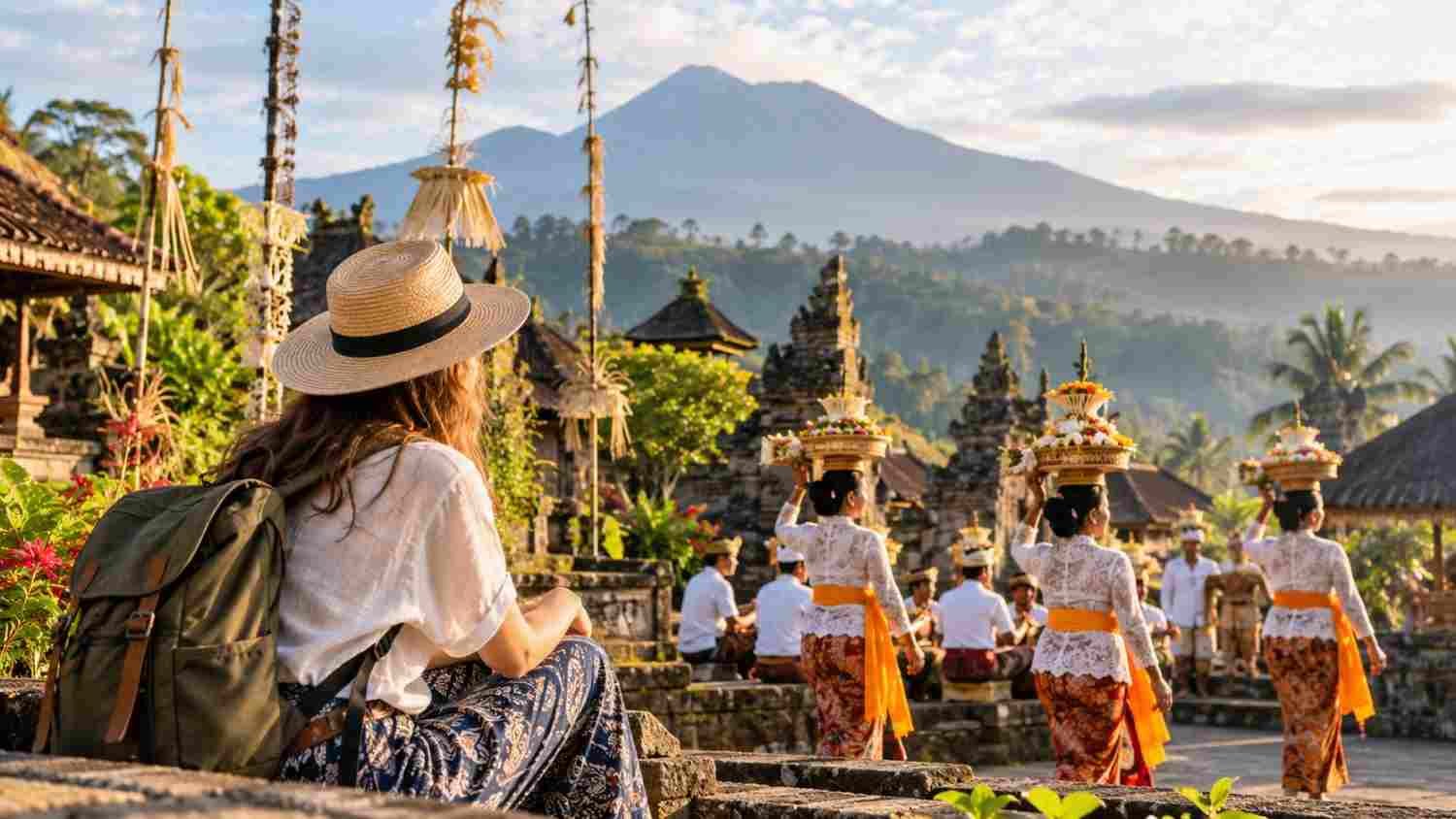
    Uluwatu combines cliff scenery with a dramatic cultural performance. Watching the Kecak dance gives you an evening experience built around rhythmic chanting and storytelling rather than beach activities.

    Check the current performance schedule and ticket arrangements before traveling. Allow time for the temple grounds, follow dress requirements, and secure loose belongings around monkeys. Stay behind barriers along the cliffs.

    Visit Temples at Your Own Comfort Level

    A water temple does not automatically require bathing. At Tirta Empul, you can focus on architecture and observe permitted areas without joining purification rituals. Follow local instructions and respect spaces reserved for worship.

    Ulun Danu Beratan offers a different setting beside Lake Beratan. Enjoy the grounds and lakeside views without adding a boat ride. Cover your shoulders and knees, and ask before photographing ceremonies.

    Browse Ubud’s Markets and Creative Spaces

    Ubud’s markets, galleries, and craft shops provide an easy change of pace between larger outings. Look for textiles, woodcarving, paintings, and handmade accessories.

    For a more participatory experience, investigate a craft workshop. Confirm what you will make, how long the session lasts, and whether materials are included. Leave room in your luggage if your creation needs careful packing.

    Discover Rice Terraces and Inland Scenery

    Discover Rice Terraces and Inland Scenery

    Choose a Rice Terrace Visit That Matches Your Mobility

    Tegallalang works well for travelers staying around Ubud, while Jatiluwih offers a broader rice-growing landscape farther away. Neither requires swimming, but walking conditions still matter.

    Choose viewpoints if you prefer minimal exertion. For longer walks, wear shoes with grip and avoid narrow, muddy paths after rain. Stay on designated routes and respect working farmland. Morning visits can make walking more comfortable.

    Walk the Campuhan Ridge

    Campuhan Ridge offers an opportunity to enjoy greenery close to Ubud. Go early, carry drinking water, and choose a turnaround point that matches your energy.

    Treat it as a scenic walk rather than a race to finish a route. Shade can be limited, so a short outing followed by breakfast may feel better than walking through midday heat.

    Enjoy Kintamani’s Volcano Views

    You do not need to climb a mountain to appreciate the landscape around Kintamani. A viewpoint or café overlooking Mount Batur and Lake Batur can suit travelers seeking scenery with less physical effort.

    If considering a sunrise hike or jeep excursion, check the actual route, walking requirements, weather arrangements, and pickup time. Do not assume every tour reaches the summit or suits every fitness level.

    Make Food and Wellness Part of the Trip

    Make Food and Wellness Part of the Trip

    Join a Balinese Cooking Class

    Cooking classes turn a meal into an experience and are worth considering when exploring things to do in Busan in winter. Some include market visits, ingredient introductions, and hands-on preparation before everyone eats together.

    Ask about dietary preferences, allergies, transport, and class size before booking. A vegetarian menu should be confirmed explicitly. This also makes a useful alternative when rain disrupts outdoor plans.

    Book a Spa Treatment or Gentle Yoga Session

    A massage or beginner yoga class creates breathing room between sightseeing days. Choose a treatment or class based on your preferences rather than dramatic wellness promises.

    Check whether spa packages include pools or bathing facilities, and request a treatment-only option if desired. For yoga, confirm the level and tell the instructor about relevant movement limitations.

    Enjoy Coastal Views Without Swimming

    Sanur’s beachfront paths, sunset dining around Jimbaran, and coastal cafés offer ways to enjoy the sea from land. Choose comfortable seating, shade, and straightforward access rather than focusing only on photographs.

    Keep away from breaking waves, exposed rocks, and cliff edges. At Tanah Lot, follow access instructions and enjoy permitted viewpoints; do not cross through water simply to reach a closer photo spot.

    Plan Three Days Without Unnecessary Transfers

    Spend your first day around Ubud, combining a short walk, market browsing, and a cooking class. Use the second for a rice terrace and one nearby cultural stop.

    Reserve the third for southern Bali, pairing a relaxed coastal meal with Uluwatu. Allow generous driving time and avoid squeezing distant northern attractions into the same day.

    Before paying, ask whether excursions include snorkeling, river crossings, waterfall wading, or boat transfers.

    Frequently Asked Questions

    1. What are the best things to do in Bali for non swimmers on a short trip?

    Prioritize a rice terrace, temple visit, cooking class, and coastal performance.

    2. Can I visit waterfalls without swimming?

    Sometimes. Confirm whether access involves wading or river crossings.

    3. Should I include Nusa Penida?

    Only if you are comfortable with boat travel and variable conditions.

    Leave With Memories Beyond the Beach

    I would choose a few meaningful experiences over a crowded checklist, giving myself time to enjoy each stop. Rice terrace walks, cooking classes, and cultural performances would bring variety to my days. I would group nearby activities and leave room for rest or unexpected weather.

    With thoughtful planning, I could enjoy Bali’s landscapes, culture, and coastal views within my comfort level. For me, those moments would make the trip memorable without needing to swim.

  • Choose Accommodation Near Public Transport in Asia: Book Smarter

    Choose Accommodation Near Public Transport in Asia: Book Smarter

    A beautiful hotel room loses some appeal when every outing starts with an expensive ride to the station. When I compare places to stay, I look beyond the balcony view and imagine leaving with a suitcase, returning after dinner, or heading out during heavy rain. 

    To choose accommodation near public transport in asia, I start with the journeys I expect to make. That approach helps me find a practical base without letting attractive photos or vague location claims decide the trip.

    Which Transport Connections Match Your Itinerary?

    Before comparing rooms, mark your main attractions, planned day trips, and arrival point on a map. Look for accommodation connected to those places by straightforward routes.

    A hotel beside a station can still be inconvenient if every journey requires several transfers. Conversely, a property outside the tourist center may work well when its nearby line serves your daily destinations directly.

    Compare complete journeys, including walking, waiting, and changing lines. A short train ride tells you little if reaching the platform takes another twenty minutes. Apply the same approach when you find affordable flights between Asian countries, factoring in airport transfers and connection times alongside the airfare.

    Should You Stay Near a Major Interchange?

    An interchange offers flexibility when your plans spread across different districts. However, large stations can involve long corridors, crowds, and confusing exits.

    A smaller station on the right line may suit your itinerary better. Choose connections you will actually use rather than paying extra for a famous transport hub.

    How Close Should Your Accommodation Be to a Station?

    How Close Should Your Accommodation Be to a Station

    Use a five- to ten-minute walk as an initial preference, then investigate the route. Walking comfort depends on weather, luggage, mobility, and street conditions.

    Do not rely on straight-line distance. A hotel may appear beside a station while its usable entrance sits across a busy road or around a large development.

    Search walking directions from the property entrance to a specific station entrance. Check whether the route crosses pedestrian bridges, requires stairs, or passes through buildings with restricted opening hours.

    What Makes a Short Walk Difficult?

    Narrow sidewalks, steep slopes, awkward crossings, and uncovered stretches can change how convenient a location feels. A manageable walk on a cool morning may feel harder during tropical rain.

    Review available street imagery and recent guest photographs. With children, rolling luggage, or mobility needs, prioritize a straightforward route over a slightly shorter one.

    How Can You Verify a Hotel’s Transport Claims?

    Treat “excellent transport links” as a starting point for research. Look for the station name, line, entrance, and realistic walking directions.

    Read recent reviews and search for words such as “station,” “walk,” “stairs,” “shuttle,” and “noise.” Repeated comments about inconvenient access deserve attention.

    Ask the property which station entrance guests should use with luggage. If a shuttle is necessary, confirm its timetable, charges, reservation requirements, and last departure.

    The most useful way to choose accommodation near public transport in asia is to verify the entire journey rather than accepting the booking page’s distance label.

    Will Airport Connections Make Arrival Easier?

    Will Airport Connections Make Arrival Easier

    Compare airport access separately from sightseeing convenience. A well-connected city hotel may still require several changes from your arrival terminal.

    Check the airport shown on your ticket, your expected arrival time, and transport operating hours. Allow time for immigration, baggage collection, and finding the departure point.

    If you arrive late, calculate an alternative transfer before booking. Also confirm reception hours and check-in instructions.

    For an early departure, assess the return journey too. Airport rail access offers little benefit when the first service cannot get you there in time.

    Is a Cheaper Hotel Really Better Value?

    Compare room rates alongside transport spending. Include fares, occasional taxis, airport transfers, and trips needed just to reach a useful station.

    For example, a hypothetical hotel saving $15 nightly may offer limited savings if inconvenient access adds $12 in daily transport costs. Over several nights, those expenses accumulate.

    Time matters as well. An additional forty minutes of travel each day can reduce sightseeing opportunities.

    Check nearby restaurants, convenience stores, and laundry options. A practical neighborhood can help you manage everyday expenses without additional journeys.

    What Should Families and Travelers With Luggage Check?

    What Should Families and Travelers With Luggage Check

    Station proximity does not guarantee step-free access. Confirm elevators at the entrances you need, along with accessible routes through transfers.

    Ask whether the accommodation has an elevator and whether steps separate the street from reception. For apartment stays, clarify the exact building entrance.

    Consider sleep quality too. Read reviews for railway noise, nightlife, and busy roads. A quieter room a little farther from the station may provide a better balance.

    How Should You Choose Accommodation Where Rail Is Limited?

    In island destinations and smaller towns, assess buses, ferries, and other available local services.

    Check frequency, operating days, last departures, and access to your planned activities. A nearby stop is useful only when its services suit your schedule.

    Frequently Asked Questions

    1. How do I choose accommodation near public transport in asia on a budget?

    Compare the room price with expected transport costs. Search along useful routes beyond expensive tourist districts, then verify walking access and recent reviews.

    2. Is staying beside the station always necessary?

    No. A comfortable walk to a useful line may suit you better than immediate access to a poorly connected station.

    3. Should I trust the hotel’s walking estimate?

    Use it as a reference, then check directions to the correct entrance. Ask about stairs, crossings, and luggage access.

    4. What should I check before making a nonrefundable booking?

    Confirm the address, station route, arrival arrangements, room details, and cancellation conditions.

    Make Your Location Work for You

    I would rather spend a few extra minutes checking routes before booking than repeat an inconvenient journey every day. When I balance transport access, comfort, and total cost, accommodation becomes a helpful part of the trip. The right location leaves more time for exploring and makes returning at the end of the day easier.

  • Family Friendly Holiday Destinations in Southeast Asia: What Worked for Our Kids

    Family Friendly Holiday Destinations in Southeast Asia: What Worked for Our Kids

    Finding vacation spots that satisfy restless toddlers and demanding pre-teens without burning out parents is tough. After spending months navigating transit, street food, and tropical heat across the Pacific, I found that the most rewarding family friendly holiday destinations in southeast asia deliver safety, great value, and engaging outdoor spaces.

    Traveling across this region requires thoughtful pacing. You will encounter high-tech megacities with air-conditioned walkways, sleepy coastal towns with calm surf, and lush mountain trails. Below is my first-hand breakdown of the region’s standout destinations for traveling families.

    How We Evaluated Southeast Asia with Kids: The Stroller-to-Scramble Test

    I graded each stop using my own practical metric: the Stroller-to-Scramble Index. This score evaluates pavement continuity, elevator access at rail stations, shade density, and Grab availability.

    Cities with a high stroller score make moving gear effortless. Locations with a high scramble score require baby carriers, sturdy sandals, and extra hydration. Matching your family’s physical stamina to local infrastructure prevents mid-afternoon meltdowns.

    Singapore: The Ultimate Zero-Friction Urban Playground

    Singapore: The Ultimate Zero-Friction Urban Playground

    Singapore is the easiest landing spot in Southeast Asia for parents. Clean sidewalks, universal elevator access, and a hyper-efficient MRT system make daily logistics stress-free.

    Marina Bay and Sentosa Island Logistics

    We spent three days exploring Marina Bay before crossing to Sentosa Island. The misted domes at Gardens by the Bay offered cool relief during midday heat spikes. The Far East Organization Children’s Garden provided an expansive, secure splash park that kept our kids occupied for hours.

    Sentosa Island houses Universal Studios Singapore and Adventure Cove Waterpark. For transit and park operating hours, refer to official destination updates on the Singapore Tourism Board platform.

    • Stroller-to-Scramble Index: 9.5/10 (Exceptionally stroller-friendly)
    • Best Age Range: 6 months to 16 years
    • Parent Note: Tap-to-pay transit systems work directly with international credit cards, avoiding the need for individual transport cards.

    Thailand: Balancing Resort Downtime and Northern Culture

    Thailand: Balancing Resort Downtime and Northern Culture

    Thailand remains a family staple due to its hospitable service and exceptional food variety. We split our time between the southern islands and the northern mountains to balance pool days with active culture.

    Phuket Beaches and Elephant Sanctuaries

    Phuket offers quiet, wide shorelines along Kata and Karon beaches. The surf here remains shallow and manageable during the dry season from November through April.

    We booked an educational visit through an ethical rescue venue in the hills, where our kids helped chop pineapples and prepare nutrient balls for retired working elephants. You can verify seasonal park closures and safety guidelines via the Tourism Authority of Thailand Newsroom.

    Chiang Mai Beyond the Temples

    In northern Chiang Mai, the pace slows down. We skipped crowded night bazaars in favor of the Bua Thong Sticky Waterfalls. The mineral deposits over the limestone create natural grip, allowing young children to scramble directly up running cascades without slipping.

    • Stroller-to-Scramble Index: 6/10 (Use an ergonomic baby carrier in the Old City)
    • Best Age Range: Ages 4 and up

    Central Vietnam: History, Lanterns, and Beach Days

    Central Vietnam: History, Lanterns, and Beach Days

    Central Vietnam provides an ideal twin-destination trip. Flying directly into Da Nang puts you within easy reach of urban beaches and historic walking towns.

    Da Nang and Hoi An Twin Itinerary

    Da Nang features wide beachfronts, clean boardwalks, and direct access to Ba Na Hills. Riding the cable cars to the iconic Golden Bridge suspended by giant stone hands was a major hit with our children.

    A 30-minute cab ride brought us to Hoi An Ancient Town, a protected landmark recognized by the UNESCO World Heritage Centre. During the evening pedestrian hours, cars are barred from the core streets. We hired a round bamboo basket boat in the Cam Thanh coconut groves, where local boaters spun the crafts in gentle circles to entertain the children.

    • Stroller-to-Scramble Index: 7/10
    • Best Age Range: Toddlers to young teens

    Malaysia: Theme Parks, High Altitudes, and Coastal Wildlife

    Malaysia: Theme Parks, High Altitudes, and Coastal Wildlife

    Malaysia pairs urban infrastructure with cool mountain retreats and duty-free island bays.

    Kuala Lumpur serves as a low-cost, connected hub. The KL Bird Park features a massive walk-in free-flight aviary where hornbills land within arm’s reach of visitors.

    From the capital, a one-hour drive climbs into Genting Highlands. Perched at 6,000 feet, Genting SkyWorlds outdoor theme park delivers alpine air that shields children from tropical midday heat. If your family prefers seaside nature, Langkawi provides calm waters at Pantai Cenang alongside mangrove boat tours through Kilim Geoforest Park.

    • Stroller-to-Scramble Index: 8/10
    • Best Age Range: Ages 3 to 14

    The Packing and Health Blueprint for Traveling Parents

    Medical preparation prevents minor illnesses from disrupting your itinerary. Before departure, review recommended regional vaccines through the CDC Travelers’ Health Directory.

    Pack a compact first-aid kit containing pediatric rehydration salts, children’s ibuprofen, motion sickness chews, and DEET-free repellent sprays. Tropical downpours arrive suddenly, so keep compact umbrellas and lightweight dry bags inside your daypack.

    If you love off-the-beaten-path ecotourism, you might also consider the dense rainforests and nature destinations in sabah and sarawak borneo. 

    Frequently Asked Questions About Family Travel in Southeast Asia

    1. Which Southeast Asian country is easiest to visit with a baby?

    Singapore is the easiest country for infant travel thanks to its spotless public nursery rooms, stroller ramps, and drinkable tap water.

    2. What is the safest destination for families in Southeast Asia?

    Singapore and Malaysia rank among the safest destinations in the region, featuring low crime rates and reliable emergency healthcare.

    3. How do families handle local transportation in Southeast Asian cities?

    Download the Grab app to book fixed-fare private vehicles with air conditioning, eliminating the need to negotiate taxi meters.

    4. What is the ideal month for a Southeast Asia family vacation?

    December through March offers the driest conditions and comfortable temperatures across Thailand, Singapore, and western Malaysia.

    Pack the Sunscreen, Ditch the Rigid Schedule

    The secret to exploring Southeast Asia with children is building generous buffers into your daily plans. Prioritize one core activity each morning, retreat indoors during the peak afternoon sun, and venture out when night markets illuminate the streets.

    Pick your preferred base, book direct flights with manageable transfer windows, and let the region’s friendly hospitality take care of the rest. Pair your regional loop with the relaxed coastal towns to visit in southern sri lanka.

  • Asia Without a Rental Car: Make the Connections Work

    Asia Without a Rental Car: Make the Connections Work

    A hotel can look perfect until you discover that reaching it requires three transfers and a steep walk with your suitcase. That is why I would start with connections rather than accommodation when deciding to plan an asia trip without renting a car. 

    Trains, buses, ferries, and occasional taxis can make the journey manageable, but only when the route fits together. The goal is to spend more time exploring and less time solving transport problems after arrival.

    Choose Destinations Around Transport Access

    Asia has no single transport system. A city with extensive rail connections offers a different experience from an island where attractions sit far apart.

    Start by choosing one country or a compact regional route. Look at your intended attractions, then check whether public transport reaches them conveniently. A destination may have excellent intercity connections but limited options once you arrive.

    Tokyo, Singapore, and Hong Kong offer useful examples of urban trips built around public transport. However, assess each neighborhood and excursion separately instead of assuming every attraction is equally accessible.

    Build a Route With Fewer Bases

    Build a Route With Fewer Bases

    Changing hotels every night creates repeated packing, station transfers, and check-in delays. For a shorter vacation, choose a few bases and explore nearby places through day trips.

    Arrange stops in a logical direction. Before adding another destination, calculate the time required to leave your accommodation, reach the departure point, travel, and find your next hotel.

    A short journey can consume half a day once those steps are included. Leave your arrival afternoon lightly scheduled so a delay does not disrupt several reservations.

    Choose Hotels Near Useful Connections

    “Near public transport” tells you little unless the nearby service connects with places you actually want to visit. Check the walking route between the accommodation and station entrance. Consider stairs, road crossings, hills, sidewalks, and how comfortable that walk will feel with luggage.

    Read recent reviews for comments about access and noise. Ask the property about late check-in and luggage storage. A slightly more expensive room near a useful connection may offer better overall value than cheaper accommodation requiring daily transfers.

    Compare Transport From Door to Door

    Compare Transport From Door to Door

    To plan an asia trip without renting a car, compare the complete journey rather than the advertised ticket price or travel time.

    Trains for Connected Routes

    Trains can suit journeys between destinations with convenient stations. Check the departure station, seat reservation requirements, luggage arrangements, and onward transport. For overnight travel, consider whether you will actually sleep comfortably. A saved hotel night offers limited value if exhaustion ruins the following day.

    Buses for Places Beyond Rail

    Buses can fill gaps where rail does not reach your destination. Confirm the exact boarding and arrival points because terminals may sit outside sightseeing areas. Check luggage limits and cancellation conditions before paying. For winding roads, consider your tolerance for motion sickness.

    Ferries for Island Connections

    Plan the whole chain: hotel to pier, ferry crossing, and arrival pier to accommodation. Check whether a combined ticket includes every transfer. Weather can interrupt boat services. Avoid scheduling an essential international departure immediately after an island crossing.

    Flights for Longer Distances

    A flight may save time on a long journey, but compare airport transfers, check-in, baggage charges, and arrival arrangements. When you choose accommodation near public transport in Asia, check whether services will still be running when you land. An inexpensive late-night fare can become costly if public transport has stopped and your hotel requires a private transfer.

    Handle Local Travel and Remote Excursions

    Handle Local Travel and Remote Excursions

    Skipping a rental does not mean avoiding every car journey. An occasional licensed taxi, hotel shuttle, or guided excursion can bridge a transport gap.

    For countryside attractions, confirm both the outward journey and the return. Reaching a trailhead is only half the plan.

    Group daily sightseeing by neighborhood to reduce unnecessary transfers. Leave room for heat, rain, meals, and rest, especially when walking forms a large part of your itinerary.

    Book Key Journeys and Keep a Backup

    Reserve journeys that could determine whether the route works, particularly departures with limited alternatives. Confirm schedules and booking conditions through current operator information. Save tickets, accommodation addresses, and boarding locations offline. Carry a charged phone, a power bank, and locally usable payment options.

    Pack luggage you can lift independently. Check accessibility arrangements if stairs or long walks are difficult. Keep enough flexibility and money for a replacement transfer or an extra night when a connection fails.

    Frequently Asked Questions

    Can I plan an Asia trip without renting a car on my first visit?

    Yes. Choose a small number of connected destinations, research airport transfers, and stay near useful transit. A straightforward route usually requires less problem-solving than an itinerary covering many regions.

    Do I need to buy a transport pass?

    Only when it suits your journeys. Compare its price, coverage, validity, and reservation conditions with individual tickets. Convenience alone does not guarantee savings.

    Can I visit rural attractions without driving?

    Sometimes. Look for scheduled buses, shuttles, or organized excursions. Confirm the return service before leaving, particularly where departures are infrequent.

    Make the Journey Part of the Experience

    I would rather remove one awkward stop than spend a vacation chasing fragile connections. With practical hotel locations, manageable luggage, and realistic travel days, exploring without a rental can feel freeing. I would build the route around reliable journeys first, then leave space for discoveries along the way.

  • Indonesia’s Village Rituals and Living Cultural Heritage in Remote Rural Communities

    Indonesia’s Village Rituals and Living Cultural Heritage in Remote Rural Communities

    I have always found rural traditions fascinating because they reveal how people build a sense of belonging through ordinary routines. In Indonesia, village life often connects farming, family responsibilities, ancestral beliefs, and community celebrations. What looks like a simple ceremony to an outsider may carry generations of memories, local knowledge, and obligations that still shape how people live.

    I also noticed that Indonesia’s cultural identity becomes more complex when you look beyond its famous beaches and busy cities. In remote communities, traditional houses, shared land, customary rules, and seasonal rituals remain closely connected. These practices are not simply reminders of the past. For many villagers, they continue to influence relationships, livelihoods, and the way communities respond to change.

    How Customary Traditions Shape Village Life

    One important foundation of rural Indonesian culture is adat, a broad term for customary practices, traditions, and community rules. Depending on the region, adat can influence marriage, inheritance, dispute resolution, land use, and ceremonies. Elders and community leaders often help interpret these customs, while collective discussion can play an important role in resolving disagreements.

    Communal land is another significant part of customary life. Known in some communities through the term tanah ulayat, it refers to territory held under the customary rights of an Indigenous community. Such land can support farming, forests, water access, and shared livelihoods. Indonesia’s land administration framework recognizes customary land rights, although their legal recognition and management depend on applicable requirements.

    These arrangements demonstrate that cultural heritage involves more than clothing, dance, or festivals. It can also include systems for managing resources and maintaining relationships between neighbors.

    Tana Toraja and the Importance of Ancestral Connections

    Tana Toraja and the Importance of Ancestral Connections

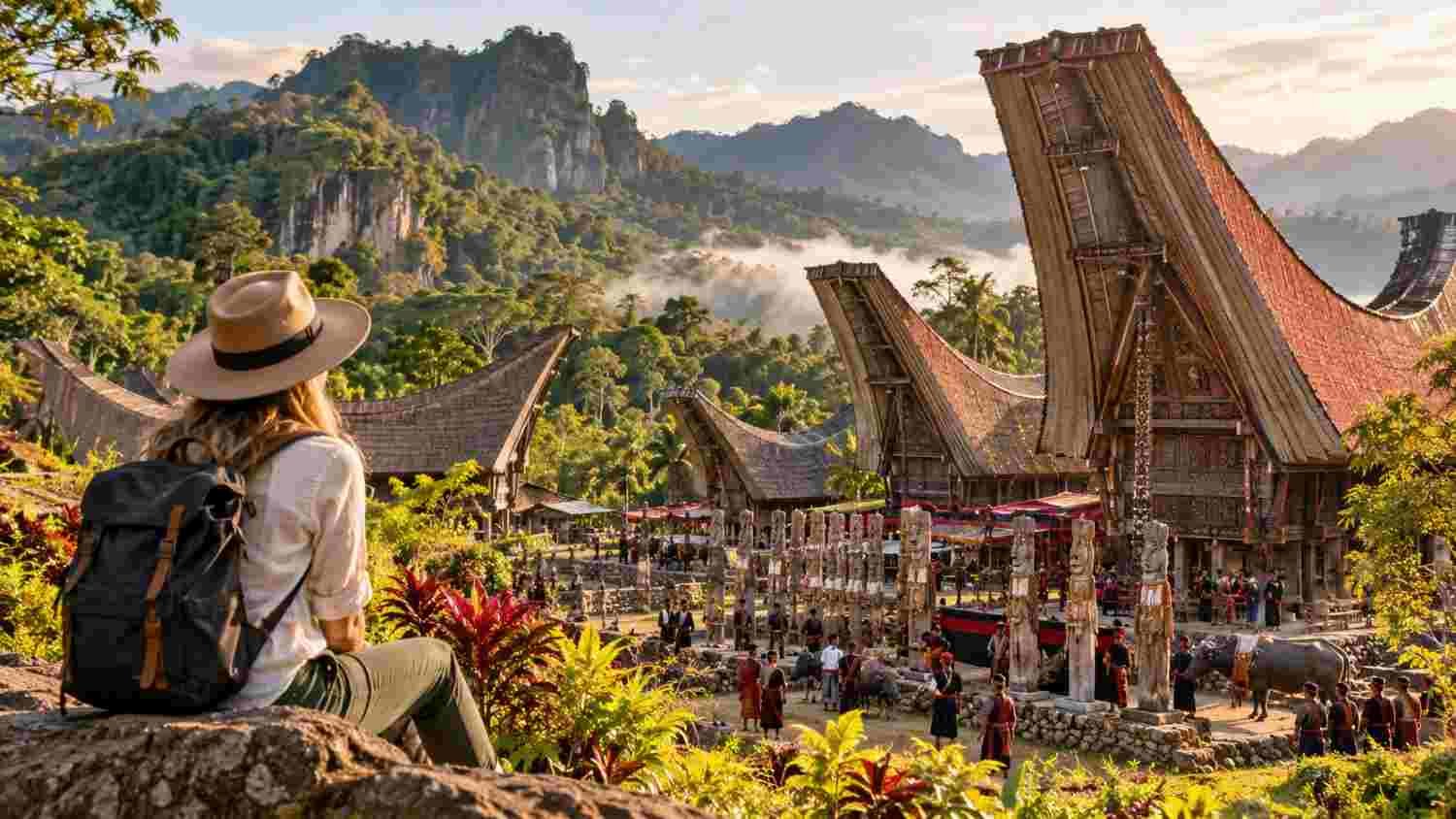
    In South Sulawesi, the Toraja people are known for distinctive architecture, elaborate funeral traditions, and strong connections between family identity and ancestral memory. Traditional tongkonan houses have sweeping roofs and carved decorations that communicate family history and social identity.

    Funeral ceremonies hold particular significance because death is understood through a wider network of family relationships, beliefs, and responsibilities. Preparations may involve relatives traveling from elsewhere, contributions from extended families, and gatherings that require considerable planning. The scale and details of ceremonies vary according to family circumstances and local customs.

    Traditional burial sites, including cliffside graves and rock-cut tombs, also reflect the relationship between landscape and cultural belief. These places should not be treated merely as unusual sightseeing stops. They hold meaning for families and deserve the same respect visitors would offer any sacred site.

    Sumba’s Traditional Houses and Sacred Landscapes

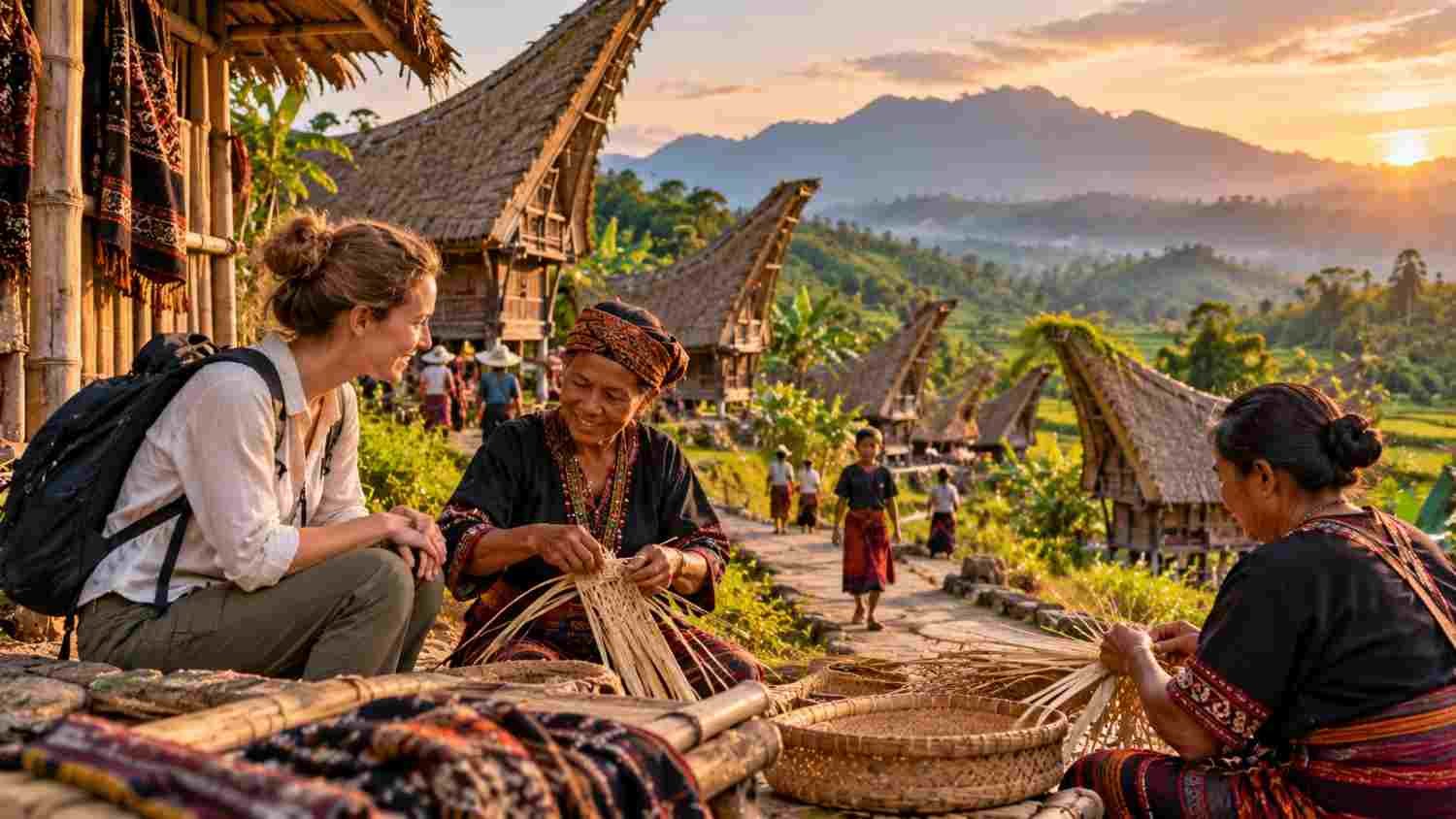
    On the island of Sumba, traditional villages preserve distinctive houses with tall, steeply pitched thatched roofs. In communities following the ancestral Marapu belief system, architecture can express relationships between the living, ancestors, and the spiritual world.

    Some villages also feature megalithic stone graves that serve as important markers of family history and ceremonial life. The placement of houses, communal spaces, and burial structures reflects local social organization as well as spiritual beliefs.

    Ceremonies may involve livestock offerings, gatherings, and ancestral observances. Their meaning extends beyond the event itself, bringing relatives together and reaffirming responsibilities within the community. Practices differ between communities, so it would be misleading to describe every Sumbanese village as following identical customs.

    Wae Rebo and Rituals Tied to the Agricultural Year

    High in the mountains of Flores, Wae Rebo is known for its traditional Mbaru Niang houses, circular buildings with distinctive conical roofs. Their architecture reflects local knowledge, available materials, and the importance of shared village spaces.

    One significant tradition is Penti, a thanksgiving ceremony associated with the agricultural cycle. The celebration expresses gratitude for the previous harvest and hopes for a prosperous growing season. Rituals, traditional songs, offerings, and community gatherings connect agricultural work with spiritual beliefs and collective identity.

    The ceremony also illustrates how seasonal traditions can organize a community’s understanding of time. Farming is not merely an economic activity when harvests influence celebrations, relationships, and hopes for the coming year.

    Similar connections between place, belief, and seasonal life appear elsewhere in Asia, including Japan’s lesser-known seasonal traditions and local festivals, where regional communities also maintain celebrations linked to nature and changing seasons.

    Community Cooperation in West Sumatra

    In West Sumatra, Minangkabau communities maintain traditions that emphasize cooperation, shared responsibilities, and collective identity. The practice of batobo, associated with cooperative work, reflects the value of people helping one another with agricultural tasks.

    Another tradition, bakaua, is an agricultural thanksgiving ritual documented in Nagari Sijunjung. It brings together ritual, collective memory, and hopes for agricultural well-being. Research into the practice shows how traditions can persist while communities respond to modernization and changing social conditions.

    These customs demonstrate that living heritage does not survive through ceremonies alone. It also depends on everyday participation, shared labor, storytelling, and the willingness of younger generations to learn from older community members.

    The same broader principle appears in India’s regional traditions beyond major tourist cities, where local customs often remain closely connected to agriculture, community relationships, and regional identity.

    Preserving Heritage While Village Life Changes

    Preserving Heritage While Village Life Changes

    Traditional communities are not frozen in time. Education, migration, technology, new employment opportunities, and changing religious practices all influence village life. Some families adapt older customs, while others maintain selected traditions and allow different practices to fade.

    Kampung Naga in West Java offers an example of a community known for maintaining customary architecture and environmental practices. However, it is more accurate to describe its approach as selective cultural preservation than to assume every resident rejects modern technology.

    Tourism can provide income for local households and encourage the maintenance of traditional buildings. It can also create pressure when sacred ceremonies become performances designed around visitor expectations. Community control over access, photography, and cultural interpretation matters.

    Visitors can help by asking permission before photographing residents, following local instructions, dressing appropriately, and hiring local guides when available. During ceremonies, observe quietly rather than assuming every activity is open to outsiders.

    Why These Traditions Continue to Matter

    Indonesia’s village rituals reveal how heritage remains connected to practical life. Shared land can support livelihoods, customary rules can guide relationships, and seasonal ceremonies can bring dispersed families together. Architecture and oral histories preserve knowledge that might otherwise disappear, while community participation gives traditions meaning beyond their appearance.

    The most valuable way to understand these places is to recognize that they belong first to the people who maintain them. Their customs can evolve without losing their significance, and their future depends partly on whether communities retain the freedom to decide what should be preserved.

    Cultural heritage stays alive when people continue to find meaning in it, not simply when visitors come to see it.

    FAQs: Indonesia’s Village Rituals and Living Cultural Heritage in Remote Rural Communities

    1. What is adat in Indonesia?

    Adat refers to customary traditions, social norms, and community practices. Depending on the community, it may influence family relationships, ceremonies, land use, and dispute resolution.

    2. What is Penti in Wae Rebo?

    Penti is a traditional thanksgiving ceremony associated with the harvest and the agricultural year. It includes rituals and communal activities rooted in Manggarai cultural traditions.

    3. Why are traditional villages important in Indonesia?

    They preserve architectural knowledge, oral histories, customary practices, and community relationships. Many also maintain traditional approaches to agriculture and environmental stewardship.

    4. Can travelers attend village ceremonies?

    Access varies by community and ceremony. Visitors should ask permission, follow local guidance, respect restrictions, and avoid treating sacred practices as entertainment.