I remember stepping onto the dusty terracotta tiles of Badi Chaupar as the morning call to prayer echoed against sandstone walls. The desert dawn turns the city’s signature salmon-pink facades into warm, glowing embers. If you are hunting for the best photography spots and activities in jaipur, you quickly learn that timing and light angle dictate whether your photos look washed out or stunning.
Photographing this heritage capital requires a deliberate plan. Between managing harsh midday glare and moving through dense bazaars, here is how I captured the city’s finest angles.
Sunrise to Midday: Capturing Jaipur’s Iconic Architecture
The sun over Rajasthan rises rapidly, casting long architectural shadows before creating intense dynamic contrast. You will want to reach your primary outdoor locations right at first light.
Patrika Gate: Symmetrical Framing Before the Crowds
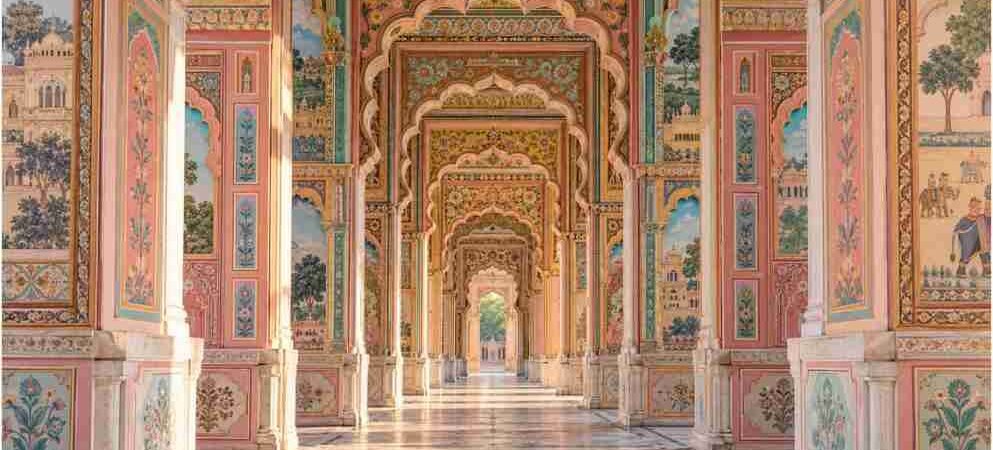
Located at Jawahar Circle Park on the southern edge of town, Patrika Gate is a vivid tribute to Rajasthani craftsmanship. Each archway reveals hand-painted murals depicting battles, royal weddings, and vibrant regional folk art.
I arrived at 6:15 AM, just as the park opened. Arriving early allowed me to stand dead center along the central corridor without other visitors walking through the frame. To capture the entire series of receding arches, mount a 16–35mm ultra-wide lens.
Keep your camera at chest height to prevent vertical lines from keystoning. As the morning sun creeps through the eastern pillars, bracket your exposures by +/- 2 EV to preserve the rich pastel colors without blowing out the highlights on the outer pavement.
Hawa Mahal: Elevated Perspectives and Street Rhythm
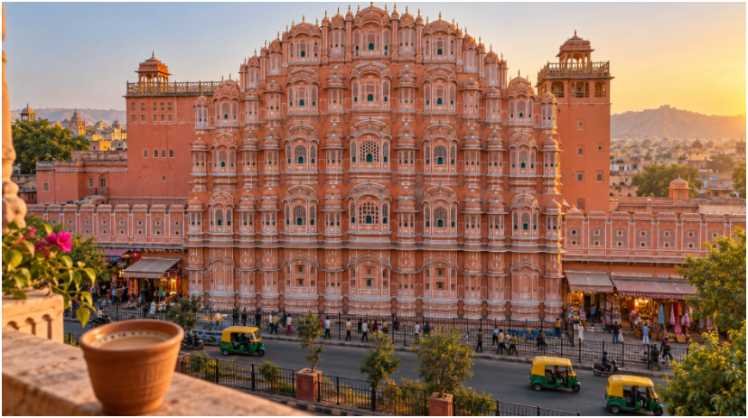
The 1799 “Palace of Winds” features 953 honeycombed jharokhas (latticed balconies) carved out of pink sandstone. Royal women once used these windows to watch daily street festivals while remaining out of public view.
Photographing this façade from street level means dodging heavy rickshaw traffic and electrical wires. Instead, cross the road and head up to one of the upper-floor cafés, such as The Tattoo Café or Wind View Café. Order an early-morning chai, secure a balcony railing seat, and frame the façade with a 24–70mm lens.
The early sun hits the front of the palace directly between 7:00 AM and 8:30 AM. For evening shoots, switch to a slow shutter speed (around 1/4 second) with an ND filter to turn the buzzing tuk-tuks below into light trails beneath the illuminated wall.
Panna Meena Ka Kund: Geometry and Dynamic Shadows
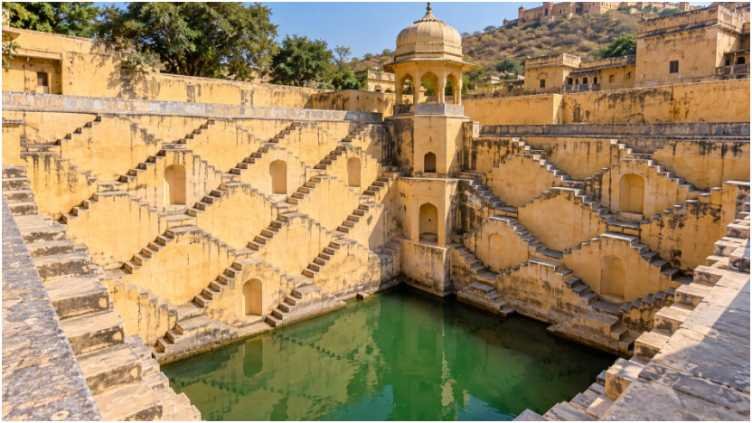
Hidden near the base of Amber Fort sits Panna Meena Ka Kund, a symmetrical stepwell dating back to the 16th century. Its crisscrossing, chevron-style golden stairs lead down into deep jade-green water.
Most travel guides tell you to shoot here at sunrise, but I found the opposite works better. When the sun is too low, the deep stepwell remains shrouded in heavy, muddy shadows. Wait until around 9:30 AM when the sun rises high enough to illuminate one side while throwing the opposing steps into crisp, hard-edged shadow.
Stand on the southwest corner of the upper terrace with a 35mm lens to compose a clean, geometric frame. Stepwells are managed under heritage preservation rules overseen by the Archaeological Survey of India, meaning descending the stairs is strictly prohibited. Keep your camera focused on the diagonal patterns from the rim.
Amber Fort and Jal Mahal: Water Reflections and Hilltop Fortifications
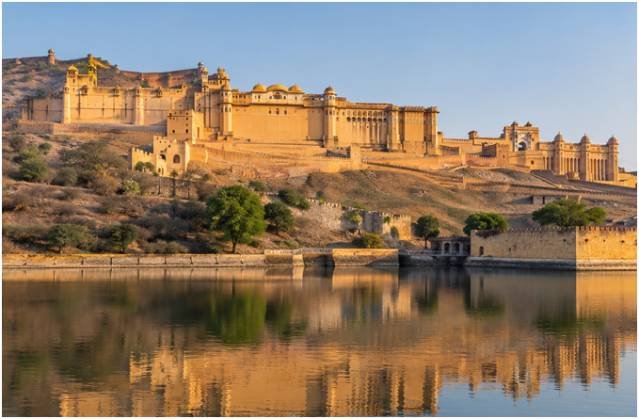
Before midday heat washes out the hills, drive north toward Amer. The colossal UNESCO World Heritage Amber Fort commands the rocky ridge above Maota Lake.
Inside the complex, the Sheesh Mahal (Mirror Palace) offers a stunning visual display. Convex glass mirrors inlaid into the plaster shimmer under any ambient light. To capture detail without flash, set your aperture wide (f/2.8) and push your ISO to 1600.
On your return journey back toward the city center, pull over along the promenade facing Jal Mahal, the floating water palace on Man Sagar Lake. While entering the palace is restricted, the lake promenade provides an unobstructed panoramic view.
A 70–200mm telephoto lens isolates the submerged palace against the rugged Aravalli range. Use a Circular Polarizer (CPL) to cut water glare and deepen the reflection across the lake surface.
Immersive Street Photography Activities in the Pink City
Jaipur is just as captivating on its streets as it is in its palaces. The walled city pulses with color, scent, and character.
Navigating the Morning Flower and Spice Bazaars
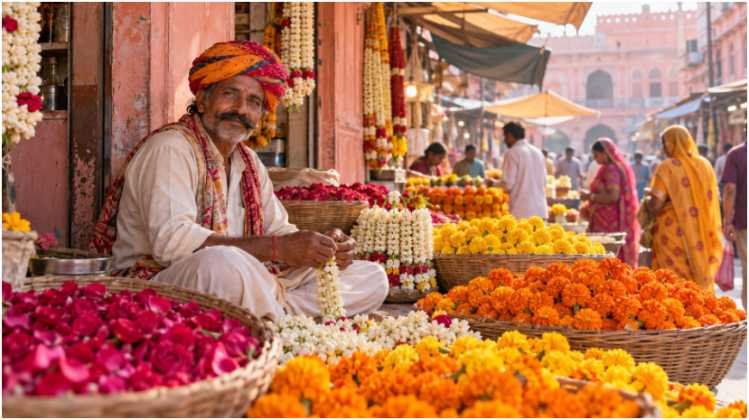
Skip the air-conditioned tour buses and take a walk through the Old City’s wholesale flower market (Phool Mandi) near Chhoti Chaupar around 6:30 AM. Massive burlap sacks overflow with orange marigolds, fragrant damask roses, and jasmine garlands.
Street portraiture here demands patience and mutual respect. I keep a fast 50mm f/1.8 lens mounted to isolate individual vendors from the visually busy backgrounds. Always make eye contact, smile, and ask for a nod of permission before raising your lens.
The soft ambient light filtering through the bazaar awnings creates warm skin tones without harsh shadows. If you want environmental portraits of local craftsmen, walk through Tripolia Bazaar to capture brass beaters and lac bangle artisans working within their historic street-level workshops.
Finding Jaipur’s Century-Old Street Darkroom
One of the most unique photographic activities in India lives right on the sidewalk outside Hawa Mahal. Keep an eye out for Tikam Chand, a third-generation street photographer who operates a wooden Carl Zeiss camera built in the 1860s.
For a few hundred rupees, you can sit on his wooden stool while he captures your portrait on paper negative. He develops and fixes the print on the spot inside the camera’s self-contained darkroom box, using buckets of water and chemical trays balanced on the curb. Documenting his analog process with your digital camera provides a rare behind-the-scenes view of living photographic history.
Jaipur ranks among the most captivating historic cities to visit for visual storytellers. The capital of Rajasthan blends symmetrical Rajput design with intricate Mughal masonry.
Essential Camera Gear and Technical Strategies for Harsh Desert Light
Shooting in Rajasthan introduces two consistent challenges: blowing dust and intense dynamic range.
- Bring a Circular Polarizer: Sandstone surfaces reflect bright midday sun, which strips away the rich reddish-pink pigments in your RAW files. A polarizer restores deep color saturation to the stonework and pulls detail out of hazy desert skies.
- Leave the Full-Size Tripod at Your Hotel: Heritage sites like City Palace and Amber Fort strictly prohibit three-legged tripods without expensive commercial permits. Security guards will turn you away at baggage checks. Instead, carry a compact tabletop pod or shoot handheld with image-stabilized lenses.
- Pack Sensor Swabs and a Rocket Blower: The dry wind off the Thar desert carries fine sand particles. Never change lenses out in the open during windy bazaar walks. Duck inside a courtyard or change gear inside your shoulder bag.
Frequently Asked Questions About Jaipur Photography
1. What is the best month to photograph Jaipur?
November through February offers pleasant temperatures, clear morning skies, and manageable midday light.
2. Do I need a camera permit for Jaipur’s forts?
Handheld still cameras are allowed for a nominal fee at entry ticket counters, but commercial gear and tripods require special clearance.
3. Can you fly camera drones over Jaipur’s monuments?
No, recreational drone flights over urban heritage sites and forts are strictly forbidden by Indian civil aviation regulations.
4. Which spot offers the best sunset view in Jaipur?
Nahargarh Fort provides the premier vantage point to capture the entire illuminated city grid during golden hour.
Frame the Pink City Before the Light Fades
Jaipur rewards photographers who wake up early and stay alert to changing light. Set your alarm well before sunrise, pack an ultra-wide zoom alongside a fast prime, and let the morning light guide you through the city’s historic streets.