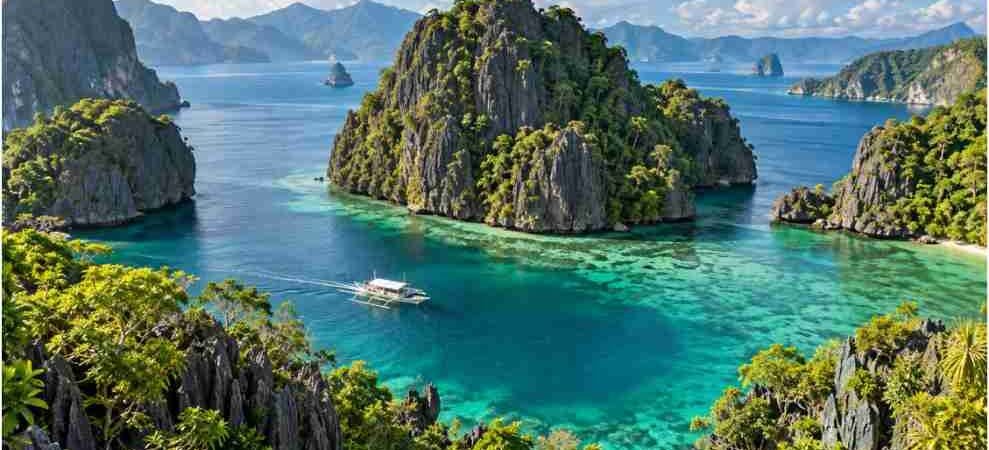
Island hopping across the Sulu Sea taught me that paradise demands practical planning. Finding the best island destinations in the philippines is less about ticking off 7,641 islands and more about understanding how water and wind dictate your schedule.
Too many travelers lose half their vacation stuck in airport security lines in Manila or trapped on bumpy vans. Having navigated this archipelago by outrigger bancas, ferries, and propeller planes, I learned that grouping islands by geographic sub-regions turns a chaotic journey into an effortless tropical adventure.
Navigating the Philippine Archipelago: Real Logistics First
The biggest mistake first-time travelers make is treating the Philippines like a compact cluster. The archipelago spans three major island groups: Luzon in the north, the Visayas in the center, and Mindanao in the south.
Connecting between these regions often requires routing back through congested aviation hubs. When selecting historic cities to visit as transit waypoints, prioritize secondary gateways like Cebu (CEB) or Clark (CRK) over Manila (MNL) whenever possible to sidestep multi-hour runway delays.
Balancing Domestic Flights vs. Fast Ferry Connections
Flying between every single stop eats your daylight. If an island pair has a direct, reliable maritime connection, take the water route. The Philippine Department of Tourism actively promotes regional maritime connectivity, and local operators like OceanJet run frequent daily departures that connect major provincial hubs cleanly.
A two-hour open-air catamaran ride beats a six-hour domestic flight sequence involving check-in windows, baggage checks, and tarmac holds.
Palawan: Dramatic Limestone Karsts and Sunken Relics
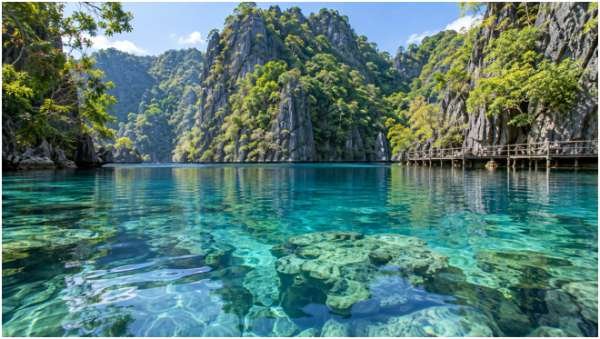
Palawan consistently ranks among the world’s premier island provinces, and its reputation is entirely earned. Jagged black limestone cliffs rise straight out of emerald water, hiding underwater caves and coral gardens. It easily houses some of the top scenic destinations in Southeast Asia.
El Nido: Navigating Bacuit Bay’s Hidden Lagoons
El Nido centers on the dramatic formations of Bacuit Bay. Standardized boat tours categorize the sights into Tours A, B, C, and D, but Tour A (Big Lagoon, Secret Lagoon) and Tour C (Hidden Beach, Shrine Island) remain the heavyweights.
Gliding a sit-on-top kayak through the narrow opening of the Big Lagoon surrounded by sheer karst walls feels unreal. To experience these sites without dodging fifty other tour groups, hire a private banca and leave the dock by 7:30 AM, an hour ahead of the commercial flotilla.
If you venture south toward Puerto Princesa, you can explore the famous underground river, recognized globally by the UNESCO World Heritage Centre for its navigable cavern ecosystem.
Coron: Shipwreck Diving and Unfiltered Waters
Coron sits north of mainland Palawan and offers a distinctly wilder edge. While El Nido wins on dramatic cliffs, Coron takes the crown for aquatic clarity and historical diving.
In Coron Bay, a dozen Japanese World War II supply ships rest within recreational diving depths. Descending into the cargo hold of the Tangat or Olympia Maru, surrounded by black coral and schooling batfish, is humbling. For non-divers, Kayangan Lake provides brackish, glass-like water filtered naturally by surrounding limestone mountains.
The Central Visayas: High Adrenaline and Wildlife
The Central Visayas delivers the most logistically sound pairing for a 7-to-10-day trip. You swap domestic airports for short ferry rides while pairing open-ocean adventures with unique inland ecology.
Cebu: Shoreline Sardines and Deep Canyons
Cebu acts as both an international entry port and a launchpad for raw adventure. Skip urban Cebu City and head directly southwest along the coastal highway to Moalboal.
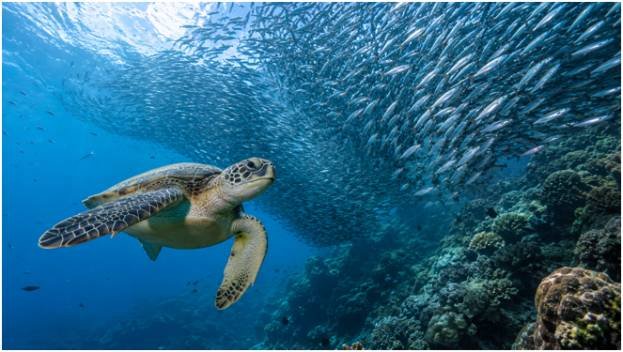
At Panagsama Beach, you do not need a tour boat to see the famed sardine run. Simply don a mask and swim thirty yards off the sand. The sea floor drops into a deep wall where millions of sardines pulse in unison, frequently joined by feeding green sea turtles.
An hour south lies Badian, where you can spend a morning canyoneering through the turquoise water and limestone jumps of Kawasan Falls.
Bohol: Geological Anomalies and River Life
A direct two-hour ferry ride from Cebu City lands you at Tagbilaran Port in Bohol. The contrast in landscape is immediate.
Head inland to Carmen to stand before the Chocolate Hills: more than 1,200 conical mounds that turn cocoa-brown during dry periods. Stop at the Philippine Tarsier Sanctuary in Corella to spot nocturnal primates clinging quietly to leafy branches.
Base yourself on Panglao Island, connected to mainland Bohol by bridges, to stage early-morning boat runs out to Balicasag Island’s marine sanctuary.
Boracay: Fine Sand Meets Polished Convenience
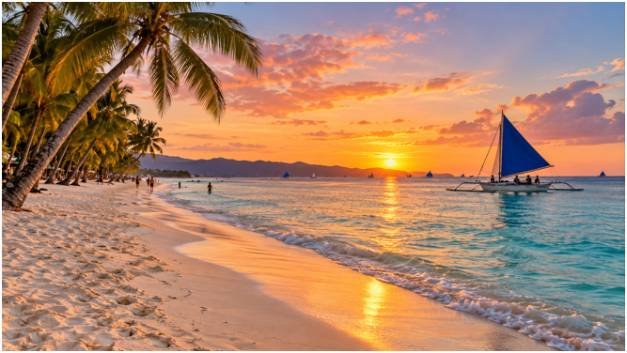
Boracay is built for uncomplicated rest. The island measures just four miles long, but its signature White Beach remains legendary for good reason. The sand is exceptionally cool, white, and talcum-soft underfoot, remaining comfortable even under intense midday sun.
Boracay operates more like a walkable beach town than an isolated wilderness. Station 1 houses quiet, high-end beachfront resorts; Station 2 bustles with open-air dining and night markets; and Station 3 caters to budget travelers and dive shops.
If you want world-class sunset sailing on an unmotorized paraw followed by great dining without packing your bags every forty-eight hours, Boracay delivers.
Siargao: Surf Breaks and Bohemian Outposts
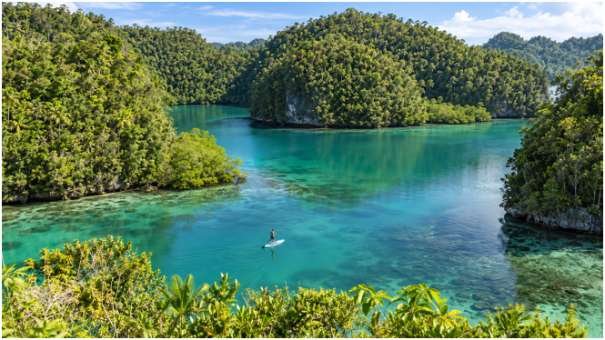
Siargao sits off northeastern Mindanao, shaped by heavy Pacific swells and a thriving café culture. The timber boardwalk of Cloud 9 remains the epicentre of Philippine surfing, offering hollow, barrelling right-hand reef breaks.
The island’s appeal stretches far beyond wave riders. Renting a scooter to navigate the coconut palm corridors of the north reveals a different pace entirely.
Spend an afternoon floating in the natural tidal pools of Magpupungko at low tide, or take a day cruise to Sugba Lagoon to paddleboard through quiet mangrove waters. Siargao retains an unhurried, community-led pulse that makes departures remarkably difficult.
Realistic Transit Matrix: What Guidebooks Skip
Planning multi-destination trips across the Philippines requires respecting physical transit days. A domestic flight does not simply consume an hour; door-to-door, it consumes five.
| Route Combination | Transit Method | Real Door-to-Door Time | Friction Level |
| Cebu to Bohol | OceanJet Fast Ferry | 2.5 to 3.5 hours total | Low (Walk-on boarding) |
| El Nido to Coron | High-speed ferry | 4.5 to 5.5 hours total | Moderate (Sea-swell dependent) |
| Cebu to Siargao | Direct domestic prop flight | 4.0 to 5.0 hours total | Low (Airport waiting) |
| Boracay to El Nido | Flight via Manila or direct charter | 5.0 to 8.0 hours total | High (Flight connections/layovers) |
| Cebu to Moalboal | Overland private car/bus | 3.5 to 4.5 hours total | Moderate (Provincial traffic) |
Frequently Asked Questions About Philippine Islands
1. When is the ideal season to tour the islands?
Target the dry season between December and April, when calm seas simplify ferry transit and diving visibility peaks.
2. Which island destination is best for absolute beginners?
Boracay offers the smoothest experience with modern amenities, walkable beaches, and direct infrastructure requiring zero technical transit.
3. How many islands should I plan to visit in ten days?
Stick to a maximum of two island bases to avoid spending your vacation in transit halls and ferry docks.
4. Do I need physical cash on the smaller islands?
Yes, bring plenty of Philippine Pesos because ATMs on islands like Siargao and Coron frequently run out of bills or lose network power.
Ditch the Over-Packed Itinerary and Anchor Down
The secret to exploring the best island destinations in the philippines is pruning your travel bucket list ruthlessly. Rather than racing through five different airports to check off names, pick one complementary pairing like Cebu and Bohol, or El Nido and Coron. Anchor down, learn the local tide charts, and let the rhythm of the Visayan tides set your pace.