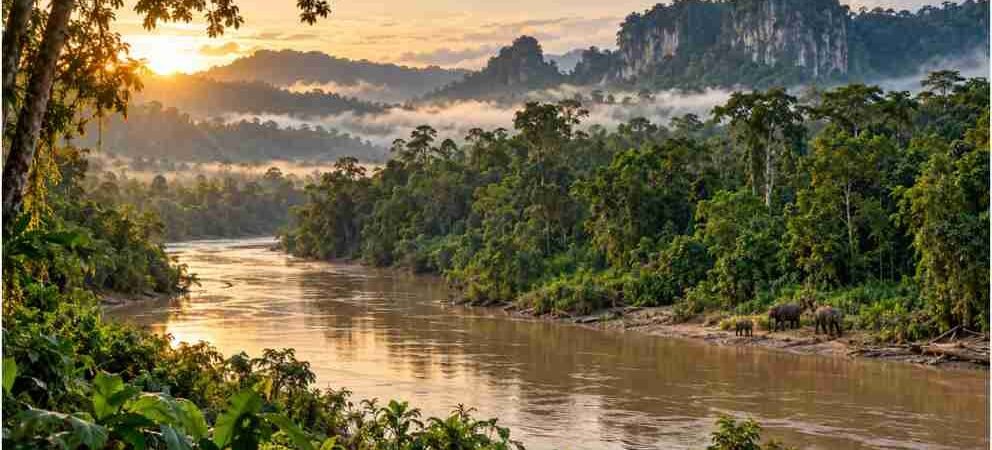
Stepping off an open wooden longboat into the thick mud of Malaysian Borneo hits your senses immediately. The air sits at 95% humidity, smelling of damp soil, river sediment, and ancient dipterocarp leaves. If you seek the most immersive nature destinations in sabah and sarawak borneo, you must decide between two completely different ecological playgrounds.
One state carves its identity out of gargantuan subterranean caves and coastal sandstone cliffs, while the other offers world-class river safaris packed with wild megafauna. Having spent weeks trekking through leech-infested primary trails and cruising silty brown waterways, I learned how to separate the tourist brochures from the authentic field realities.
The Split Personality of Malaysian Borneo: A Field Perspective
Sabah and Sarawak share the world’s third-largest island, yet their geological structures and wildlife dynamics feel worlds apart.
Sarawak captivates you with its vastness and silence. Its ancient karsts hold the planet’s largest known cave chambers, hollowed out over millions of years by underground rivers. The wildlife here hides within dense foliage, demanding patient, sharp-eyed spotting.
Sabah, by contrast, gives you immediate wildlife payoff. Its protected corridors squeeze animals toward riverbanks, offering rapid sightings of elephants, wild orangutans, and proboscis monkeys.
If your typical vacations lean toward relaxed quiet islands to visit in malaysia with breezy boardwalks, Borneo’s interior will challenge your comfort zone with rugged terrain, sweat-drenched treks, and sudden tropical downpours.
Sarawak’s Underworld and Coastal Edges
Sarawak delivers raw geography. The trails test your knees, the caves redefine scale, and the coastline drops straight into the South China Sea.
Gunung Mulu National Park: Caverns, Pinnacles, and the Bat Exodus
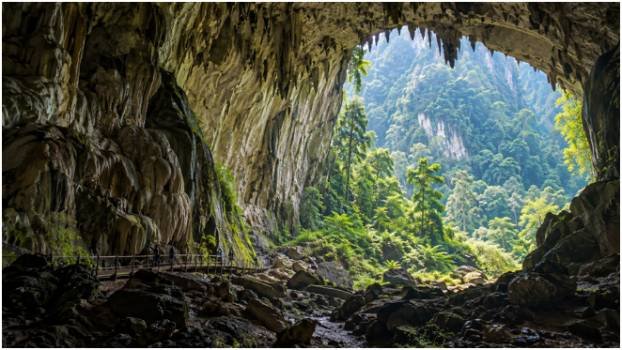
Gunung Mulu is accessible only by rural turboprop flights from Miri or Kota Kinabalu. Stepping into Deer Cave feels like entering a natural cathedral. According to data documented by the UNESCO World Heritage Convention, its opening spans roughly 120 to 150 meters in diameter. It easily swallowed a Boeing 747 with room to spare.
Inside, the warm smell of guano fills the cavern, where millions of wrinkle-lipped bats roost along the ceiling. Sit outside the amphitheater around 5:15 PM. When the weather stays dry, the bats spiral out in massive, smoke-like ribbons across the sky to hunt insects.
For travelers who enjoy high elevation vistas similar to mountain destinations in nepal for non trekkers, Mulu’s base trails and show caves provide dramatic limestone mountain views without requiring vertical mountaineering gear.
The three-day hike to the razor-sharp Mulu Pinnacles requires grueling climbs up vertical aluminum ladders fixed to limestone cliffs. The boardwalks through Clearwater and Lang Caves, however, remain accessible for any curious traveler.
Mulu Field Note:
Do not rely on ponchos inside the caves. Condensation and “cave rain” drip steadily from the roof.
Carry a headlamp pushing at least 300 lumens to illuminate slippery calcite steps.
Bako National Park: Rugged Cliffs and Mangrove Wildlife
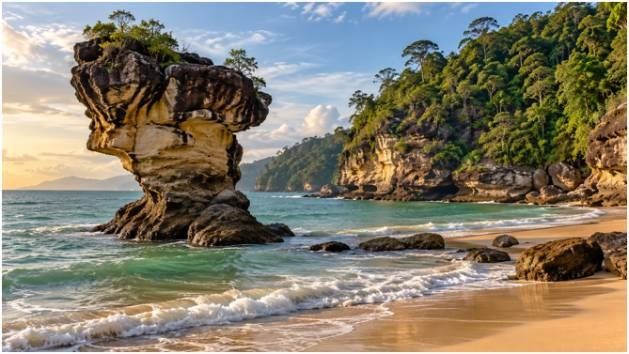
Just a short drive and a choppy longboat ride from Kuching brings you to Bako National Park. It is Sarawak’s oldest national park, and its biodiversity density is staggering.
Within thirty minutes of walking along the Telok Delima trail, you encounter wild proboscis monkeys crashing through mangrove branches. Bornean bearded pigs wander calmly across the sandy beaches right beside park headquarters, snuffling for roots.
Coastal sea stacks weather the incoming tides, and carnivorous pitcher plants cling to dry sandstone plateaus along the Lintang trail. Bako is self-guided, well-marked, and endlessly rewarding if you start walking before dawn.
Sabah’s Megafauna Corridors and Ancient Canopies
Cross the border into Sabah, and the focus shifts directly from ancient rock to active animal biology.
Kinabatangan River: Riparian Boat Safaris and Elephant Corridors
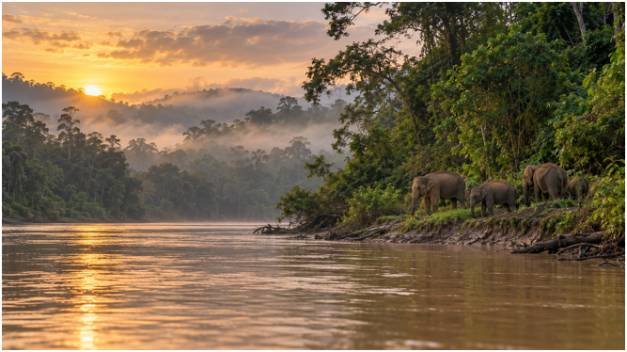
The Kinabatangan River is Sabah’s ecological artery. Decades of agriculture have restricted the native jungle to a narrow green corridor bordering the water.
While this habitat fragmentation presents real conservation challenges monitored by organizations like WWF-Malaysia, it produces phenomenal wildlife viewing for visitors.
Skip the midday heat entirely. Board a small, quiet skiff at 6:00 AM and 4:00 PM. In two days along the riverbanks, you can easily spot:
- Troops of proboscis monkeys leaping into the canopy to sleep.
- All eight native species of Bornean hornbills gliding overhead.
- Saltwater crocodiles sunning on muddy banks.
- Herds of pygmy elephants snapping wild banana trees along the water’s edge.
Night boat safaris reveal buffy fish owls staring from low branches and blue-eared kingfishers resting on reeds. The Sabah Wildlife Department works closely with local community-run cooperatives in Sukau and Bilit, ensuring riverboat drivers maintain respectful distances from foraging animals.
Danum Valley Conservation Area: Deep Primary Dipterocarp Forest
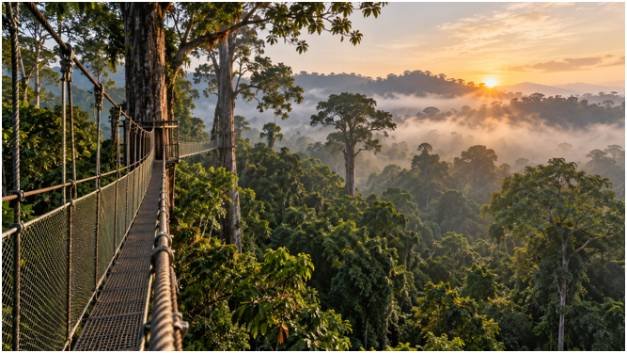
If the Kinabatangan is wildlife theater, the Danum Valley Conservation Area is untouched wilderness. Danum protects 438 square kilometers of unlogged, primary lowland dipterocarp rainforest. Trees here soar past 260 feet into the clouds.
Staying at either the Danum Valley Field Centre (catering to researchers and rugged adventurers) or the upscale Borneo Rainforest Lodge puts you in pristine terrain. Walking the suspended canopy walkway at sunrise reveals gibbon families calling across the misty canopy.
Sightings here are never staged. Finding a wild male orangutan stripping bark high in an ancient shorea tree requires hours of sweat and careful tracking, making the encounter unforgettable.
Field Logistics: How to Route Across Both States
Do not attempt to travel overland between Sarawak and Sabah. The road journey involves crossing multiple immigration checkpoints, poor road conditions, and days of driving.
| Journey Leg | Transit Method | Practical Duration | Best Time to Travel |
| Kuching to Mulu | MASwings Turboprop | 1 hour 35 mins | Morning flights avoid afternoon storm delays |
| Mulu to Kota Kinabalu | Regional Twin Otter/ATR | 55 mins | Direct flights operate limited days per week |
| Kota Kinabalu to Sandakan | Domestic Jet / Overland Coach | 45 min flight / 6 hr drive | Fly to maximize time on the Kinabatangan River |
| Sandakan to Sukau (River) | Minivan Transfer | 2 hours 15 mins | Depart by 11:30 AM to catch the 4:00 PM boat safari |
Book regional turboprop flights months ahead. Baggage allowances are strictly capped at 15 to 20 kilograms per passenger due to small aircraft weight limits.
Packing and Survival Tips for Bornean Rainforests
Jungle trekking demands specialized preparation:
- Invest in genuine leech socks. Normal hiking socks will not stop tiger leeches. Wear tightly woven calico leech socks pulled up to your knees and tied firmly below the joint.
- Keep silica gel in your electronics bag. The ambient humidity in Danum Valley and Mulu ruins camera sensors within 48 hours. Store camera bodies in sealed dry bags with rechargeable desiccant packs.
- Carry electrolytes daily. You sweat continuously, even while standing still. Pure water is not enough; mix oral rehydration salts into your canteen every morning.
Frequently Asked Questions About Borneo Nature Travel
1. Which state is better for wild orangutan encounters?
Sabah offers significantly higher wild spotting odds along the Kinabatangan River and throughout Danum Valley.
2. When is the dry season to visit Sabah and Sarawak?
March through October provides drier trails, calmer boat safaris, and better cave exploration weather.
3. Can I do both states in a single one-week trip?
No, a combined trip requires at least 10 days to comfortably manage flights and park transfers.
4. Do I need a guided tour to visit Gunung Mulu?
Yes, national park regulations require licensed local guides for entering all major cave systems.
The Verdict: Pick Your Jungle Poison
If your dream trip involves seeing wild pygmy elephants, sleeping orangutans, and cruising broad rivers with a cold drink in hand, book your flights directly to Sabah. If you want raw physical challenges, dramatic limestone chambers that make you feel microscopic, and secluded coastal forest hikes, head straight to Sarawak.
The smartest move is simple: don’t choose between them. Book a short turboprop hop across the border, pull your leech socks up tight, and experience both worlds firsthand.