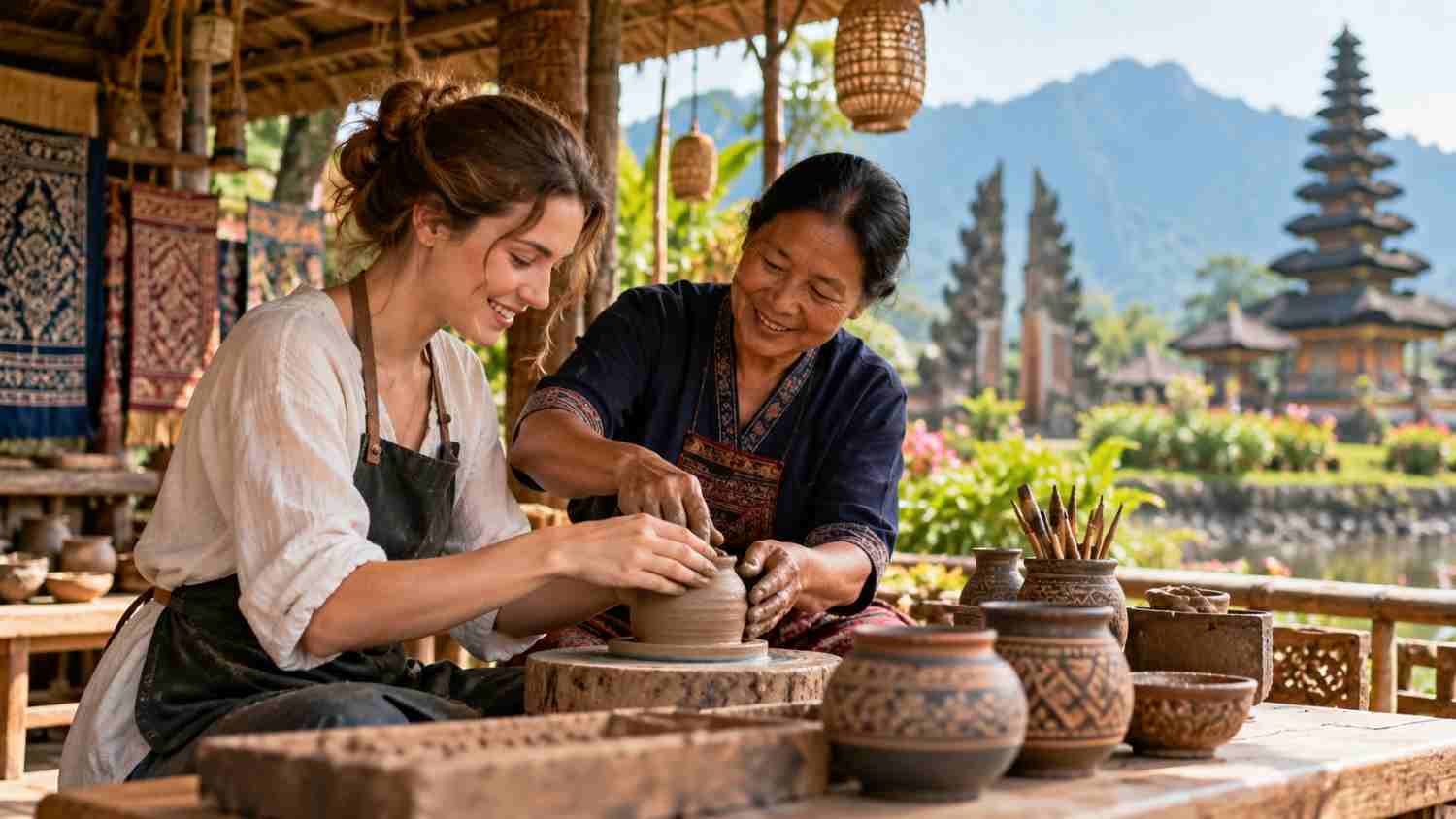
I have always found that handmade objects feel different when I understand the work behind them. A silk pattern, silver ring, or paper lantern may look beautiful in a shop, but seeing the tools and careful movements that shape it gives the finished piece a story. That connection makes a craft experience more memorable than ordinary souvenir shopping.
When I look for cultural activities while traveling, I am drawn to places where people still practice skills learned from earlier generations. Sitting beside an artisan, trying a technique, and hearing why a pattern matters can reveal parts of daily life that a quick visit to a landmark may miss. Across Asia, these encounters offer a personal way to understand living heritage.
Why Craft Experiences Offer a Deeper View of Asia
Traditional craftsmanship can reflect local materials, climate, beliefs, trade, and family history. A textile motif may carry symbolic meaning, while a dye may come from plants found nearby. Learning how these choices developed helps travelers see craft as part of a community’s identity rather than simply decorative art.
Traditional Craftsmanship Experiences to Try
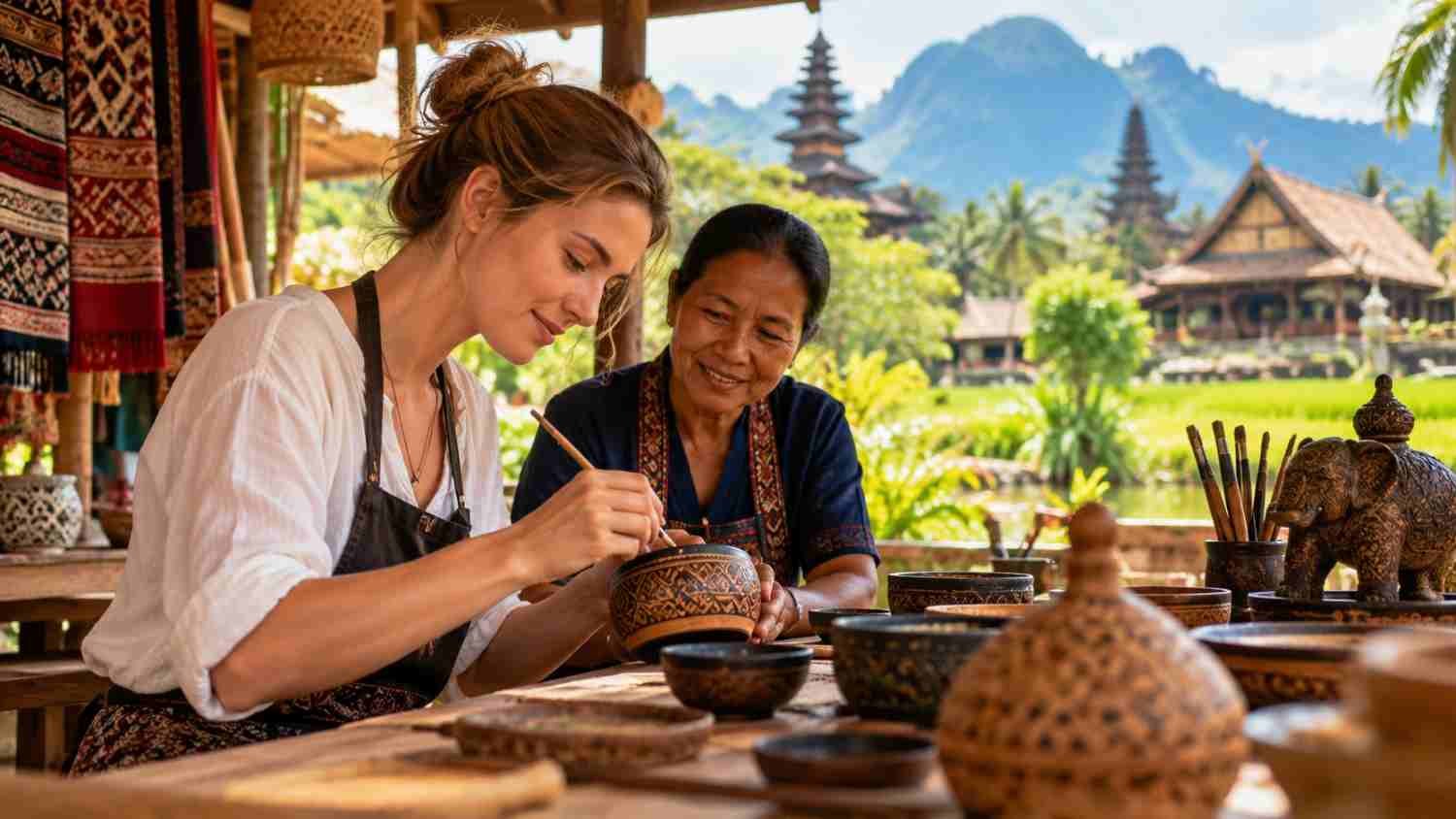
Kyoto, Japan: Gold Details and Kimono Art
Kyoto’s textile traditions reward close attention. In a Kyo-yuzen workshop, artisans use drawing, resist-dyeing, and color application to build detailed designs on fabric. Some studios also demonstrate kinsai, which adds gold decoration to silk. Travelers may try a small design on a fabric sample rather than work on a full kimono, which requires extensive training.
Ubud, Bali: Silver Jewelry Making
In and around Ubud, some workshops introduce visitors to Balinese silverwork. Under an instructor’s guidance, participants may shape wire, texture a piece, solder components, or polish a simple design. The activity varies by studio, so check what is included before booking.
A workshop can explain how jewelry fits into ceremonies, gifts, and personal adornment. Choose local makers and ask whether the fee supports artisans directly.
Chiang Mai, Thailand: Umbrellas and Natural Dyes
Northern Thailand’s Lanna heritage appears in painted parasols, textiles, and decorative patterns. At an umbrella workshop, visitors may add color to a bamboo-and-paper surface under an artist’s direction. Other classes introduce natural dyeing, including indigo, and show how plant-based color changes with preparation.
Hoi An, Vietnam: Silk Lantern Making
Hoi An’s lanterns are closely associated with its old streets and evening atmosphere. In a class, travelers may assemble a frame, stretch fabric over it, and choose colors for a small lantern. Instructors guide the steps, making the activity suitable for beginners.
Jeonju, South Korea: Handmade Hanji Paper
Hanji, traditional Korean paper made from the inner bark of the paper mulberry tree, has long been used for writing, crafts, and household objects. A workshop may show how fibers are prepared and formed into sheets, or let visitors use finished paper to create a lamp, box, or decoration.
How to Choose a Responsible Workshop
A thoughtful booking can help keep craft traditions economically viable without treating artisans as attractions. Look for small-group sessions led by working craftspeople, transparent pricing, and clear explanations of what your fee includes. Community-run studios may explain how income supports training or local employment.
Ask permission before taking portraits, follow rules around sacred motifs, and avoid bargaining aggressively over work that takes hours or days to make. Ask about materials and care when buying an object. For protected woods, shells, plant products, or animal-derived materials, check customs rules before carrying anything across borders.
The phrase hidden village traditions in Asia can describe a wider kind of discovery, but villages are living communities, not open-air exhibits. Choose experiences that welcome visitors on agreed terms and respect residents’ privacy.
Practical Tips Before You Book

Confirm the duration, language, group size, materials, cancellation terms, and whether you will take your finished item home that day. Some pieces need firing, drying, or specialist finishing and may need to be shipped later. Ask about shipping costs and packaging before starting.
Before booking, check whether the workshop is hosted by the artisan or by a third-party operator. Ask how many participants will attend and whether the instructor can demonstrate the traditional method, not only a simplified tourist version. A shorter class can still be worthwhile when the host explains the materials, history, and choices behind the design. Respectful questions often make the experience more rewarding for everyone. Without rushing the process.
Book directly with a studio when practical. Wear clothes that can handle dust, dye, or clay, and tell the instructor about any mobility needs. You do not need to produce a perfect object; the point is to understand the process.
Craft workshops can sit alongside Asian cultural rituals travelers can experience, but they are different kinds of encounters. A craft class is usually designed for participation; a ritual may have religious or community rules. Learn the etiquette before joining a ceremony, and never assume every tradition is intended for tourists.
What Stays With You After the Workshop
The object you bring home may be modest: a slightly uneven bowl, a small silver pendant, or a lantern whose seams show your beginner’s hand. Its value lies in remembering the steps, the person who taught you, and the time required to make something well. That memory can change how you look at handmade goods long after the trip ends.
Travel becomes richer when curiosity is paired with respect. By paying fairly, listening carefully, and making room for local expertise, visitors can support living traditions while gaining a grounded understanding of the places they explore.
FAQs: Traditional Craftsmanship Experiences in Asia for Curious Cultural Travelers
1. Which Asian country is best for a craft workshop?
There is no single answer. Kyoto offers textile arts, Bali has silverwork, Chiang Mai offers umbrella painting and dyeing, and Hoi An is known for lantern-making. Choose based on the craft that interests you.
2. Do I need previous experience?
Usually not. Many workshops are designed for beginners and provide tools and instruction. Check the description because some specialist techniques require more time or experience.
3. How can I support local artisans responsibly?
Book with local makers, pay the stated price, ask thoughtful questions, and avoid pressuring artisans to discount labor-intensive work. Buy items whose materials and origins are clear.
4. Can I bring handmade crafts home?
Often, yes, but rules vary by material and destination. Check restrictions for wood, plant products, shells, and animal-derived materials. Ask about safe packaging and shipping if needed.
Leave a Reply