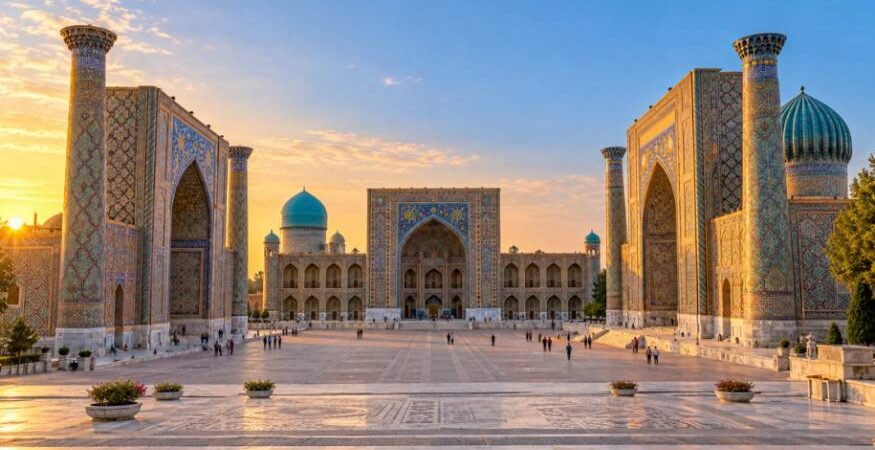
Stepping onto the sun-baked stone of Registan Square at sunrise permanently resets your sense of architectural scale. When I mapped out my itinerary to explore the premier places to visit in the silk road uzbekistan, I expected dusty outposts and forgotten ruins. Instead, I found towering cobalt portals, vibrant open-air bazaars, and an ultra-modern rail network that makes crossing Central Asia remarkably simple.
Centuries ago, merchant caravans loaded with Persian saffron, Chinese silk, and Venetian glass traversed these exact river valleys. Today, Uzbekistan preserves this legacy through immaculate UNESCO World Heritage landmarks anchored by everyday street life.
The Core Oasis Cities: Where Ancient Caravans Met
Uzbekistan’s historical spine runs directly along three historic cities: Samarkand, Bukhara, and Khiva. Each offers a distinct personality, ranging from imperial monumentalism to intact desert fortifications.
If you are planning your first journey through Asia and deciding which destinations deserve a place on your route, this guide on how to plan your first trip to Asia can help you approach those choices with a more structured itinerary in mind.
Samarkand: Monumental Tiles and Regal Tombs
Samarkand was the grand showcase of Emperor Timur’s empire, engineered deliberately to humble foreign ambassadors.
The centerpiece is Registan Square, a public plaza framed by three towering madrasas: Ulugh Beg, Sher-Dor, and Tilla-Kari. While daytime crowds gather quickly, I found that visiting at 7:00 AM reveals the intricate lapis lazuli and gold leaf in peaceful silence.
Walk inside Tilla-Kari to inspect its trompe-l’œil ceiling; the gilded dome appears concave, yet sits entirely flat against the ceiling beams. Return after 8:30 PM, when warm floodlights bathe the monumental facades against the night sky.
A twenty-minute stroll away lies the Shah-i-Zinda necropolis. This pedestrian avenue of mausoleums climbs up a hillside, housing the most vibrant mosaic tilework in Central Asia. Every archway showcases intricate variations of glazed earthenware, star-patterned relief work, and Quranic calligraphy.
Directly across town, the Gur-i Amir mausoleum holds Timur’s jade tomb beneath a ribbed azure dome.
┌─────────────────────────────────────────────────────────────┐
│ SAMARKAND AT A GLANCE │
│ • Best morning view: Shah-i-Zinda (early light on facades) │
│ • Best night view: Registan Square illumination │
│ • Essential snack: Samarkand non (dense, glazed bread) │
└─────────────────────────────────────────────────────────────┘
Bukhara: Living Medieval Streets and Trade Domes
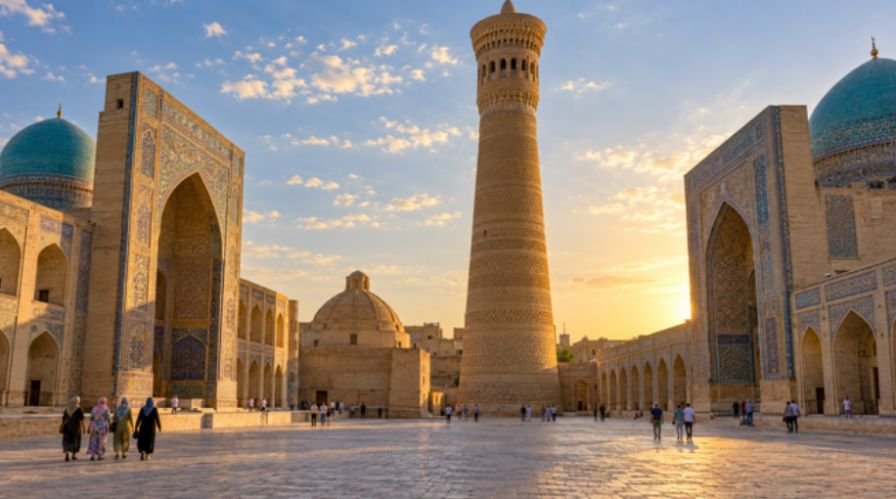
If Samarkand is a gallery of standalone monuments, Bukhara is an entire preserved ecosystem. Recognized as a premier UNESCO World Heritage Centre site, the historic center feels virtually untouched by the modern era.
Start your morning at the Po-i-Kalyan complex. Its centerpiece, the 157-foot Kalan Minaret, was completed in 1127. When Genghis Khan leveled Bukhara in 1220, local lore records that he gazed up at this banded relief brick tower and spared it from demolition. Stand directly below the baked-brick decorative rings to appreciate its geometric mastery.
Wander westward into the historic domed trade markets, known locally as Toqi. Active merchants have hammered copper plates, woven wool carpets, and traded antique spices under these vaulted junctions for four centuries.
Take a tea break at Lyabi-Hauz, a historic square centered around a tranquil stone pool shaded by ancient mulberry trees. Order hot green tea served in traditional ceramic pialas alongside dry fruits.
Before sunset, climb the earthen ramparts of the Ark of Bukhara, a fifth-century city-within-a-city that served as the fortified residence for Bukhara’s emirs.
Khiva: The Sun-Baked Fortress of Itchan Kala
Located further west in the Khorezm region, Khiva requires more travel time, but rewards you with an open-air time capsule.
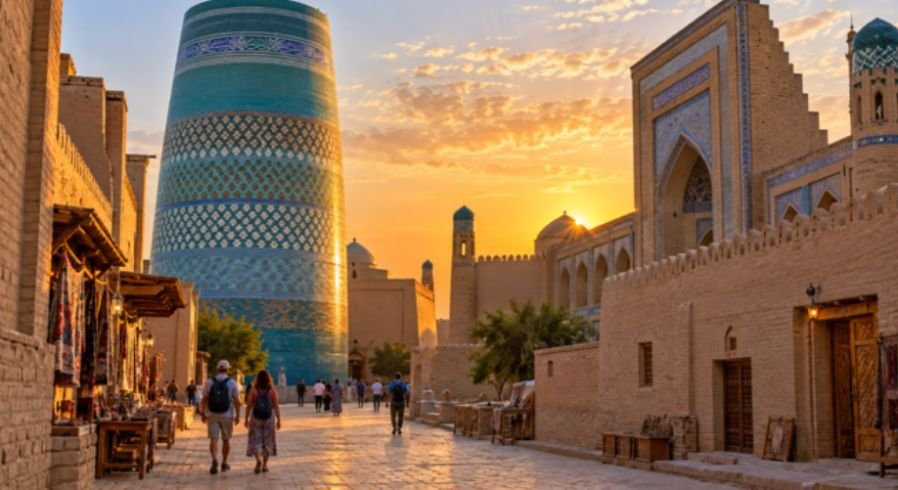
The entire old quarter, named Itchan Kala, remains completely hemmed inside undulating mud-brick walls. Because vehicle traffic is banned inside the gates, you can explore the packed alleys entirely on foot.
The primary visual anchor is the Kalta Minor Minaret. Commissioned in 1851, the ruler intended to build a minaret tall enough to survey the desert route to Bukhara. Construction halted abruptly upon his death, leaving a stout, turquoise-glazed cylinder that looks strikingly futuristic against its raw earthen surroundings.
Make time for the Juma Mosque. Instead of traditional domed halls, its ceiling rests upon 218 individually carved elm columns, several dating back to the tenth century. For panoramic views, climb the watchtower atop the Kunya-Ark fortress just as dusk settles over the Karakum desert.
Beyond the Glazed Domes: Modern Gateways and Craft Valleys
Many itineraries skip the modern capital and eastern valleys, missing critical chapters of the regional story.
Tashkent: Soviet Metro Murals and Chorsu Chaos
Tashkent is Central Asia’s main arrival hub. While reconstructed following a devastating earthquake in 1966, it balances grand Soviet planning with historic Silk Road relics.
Descend into the Tashkent Metro, where each subterranean station functions as an underground palace decorated with carved alabaster, marble chandeliers, and ceramic cosmonaut tributes.
Above ground, head into the massive domed structure of Chorsu Bazaar. Beneath its turquoise concrete ribs, vendor stalls overflow with mountain pistachios, dried apricots, horse-meat sausage (qazi), and stacks of golden flatbreads fresh from clay tandoor ovens.
In the old city quarter, the Hazrati Imam Complex houses the sacred seventh-century Uthman Quran, written upon deer parchment.
Fergana Valley: Living Workshops of Ikat and Clay
Travelers seeking traditional craftsmanship should take a train east into the Fergana Valley.
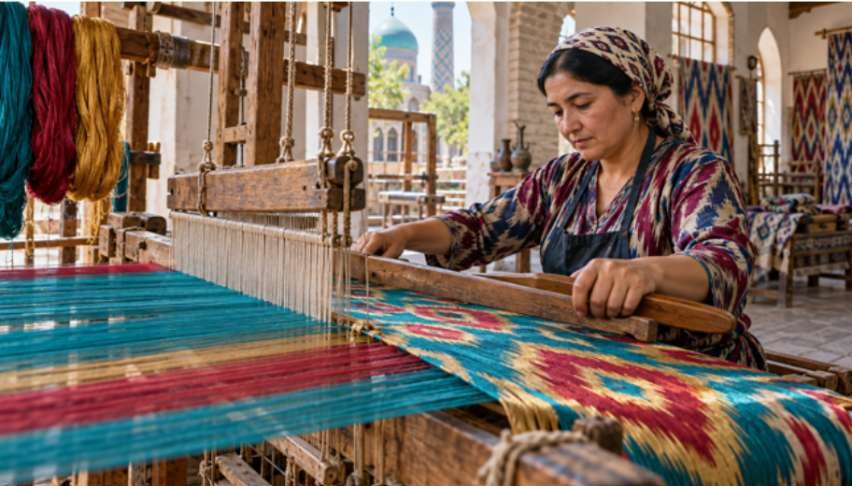
In Margilan, the Yodgorlik Silk Factory preserves handmade silk production using centuries-old Ikat techniques. You can observe the manual boiling of silkworm cocoons, vegetable dyeing, and foot-pedal weaving. In nearby Rishtan, master potters shape local clay into ceramics glazed with distinct turquoise and sage pigments derived from natural plant ash.
Navigating the Silk Road: Rail Secrets and Routing Logistics
Getting between these desert cities is surprisingly modern. The high-speed Afrosiyob train connects Tashkent, Samarkand, and Bukhara at speeds reaching 155 mph.
If you are incorporating Uzbekistan into a broader regional journey, this guide on how to create a two-week Asia travel itinerary can help you structure multiple destinations around realistic travel times and connections.
┌─────────────────────────────────────────────────────────────┐
│ AFROSIYOB TRANSIT DURATIONS │
│ • Tashkent ➔ Samarkand: ~2 hours, 15 minutes │
│ • Samarkand ➔ Bukhara: ~1 hour, 30 minutes │
│ • Bukhara ➔ Khiva: ~6 hours (regional diesel train) │
└─────────────────────────────────────────────────────────────┘
Train tickets open officially 45 days prior to departure on the Uzbekistan Railways Portal. Because seating capacity is low and tour operators book large blocks, tickets for peak spring and autumn dates often sell out within hours.
Set a calendar reminder for 45 days out at midnight local time (UTC+5). If high-speed tickets are gone, check the conventional Sharq passenger train or hire a private vehicle via local services.
Practical Rules for Central Asian Travel
Independent travel in Uzbekistan is safe and welcoming. Because weather and seasonal conditions can significantly influence what you pack, where you travel, and how comfortably you explore, this guide on how to plan an Asia trip around monsoon seasons can help you account for regional weather patterns when preparing your itinerary.
- Entry Regulations: Citizens of the United States can secure an electronic visa via the official government portal before departure. Confirm up-to-date entry rules via the U.S. Department of State Travel Advisory.
- Payment Realities: Cash remains king in local bazaars and regional diners. Carry clean, uncreased U.S. dollar bills to exchange for Uzbek Som at bank kiosks. Visa and Mastercard work reliably in upscale Tashkent and Samarkand hotels.
- Modesty and Footwear: Shrines and active mosques require covered shoulders and knees. Slip-on shoes save valuable time, as you will remove your footwear repeatedly when entering sacred prayer halls.
- Culinary Staple: You cannot visit without sampling plov, the national dish of rice, braised beef, caramelized onions, carrots, and cumin simmered in massive cast-iron cauldrons.
Frequently Asked Questions
1. What is the best month to visit Uzbekistan?
April, May, September, and October offer mild temperatures that avoid freezing winters and scorching desert summer heat.
2. How do I travel between Samarkand, Bukhara, and Khiva?
Ride the high-speed Afrosiyob train between Samarkand and Bukhara, then take a regional train or private driver onward to Khiva.
3. Is it safe to travel across Uzbekistan as an independent tourist?
Uzbekistan ranks among the safest nations for foreign travelers, featuring dedicated tourist police and welcoming local hospitality.
4. What should I wear when visiting mosques in Uzbekistan?
Wear breathable pants or long skirts covering the knees, keep your shoulders covered, and bring socks for shoe-free interior carpets.
Beyond the Turquoise Horizon: Your Next Step
Uzbekistan rewards travelers who slow down and look past the initial dazzle of glazed tilework. The true pulse of the Silk Road lives in the laughter echoing across communal tea houses, the smoky aroma of cumin drifting from neighborhood tandoors, and the quiet dignity of desert fortresses standing against shifting sands.
Lock in your train tickets early, pack a sturdy pair of slip-on shoes, and prepare for one of the world’s great overland journeys.