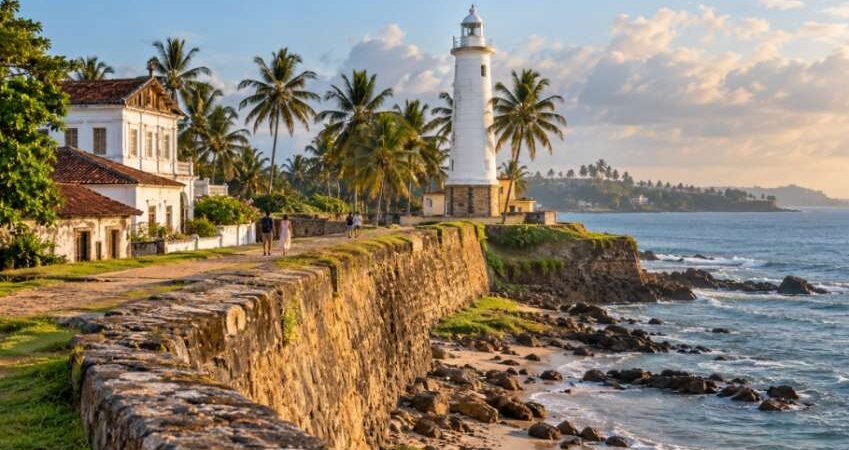
I spent months running the coastal railway and tuk-tuk trails between Bentota and Hambantota. The best coastal towns to visit in southern sri lanka change character every twenty kilometers. One headland shields a glassy, family-friendly crescent; the next exposes raw Indian Ocean swells that dump onto shallow coral reefs.
Choosing the wrong base costs hours in transit and leaves you stranded on beaches unsuited to your travel style.
West (Hikkaduwa / Galle) ──► Mid-Coast (Weligama / Mirissa) ──► Far South (Hiriketiya / Tangalle)
[Heritage & Reefs] [Surf & Nightlife] [Coves & Seclusion]
Mapping the Southern Shore: A West-to-East Overview
Heading down from Colombo, the coastline shifts from urban transit corridors into historic colonial fortifications. This western segment offers the most developed infrastructure.
Hikkaduwa: Coral Sanctuaries and Atlantic-Style Swell
Hikkaduwa was the epicenter of Sri Lanka’s original 1970s overland surf trail. The main strip borders the busy Galle Road, creating an energetic, unpretentious atmosphere.
Offshore, the reef acts as a marine buffer, creating the Hikkaduwa National Park marine sanctuary. While many vendors sell cabbage to hand-feed wild green turtles right on the shoreline, avoid this practice.
Feeding wild marine life alters natural foraging habits and pulls turtles into shallow channels where motorized day-boats cause propeller strikes. Pack a mask, swim out fifty yards over the coral heads, and observe them grazing naturally on sea grass.
The southern pocket of Hikkaduwa turns into a consistent A-frame reef break suited for intermediate surfers. It feels louder and more social than towns further east.
Galle: Ramparts, Cobblestones, and Maritime History
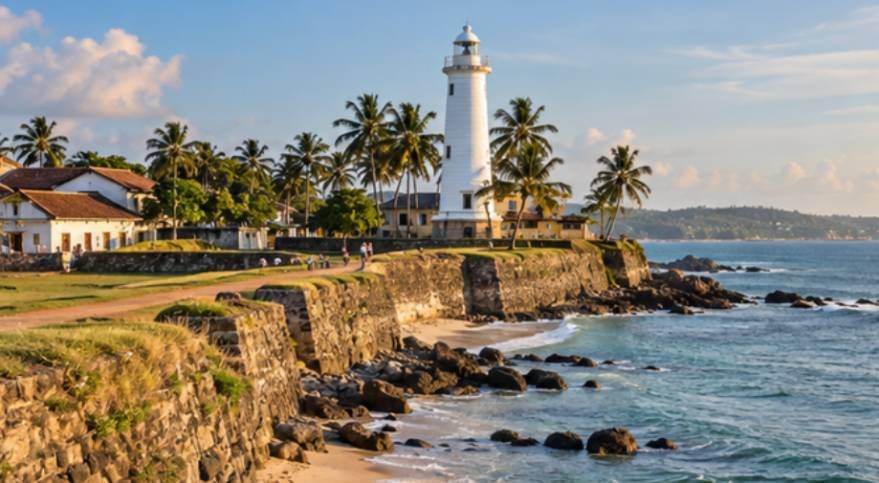
Galle Fort is not a beach destination. It is a living, 17th-century fortified citadel jutting into the sea, recognized as an official UNESCO World Heritage site.
[Galle Fort Ramparts]
│
├─► Dutch Reformed Church (1755)
├─► National Maritime Museum
└─► Galle Lighthouse (Pointe de Galle)
I base myself inside the ramparts for at least two nights on every trip. The thick coral-and-granite walls drop the interior ambient temperature noticeably compared to the modern city outside the gate. Morning walks take you past colonial Dutch villas, spice warehouses converted into design shops, and cricket matches played on the green turf below the bastion.
Dinner here is sophisticated. Upscale hoppers, wild-caught mud crab curry, and craft cocktails replace standard beachfront shacks. When you want to swim, the open beaches sit a short ten-minute tuk-tuk ride east.
Unawatuna: Sheltered Swimming and Jungle Coves
Rounding the corner from Galle brings you into Unawatuna. If traveling with young children or non-surfers, this is the most reliable swimming beach on the southern edge.
A natural offshore reef blunts the heavy southerly ocean swells. The water in the central bay stays calm enough for open-water distance swimming through the peak season. The beachfront path is packed with cafes, dive shops, and boutique guesthouses.
For a quieter afternoon, follow the dirt trail through the headland scrub to Jungle Beach. The small cove features clear water, shaded canopy trees, and healthy rock-dwelling marine life.
The Mid-Coast Surf Enclaves: Waves, Work, and Sunsets
Moving past Koggala, the coastline opens into a long stretch of sand bars, point breaks, and creative workspaces. This corridor pulls digital nomads, specialty coffee purveyors, and traveling surfers.
Ahangama: Specialty Roasters and Intermediate Reef Breaks
Ahangama transformed rapidly over the past few years. It went from a quiet stilt-fishing hamlet to the design and culinary capital of the south coast.
Unlike the wide sandy shores to the east, Ahangama’s waterfront consists primarily of rocky platforms and low bluffs broken up by hidden reef passes. Breaks like Marshmallows and Kabalana’s “The Rock” produce steep, hollow waves that test intermediate and advanced surfers.
Between surf sessions, the town functions as an open-air cafe strip. Converted mid-century houses host pour-over coffee bars, co-working studios, and wood-fired bakeries tucked into the jungle behind the rail line.
Weligama: The Island’s Softest Sandbar for Beginners
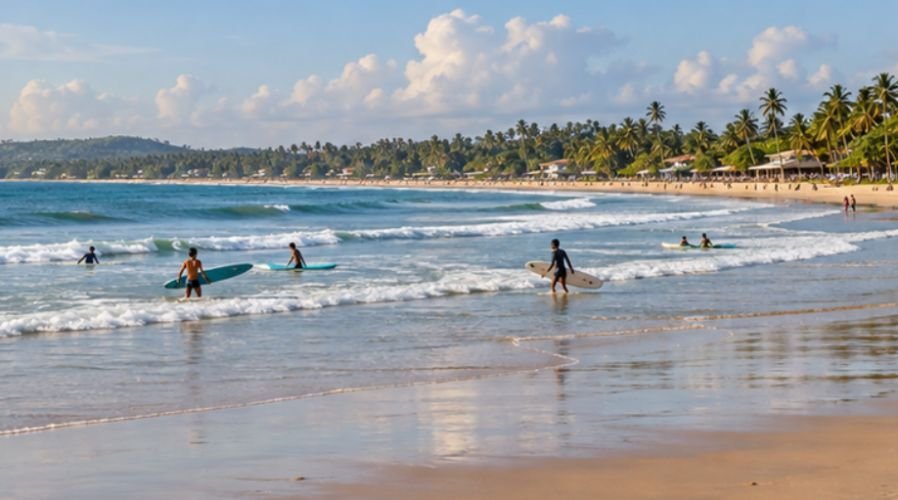
Weligama is a wide, two-kilometer sandy amphitheater. Because the bay faces south and features a flat sand bottom without hidden rocks, it serves as the premier surf classroom of South Asia.
+————————————————————————-+
| WELIGAMA BAY ANATOMY |
| |
| [ West End: Fish Harbor ] ──► [ Central Bay: Sandy Beach Breaks ] |
| Commercial trawlers Gradual slope, chest-deep water, |
| Local morning fish market safe beginner whitewater whitewash |
| |
| ──► [ East End: Taprobane Island ] |
| Private octagonal villa on rock islet |
+————————————————————————-+
Dozens of surf instructors line their boards along the beach. On any given morning, hundreds of beginners practice pop-ups in the gentle whitewash. If you are learning to surf, skip the other towns and base yourself here for three days. You will catch dozens of waves without risking cuts on exposed coral.
The trade-off is water clarity. The stirred-up sand and concentrated boat traffic inside the commercial harbor mean Weligama lacks the turquoise hues of Unawatuna or Mirissa.
Mirissa: Palm Bluffs and Open-Ocean Marine Life
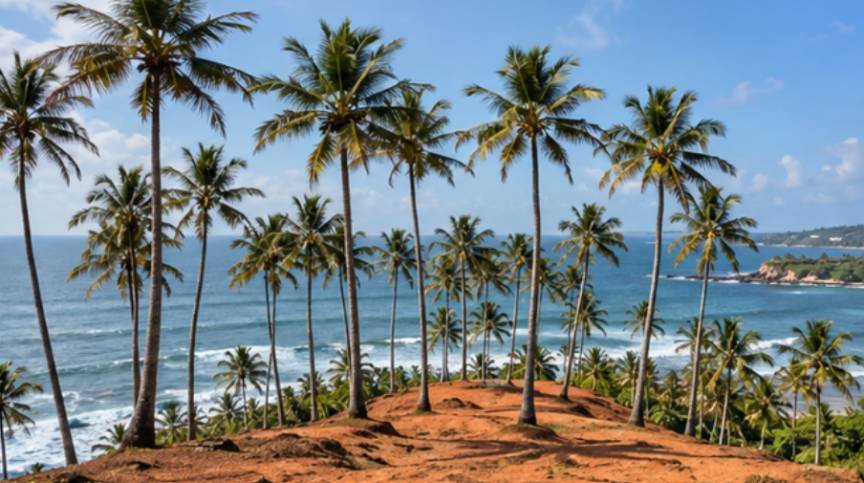
Mirissa balances lively beachfront nightlife with dramatic coastal geography. The town’s primary landmark is Coconut Tree Hill, a red-clay promontory covered in tall coconut palms bending toward the sea.
For travelers incorporating Sri Lanka into a wider Asian itinerary, it is also worth planning entry requirements in advance and checking visa requirements for travel across Asia before adding additional destinations to the route.
Visit at sunrise; by 8:00 AM, crowds fill the hill for photos.
Mirissa Harbor is the primary launch point for whale-watching expeditions into the deep Indian Ocean trench. According to marine mammal migration tracking documented by the Sri Lanka Tourism Development Authority, the deep continental shelf off Mirissa puts migratory blue whales, sperm whales, and spinner dolphins within two hours of the marina.
Choose operators certified by ethical marine bodies. Vessels should keep a minimum distance of one hundred meters, avoid encircling pods, and cut engines when animals surface.
The Deep South: Bohemian Coves and Untamed Horizons
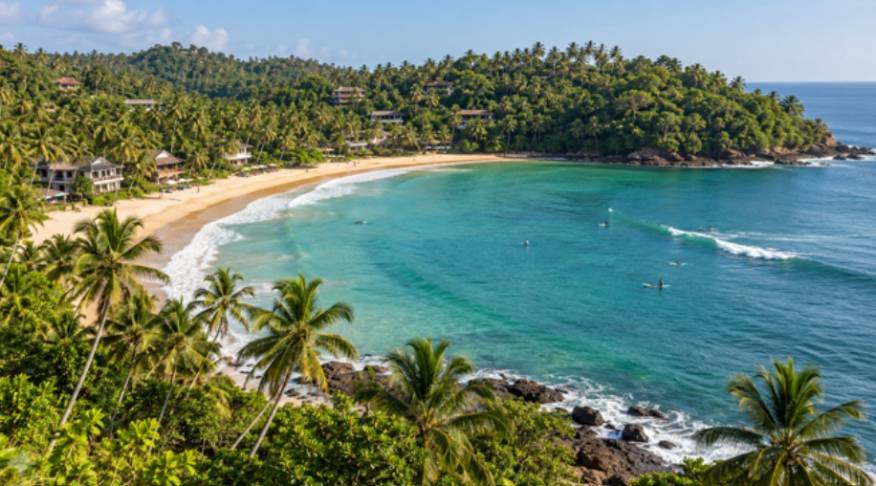
Past Matara, the coastal highway swings inland, leaving the southern tip exposed to unbroken southern ocean swells. The towns become quieter, greener, and significantly wilder.
Dikwella and Hiriketiya: Horseshoe Bays vs. Expansive Sand
Travelers often use “Dikwella” and “Hiriketiya” interchangeably, but they offer completely different environments separated by a narrow rocky headland.
[Hiriketiya Beach] [Dikwella Beach]
Horseshoe jungle bay Endless golden sand strip
Boho-chic surf point break Quiet, uncrowded, wide open
Boutique cafes, busy lineup Local seafood, easy walking
Hiriketiya is a tight, horseshoe-shaped jungle cove. Palm trees hang directly over the sand, monkeys jump across the telephone wires, and an exceptional left-hand reef break peels across the western rocks. The water inside the cove remains brilliant green, with a gentle beach break in the middle for beginners.
Because space in the bay is limited, Hiriketiya gets congested during peak months. When the cove feels crowded, walk five minutes west to Dikwella Beach. Dikwella is an expansive, uncrowded sweep of sand where you can walk for a mile without passing more than a handful of travelers.
Tangalle: Empty Golden Shorelines and Turtle Sanctuaries
Tangalle represents the edge of the southern resort strip. Beyond this point, the landscape transitions into dry-zone brush and national parks.
The beaches here—including Silent Beach and Goyambokka—are breathtaking. Massive granite boulders frame empty golden sands backed by thick coconut groves. However, swimming demands extreme care.
The open ocean creates a punishing shore-break and strong undertows along most of Tangalle’s coastline. Treat these beaches as places to walk, read, and relax rather than casual swimming holes.
At night, visit the Rekawa Turtle Conservation Project, monitored alongside the Department of Wildlife Conservation. Five of the world’s seven sea turtle species nest on this protected beach.
Trained community guides lead small groups using red light to observe nesting females without disorienting them. Regional travelers often pair this coast or pair it with trips to quiet islands to visit across Asia.
Navigating the South Coast: Practical Realities
Planning a route across these towns requires understanding the regional seasons.
| Region / Town | Best Months | Primary Wave Type | Swimming Conditions |
| Hikkaduwa | Nov – April | Peaking A-frame reef breaks | Moderate; watch reef heads |
| Galle & Unawatuna | Nov – April | Gentle beach breaks / None | Excellent; reef-sheltered water |
| Ahangama & Midigama | Nov – April | Hollow reef & rock points | Poor to fair; rocky entries |
| Weligama | Year-round | Soft sandy beach breaks | Safe; heavy board traffic |
| Mirissa | Nov – April | Low-tide right point break | Good inside central bay |
| Hiriketiya | Nov – April | Left-hand point & sand break | Safe in center of cove |
| Tangalle | Dec – April | Heavy dumping shore break | Dangerous; strong undertow |
The southwest monsoon controls water clarity and wave shape from May through October, bringing onshore winds and rough seas. For calm water and offshore breezes along this coastline, visit between late November and mid-April, in line with climate profiles from the World Meteorological Organization.
Moving between towns is simple. The coastal railway runs several passenger trains daily between Colombo, Galle, Weligama, and Matara, offering ocean views for minimal cost. For short hops between neighboring towns, hail a three-wheeled tuk-tuk along the main road.
Agree on a metered fare or settle the price before boarding to avoid unnecessary disputes. For travelers planning a wider Asian itinerary without depending on a private vehicle, this guide on how to plan an Asia trip without renting a car provides practical strategies for coordinating public transport, local connections, and efficient point-to-point travel.
Agree on a metered rate or fix the fare before climbing aboard.
While regional travelers often pair this coast with cool hill stations to visit in southern india, Sri Lanka’s southern fringe offers an unmatched density of diverse coastal settlements.
Frequently Asked Questions
1. What is the most walkable coastal town in southern Sri Lanka?
Galle Fort is entirely pedestrian-friendly, with car-free cobblestone streets and compact perimeter ramparts.
2. Which southern town is best for first-time surfers?
Weligama features a gently sloping sand bottom with predictable, safe whitewash waves, making it ideal for beginners.
3. Can you swim safely in Tangalle year-round?
No, most Tangalle beaches feature steep shore-breaks and strong rip currents that make swimming hazardous.
4. How do you travel between towns along the southern coast?
Local tuk-tuks handle short trips under thirty minutes, while passenger trains run between Galle, Weligama, and Matara.
Pack the Zinc, Ditch the Rigid Schedule
Southern Sri Lanka rewards travelers who move slowly. If the surf lineup at Hiriketiya feels too crowded, hail a three-wheeler and head five minutes west to the empty sands of Dikwella. If the afternoon heat inside Galle Fort slows you down, take the coastal road out to the cool shallows of Unawatuna for a sunset swim. Pick two bases, settle in, and let the rhythm of the tides set your daily route.