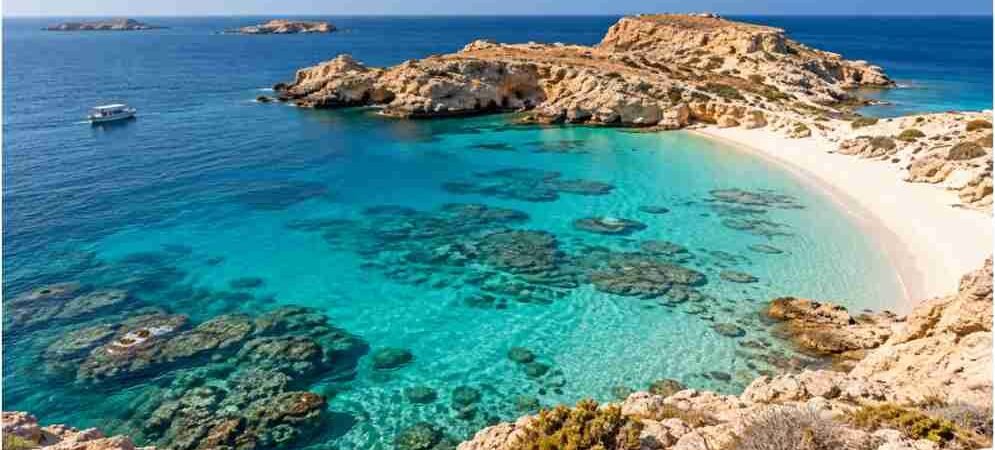
Landing in Muscat at midnight feels like entering a different dimension of the Arabian Peninsula. Whitewashed buildings replace neon glass towers, while the salty breeze from the Gulf of Oman carries the faint aroma of burning frankincense resin.
Exploring the best destinations in Oman for first timers requires abandoning the sterile highway mindset and getting comfortable with wide-open landscapes, friendly roadside greetings, and mountain switchbacks that test your nerves.
The Ultimate Northern Circuit for Debut Travelers
I spent two weeks navigating this sultanate from coastal coves to rocky limestone gorges. Oman delivers an authentic Middle Eastern journey that feels as untouched and historic as the ancient caravan outposts among the places to visit in the silk road uzbekistan. If you want an unforgettable debut route, this road-tested loop delivers every essential landscape.
[ Muscat ] (Coastal capital, Sultan Qaboos Grand Mosque)
│
▼ (1.5-hr drive inland)
[ Nizwa ] (Historic fort, Friday goat market, spice souqs)
│
┌─────┴─────────────────────────┐
▼ ▼
[ Jebel Akhdar / Shams ] [ Sharqiya Sands ]
(Grand Canyon, 4WD climbs) (Desert dunes, Bedouin camps)
│ │
└─────────────┬─────────────────┘
▼
[ Coastal Daymaniyat / Salalah ]
(Turtle reefs & southern Khareef greenery)
First-time visitors should focus on northern Oman. The road infrastructure between the capital and the interior is world-class, linking ocean ports, mountain massifs, and dramatic sand corridors within manageable three-hour driving legs.
Muscat: Coastal Calm and Architectural Splendor
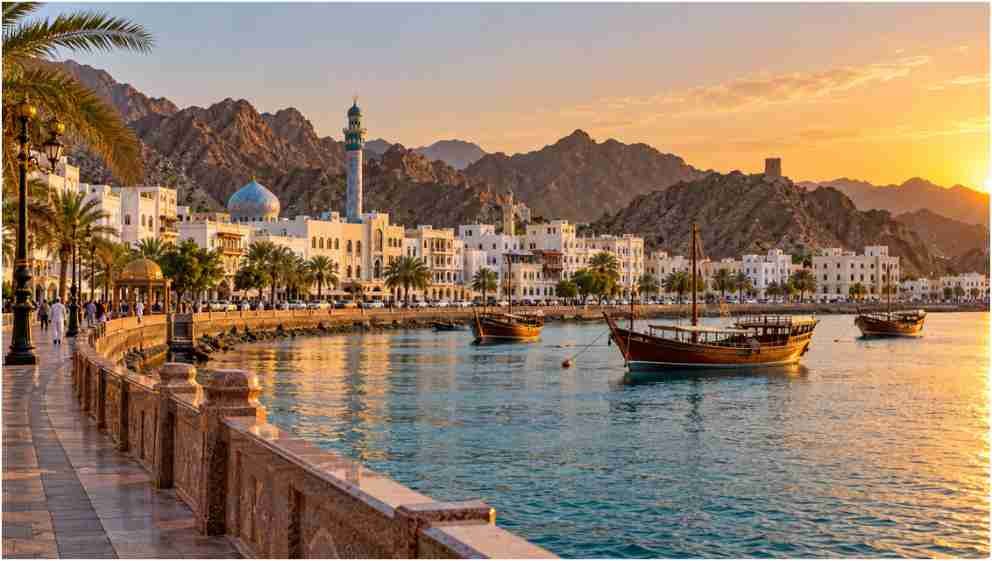
Muscat does not imitate regional neighbors with sky-piercing skyscrapers. Municipal zoning laws limit commercial buildings to traditional white, beige, and sand-toned facades accented with arched windows and carved wooden balconies.
Start at the Sultan Qaboos Grand Mosque, one of the few active religious sites in the nation welcoming non-Muslim visitors. Walking barefoot across the massive prayer hall’s single-piece Persian carpet—which took hundreds of weavers four years to produce—reveals the sheer scale of modern Islamic craftsmanship.
Head down to the Mutrah Corniche during the late afternoon. Watch traditional wooden dhows sway in the harbor before plunging into the labyrinthine alleys of Mutrah Souq to hunt for authentic frankincense tears (Boswellia sacra) harvested in Dhofar. For practical entry visas and local consular updates before arriving, consult the [suspicious link removed].
Nizwa: Centuries of Commerce and Omani Silver
Drive ninety minutes inland through the gap in the Western Hajar Mountains to reach Nizwa, the historic capital of religious and scholarly leadership in inner Oman.
Nizwa Fort dominates the city center. Its massive 17th-century cylindrical gun tower features hidden murder holes designed to drop boiling date syrup on invading forces.
Time your visit for a Friday morning. Local herders converge at dawn on the open-air goat market, leading livestock around a packed circular pavilion while shouting bids in rapid-fire Arabic. Just outside the fort gates, artisans hand-chisel silver khanjars (ceremonial curved daggers) and sell clay pots cured in mountain kilns.
Conquering the Extremes: The Hajar Mountains and Desert Sands
The northern interior transitions rapidly from historic oasis settlements to dizzying limestone massifs and shifting red dunes. These two destinations showcase Oman’s raw topography.
| Destination | Elevation / Terrain | Vehicle Needed | Primary First-Timer Activity |
| Jebel Akhdar | 6,500–9,800 ft (Terraced peaks) | Mandatory 4WD | Cliff walks, pomegranate orchards, cool breezes |
| Jebel Shams | 9,800+ ft (Limestone gorges) | High-Clearance 4WD | Balcony Walk along the edge of Wadi Ghul |
| Sharqiya Sands | Red desert dunes | 4WD (Low Tire Pressure) | Dune bashing, stargazing, luxury desert camps |
Jebel Akhdar and Jebel Shams: Summit Roads and Canyon Views
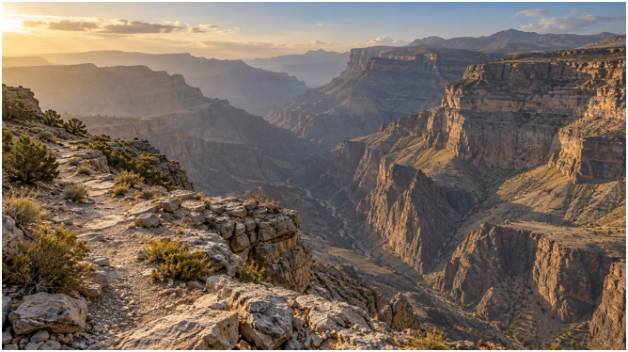
Rising above the desert plains, the Hajar Mountain range rivals the deep tectonic cuts and vertical sheer cliffs found across the valleys in northern pakistan.
Jebel Akhdar, or the “Green Mountain,” features high-altitude terraced farming where damask roses bloom every spring.
For raw drama, target Jebel Shams—the Mountain of the Sun. The summit rim overlooks Wadi Ghul, widely dubbed the Grand Canyon of Arabia. Trekking the Balcony Walk along an old donkey path suspended halfway down a thousand-foot vertical drop provides unmatched panoramic vistas.
Bring a warm fleece layer even in summer. High mountain temperatures frequently plunge twenty degrees Fahrenheit below the valley floor.
Sharqiya Sands: Mastering Dune Driving and Desert Camps
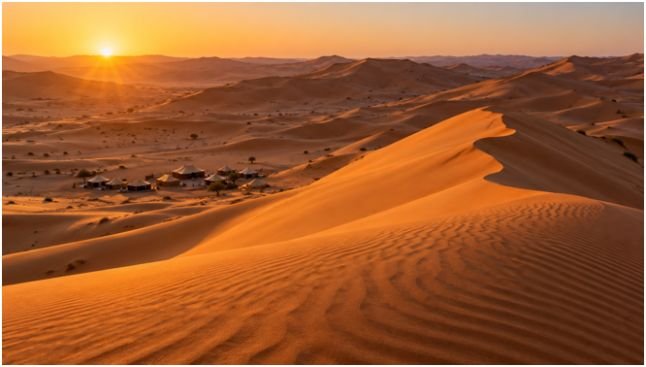
Located two hours east of Nizwa, Sharqiya Sands (Wahiba Sands) is an undulating ocean of longitudinal sand dunes stretching south toward the Arabian Sea.
Spending a night in a remote desert camp under unpolluted night skies is essential. You fall asleep to absolute silence and wake up to morning light creeping across wind-sculpted sand ridges.
Reaching these camps requires leaving the asphalt behind. As soon as your wheels hit deep sand, standard momentum fails unless you have deflated your tires to increase ground contact surface area.
Coastal Add-Ons: Marine Sanctuaries and Southern Monsoons
If you have more than seven days on your itinerary, add one of these coastal extensions to balance mountain climbing with marine conservation and tropical microclimates.
Daymaniyat Islands: Snorkeling with Hawksbill Turtles
Sitting forty minutes by speedboat off the coast of Al Mouj Marina in Muscat, the Daymaniyat Islands comprise nine uninhabited rocky islets surrounded by turquoise waters.
This marine reserve is recognized globally for critical biodiversity, managed in harmony with regional initiatives promoted by the UNESCO World Heritage Centre.
Slip into the water between November and April to snorkel alongside dozens of green sea turtles and hawksbills feeding peacefully over vibrant coral shelves. Bottlenose dolphins often trail tour boats through the bay.
Salalah: The Green Subtropical Escape
Salalah sits in the far south of Dhofar, a ninety-minute domestic flight from Muscat. Visit between late June and early September during the Khareef (monsoon season).
While the rest of the Arabian Peninsula experiences triple-digit heat, rain clouds roll across Salalah’s coastal mountains. The arid valleys transform into emerald-green hills, swollen waterfalls, and lush tropical coconut groves.
During the winter months, Salalah reverts to a quiet, sunny coastal paradise with empty white-sand beaches.
First-Timer Essentials: Vehicles, Checkpoints, and Culture
Navigating Oman safely requires knowing a few firm ground rules:
[Highway Cruising (32-35 PSI)]
│
▼
[Bidiyah / Gateway Town Service Station]
│
├──> Deflate tires to 14-16 PSI (1 OMR fee or DIY)
│
▼
[Wahiba Sand Dunes Track (4WD High / Low Range)]
│
▼
[Return to Tarmac: Re-inflate to 32-35 PSI Immediately]
The 4WD Requirement and Police Checkpoints
Do not try to cut corners by renting a basic compact crossover. The ascent up Jebel Akhdar is strictly guarded by a permanent Royal Oman Police checkpoint at Birkat Al Mouz.
Officers inspect your vehicle documents and confirm that your car has a true four-wheel-drive transfer case with low range capabilities before clearing you to pass.
They turn away standard two-wheel-drive sedans because the sustained fifteen-percent grades will overheat and destroy standard passenger vehicle brakes on the descent.
Downshift into low gears and rely on engine braking down the mountain. Never ride your foot brake.
Sand Driving Protocols
Before leaving the tarmac in gateway towns like Bidiyah, stop at a local tire shop. Have the mechanic drop your tire pressure down from 32 PSI to roughly 14–16 PSI.
Lower pressure widens the tire tread’s footprint, letting the vehicle float above loose grains rather than digging in.
Engage four-wheel drive high (4H), maintain steady forward momentum, and steer clear of sharp, sudden turns on dune slopes.
When you return to the highway, reinflate your tires immediately at the nearest gas station before accelerating to highway cruising speeds.
Cultural Etiquette and Dress Codes
Omanis are warm and welcoming hosts, but traditional cultural standards prevail across the sultanate.
Cover shoulders and knees when exploring towns, souqs, and villages. At the Sultan Qaboos Grand Mosque, women must cover their hair, arms, and ankles completely, while men must wear long trousers.
Always ask permission before photographing local residents at traditional markets. Respect private date orchards in rural oases by sticking to designated walking paths along the aflaj irrigation channels. Official travel guidance and seasonal cultural advice are cataloged through Experience Oman.
Frequently Asked Questions About Visiting Oman
1. Is Oman safe for solo and first-time travelers?
Yes, Oman ranks consistently as one of the safest countries in the world with virtually non-existent violent crime rates.
2. Do I need a 4WD to travel in Oman?
You must rent a true 4WD if your itinerary includes driving up Jebel Akhdar, mountain trails, or desert dunes.
3. What is the best month to visit northern Oman?
November through March offers ideal weather, with pleasant daytime temperatures hovering between 75°F and 85°F.
4. Can tourists drink alcohol in Oman?
Licensed hotel restaurants and resort bars serve alcohol freely to non-Muslim tourists, though public consumption remains strictly prohibited.
Ditch the Crowds and Grab the Keys
Skip the crowded mega-resorts and commercialized tourist corridors elsewhere in the region. Oman rewards independent travelers who enjoy open roads, centuries of maritime heritage, dramatic canyon trails, and unhurried desert hospitality.
Reserve a reliable 4WD vehicle, keep your eyes open for roaming camels along the highway margins, and set off into one of Arabia’s most welcoming landscapes.