
Hanoi’s Old Quarter thrills your senses, but after 48 hours of dodge-and-weave motorbike crossings and street-corner egg coffees, the city’s decibels take their toll. Escaping into the countryside reveals limestone towers, terraced mountain climbs, and glassy waterways. Deciding where to go in northern Vietnam beyond Hanoi comes down to balancing transit hours against the type of terrain you crave.
During my months traversing these northern corridors, I learned that distance on a Vietnamese map rarely tells the full story. A 100-mile highway sprint takes two hours, while a 100-mile mountain pass can devour an entire day.
Lowland Karsts: Trading City Pavements for Ninh Binh’s River Grottoes
Just ninety minutes south of Hanoi via the expressway sits Ninh Binh. People call it “Ha Long Bay on land,” but that moniker understates its distinct geology. Towering limestone bluffs rise vertically from emerald-green rice paddies, intersected by subterranean river systems carved over millions of years. Much like the jungle ridges of north sumatra indonesia, the karst topography here demands travel by water rather than wheels.
Trang An vs. Tam Coc: What My GPS and River Guides Taught Me
Most day-trippers default to Tam Coc. While watching locals steer rowing oars with their feet is fun, the route often suffers from motorboat exhaust and aggressive souvenir vendors.
I recommend heading straight to the Trang An Landscape Complex, an official UNESCO World Heritage site. Trang An enforces a strict no-hawking rule on the water. You glide in silence through long, low-ceilinged limestone caverns where stalactites hang inches above your head.
Field Insight: Choose Boat Route 3 at Trang An. It includes the 1,000-meter-long Dot Cave, taking you deep beneath ancient marine beds without the tour-group gridlock of Route 1.
After your boat journey, rent a bicycle to explore the backroads toward Hang Mua (Mua Cave). Climbing the 500 ragged stone steps to the dragon shrine ridge yields a sweeping, 360-degree panorama of the entire Ngo Dong River valley below.
Emerald Waters: Skipping Ha Long Crowds for Lan Ha Bay
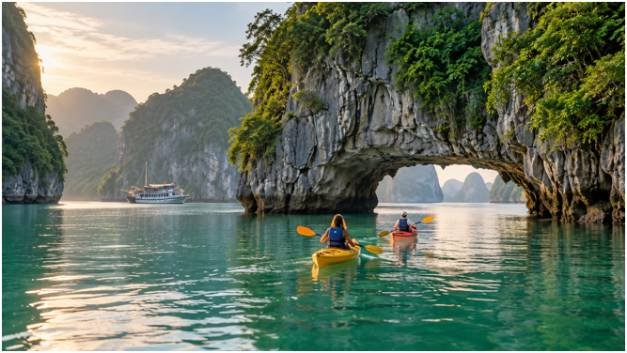
Ha Long Bay remains Vietnam’s most recognizable seascape. Over 1,600 limestone towers punch through the Gulf of Tonkin, as documented by geological surveys hosted on NASA Earth Observatory. However, central Ha Long’s main shipping lanes carry hundreds of day-cruisers, churning up diesel fumes and churning anchor lines around Sung Sot Cave.
To experience undisturbed marine karsts, book an overnight boat departing from Cat Ba Island or Got Ferry Terminal into Lan Ha Bay.
Lan Ha shares the exact same geological framework as Ha Long, but local administrative zoning keeps mega-vessels away. I spent two mornings on a traditional boutique vessel in Lan Ha, surrounded by nothing but sheer cliff walls and floating fishing villages.
You can kayak directly through sea-level arches into enclosed tidal lagoons called hồ sụt. At night, turn off your cabin’s deck lights. The waters around Cat Ba harbor bioluminescent plankton that glow bright blue with every paddle stroke.
Mountain Valleys: Finding Slower Paces in Mai Chau and Sa Pa
When summer heat sets in across the Red River Delta, relief lies northwest in the Hoang Lien Son mountain range.
Mai Chau: Stilt Houses and Flat Basin Cycling
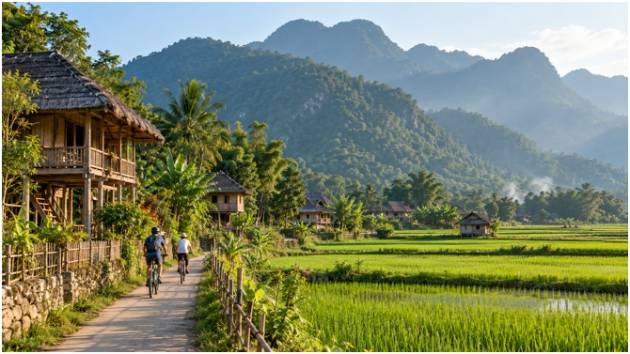
If steep mountain switchbacks turn your stomach, choose Mai Chau. Located three and a half hours southwest of Hanoi, this broad, emerald-green valley floor is home to White Thai communities living in traditional timber stilt houses.
Unlike the steep verticality of the northern border, Mai Chau’s terrain remains largely flat. You can spend entire mornings pedaling a single-speed cruiser along irrigation canals between Lac and Pom Coong villages. The rhythm here is hypnotic: women weaving silk textiles on handlooms beneath elevated floorboards, water buffalo grazing by irrigation ditches, and zero traffic noise.
Sa Pa: Navigating High Ridges and Fansipan
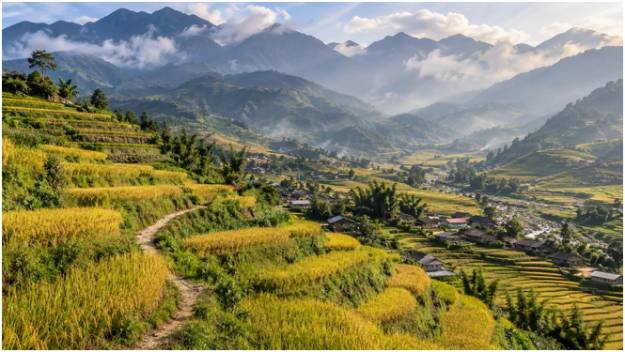
Sa Pa sits at 1,500 meters above sea level. Reaching it requires a five-hour highway express bus or an atmospheric overnight sleeper train to Lao Cai.
The town center of Sa Pa has experienced heavy concrete construction in recent years. To find true serenity, book an eco-lodge further down the Muong Hoa Valley in Ta Van, Lao Chai, or Ban Ho.
From these outposts, you can hike through century-old mud paths carving along cascading rice terraces. If you want Indochina’s best viewpoint without a grueling three-day summit trek, ride the modern cable car up to the peak of Mount Fansipan (3,143 meters). Rising above the sea of clouds feels like stepping onto another planet.
Northern Frontier Expeditions: Ha Giang and Cao Bang
For true off-the-beaten-path travel, head to the far northern border. These remote provinces require valid travel permits and sturdy stamina, but the payoff is unmatched anywhere in Southeast Asia.
The Ha Giang Loop: Conquering Ma Pi Leng Pass
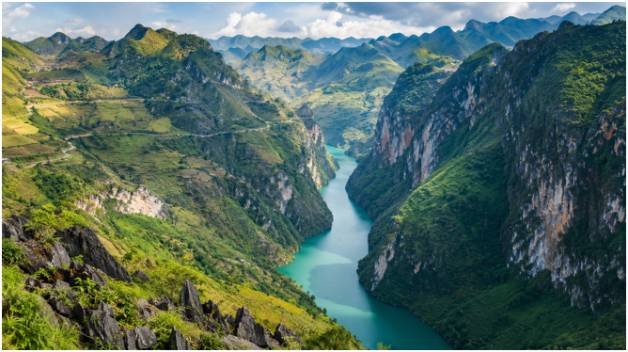
The Ha Giang Loop is an unforgettable motorcycle or private-driver expedition through the Dong Van Karst Plateau. Over three or four days, you climb sheer mountain corridors carved straight into vertical granite walls.
The crown jewel of this route is the Ma Pi Leng Pass. Standing on the cliff edge looking thousands of feet straight down to the turquoise Nho Que River feels unreal.
Safety Note: Unless you hold a valid international motorcycle permit and extensive manual-clutch experience, hire an “Easy Rider” (licensed local driver). The mountain switchbacks along national route QL4C are steep, narrow, and unforgiving.
Ban Gioc Waterfall: A Border Basin Encounter
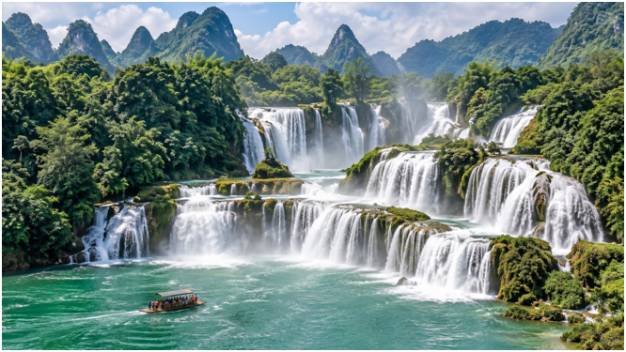
Tucked inside Cao Bang province along the Chinese border, Ban Gioc is the fourth largest border waterfall in the world. Fed by the Quay Son River, the cascade drops across multiple limestone terraces flanked by dense bamboo groves.
You can hire local bamboo rafts that motor within touching distance of the crashing spray. Combine a morning at the falls with an afternoon exploring the cavernous chambers of Nguom Ngao Cave nearby.
Route Logistics and Transit Times
Refer to the official regional transit guides on the Vietnam National Authority of Tourism website when coordinating rural connections. Here is how the key destinations compare:
| Region | Drive Time from Hanoi | Primary Transport | Ideal Stay | Atmosphere |
| Ninh Binh | 1.5–2 hours | Limousine van / Train | 2 Days | Historic, aquatic, accessible |
| Lan Ha Bay | 2.5 hours | Highway bus to ferry | 2 Days | Coastal, tranquil, scenic |
| Mai Chau | 3.5 hours | Shared shuttle / Private car | 2 Days | Rural, flat, community-based |
| Sa Pa | 5.5 hours | Sleeper bus / Night train | 3 Days | High alpine, misty, trekking |
| Ha Giang | 6–7 hours | Sleeper bus to local tour | 4 Days | Rugged, dramatic, daring |
| Cao Bang | 6–7 hours | Highway sleeper coach | 3 Days | Lush, wild river basins |
Pack Your Bags, Ditch the Smog
Hanoi provides the cultural spark, but northern Vietnam’s soul thrives out among the karst towers, valley trails, and sea arches.
If you have a tight five-day window, connect Ninh Binh with an overnight Lan Ha Bay cruise for maximum scenery with minimal transit drag. If you have ten days or more, rent an Easy Rider, climb up toward the northern border, and let the sheer scale of the mountains reset your perspective.
Frequently Asked Questions
1. Which destination beyond Hanoi is best for short 2-day trips?
Ninh Binh is the best choice because it sits just ninety minutes from Hanoi via modern expressways.
2. Is Lan Ha Bay better to visit than Ha Long Bay?
Yes, Lan Ha Bay offers the same stunning karst seascapes with far less boat traffic and cleaner water.
3. What is the easiest way to reach Sa Pa from Hanoi?
The express highway sleeper bus provides the fastest direct transit, taking roughly five and a half hours.
4. When is the ideal season to visit northern Vietnam’s highlands?
September through November brings clear skies, comfortable temperatures, and golden harvest-ready rice terraces.