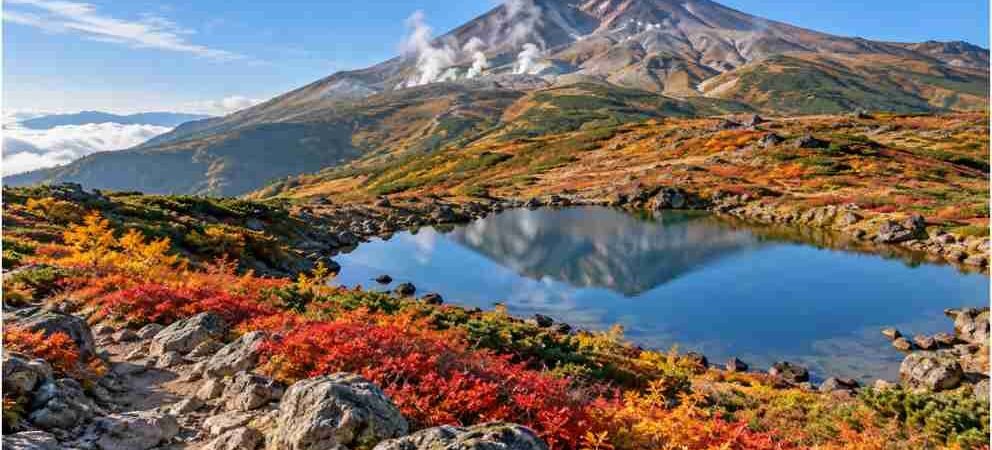
When late September rolls in, mainland Japan remains wrapped in summer heat, but Hokkaido ignites in crimson and amber. Finding the top things to do in Hokkaido in autumn means catching Japan’s very first autumn foliage (kōyō) weeks before Kyoto or Tokyo even hint at gold. I have watched alpine tundra freeze overnight while steaming volcanic vents warmed my boots below.
From mist-shrouded river valleys to seaside crab markets, fall is Hokkaido’s most rewarding season.
Tracking Japan’s Earliest Fall Foliage (Kōyō)
Foliage in Hokkaido does not advance south; it travels downhill. The color shift starts at the volcanic summits of central Hokkaido in early September, dropping down into lowland river basins by late October.
Alpine Transitions in Daisetsuzan National Park
Daisetsuzan National Park covers over 226,000 hectares of rugged terrain, earning its Indigenous Ainu name Kamui Mintara (“Playground of the Gods”). Mt. Asahi and Mt. Kurodake ignite with mountain ash and golden birch as early as mid-September.
Taking the Asahidake Ropeway delivers you straight into alpine tundra. The 1-hour Sugatami Pond loop trail lets you view active fumaroles spewing sulfurous steam against blazing yellow groundcover. Pack a windproof thermal shell; temperatures at 1,600 meters plunge below freezing even on sunny afternoons.
Chasing Waterfalls Through Sounkyo Gorge
On the eastern face of the Daisetsuzan range, Sounkyo Gorge features sheer 200-meter basalt cliffs lined with turning maples. In early October, the Ginga and Ryusei twin waterfalls pour down cliff faces draped in vibrant red foliage. Walking the gorge trail early in the morning lets you photograph the canyon walls without tour buses blocking the viewpoints.
The Golden Tunnel of Hokkaido University’s Ginkgo Avenue
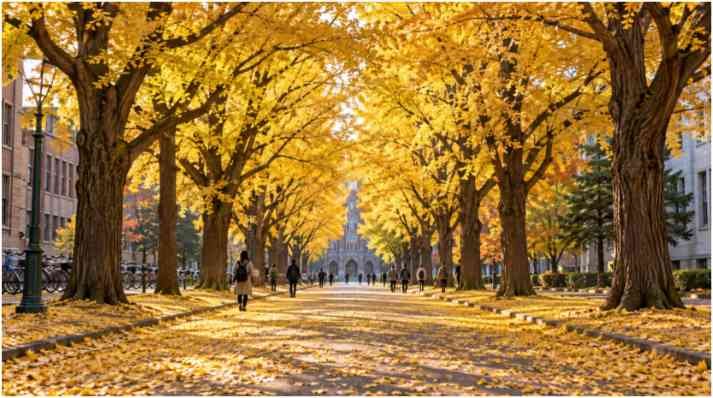
If your travels fall in late October or early November, central Sapporo hosts the season’s grand finale. The Ginkgo Avenue (Icho Namiki) at Hokkaido University stretches 380 meters across campus.
Over 70 mature ginkgo trees interlock overhead, dropping a carpet of golden leaves across the pavement. The university hosts its annual weekend Golden Leaf Festival here, illuminating the canopy under evening floodlights.
Soaking in Steamy Thermal Springs: Scenic Onsen Towns
Crisp autumn air pairs naturally with outdoor thermal soaking (rotenburo).
River Views and Reservoir Reflections in Jozankei Onsen
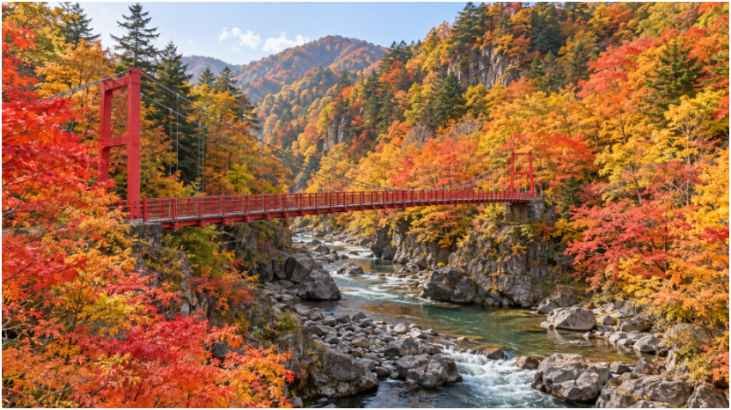
Located just an hour’s drive south of downtown Sapporo, Jozankei Onsen lines the Toyohira River gorge. The red Futami Suspension Bridge offers panoramic views across forest-lined riverbanks.
Take the local eco-bus from the onsen district up into Hoheikyo Dam. The reservoir cliffs reflect fiery hillside colors directly across the glassy emerald water. Afterwards, book a day-use bath at a riverside inn to soak in mineral-rich water while maple leaves drift past.
Volcanic Steam and Forest Footbaths in Noboribetsu Hell Valley
Further south, Noboribetsu provides a raw geothermal landscape. Wooden boardwalks guide you through Jigokudani (Hell Valley), where sulfur vents billow white steam against dark volcanic rock and bright yellow foliage.
Follow the unpaved trail into the surrounding birch forest toward the Oyunuma River Natural Footbath. Sitting on a wooden log with your feet submerged in a hot thermal stream running through crisp autumn woods is one of Hokkaido’s signature experiences.
Experiencing Aki no Mikaku: Hokkaido’s Autumn Harvest & Food Festivals
In Japan, autumn is known as Aki no Mikaku—the season of harvest flavor. Hokkaido supplies a large portion of the nation’s fresh produce and coastal seafood, making autumn a culinary paradise.
Graze Across the Island at Sapporo Autumn Fest
Held annually throughout September in Odori Park, this massive open-air festival aggregates regional specialties from every corner of Hokkaido. Food stalls serve:
- Butter-roasted seasonal sweet corn
- Charcoal-grilled Pacific saury (sanma) and Tokachi wagyu beef
- Steaming bowls of miso ramen crowned with scallops
- Local microbrews from regional craft breweries
The festival provides an easy way to sample hyper-local dishes from remote towns without hours of extra driving. For more regional culinary contrasts across the Japanese archipelago, explore places to visit in kyushu japan.
Historic Canals and Seasonal Seafood Bowls in Otaru
A 45-minute drive west of Sapporo brings you to the port city of Otaru. Strolling along the brick warehouse-lined Otaru Canal as gas lamps flicker on at twilight feels timeless.
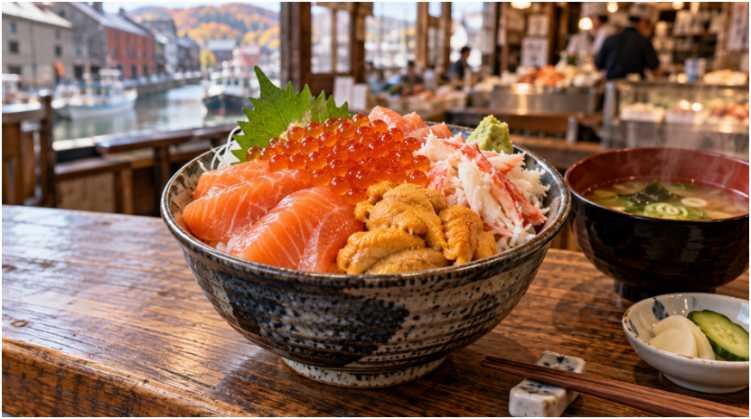
Autumn marks the peak season for fresh salmon and glistening salmon roe (ikura). Stop by a local market eatery to order a seasonal kaisendon (seafood rice bowl) packed with sweet sea urchin, king crab, and house-cured roe.
Postcard Vistas: Lakes, Nightscapes, and Historic Bastions
Clear autumn high-pressure systems create exceptional visibility across Hokkaido’s southern vantage points.
Cruising Lake Toya and Night Skies
The caldera waters of Lake Toya remain ice-free year-round. Autumn sightseeing boats cruise past Nakajima Island, which lights up in red and copper during October. Through late October, nightly fireworks launch directly over the water, reflecting bursts of light against the darkened crater rim.
Mount Moiwa Summit & Hakodate’s Geometric Fortress
For elevated city views, ride the Mount Moiwa Ropeway just outside Sapporo at sunset. The forested slopes show patchwork fall color that yields to Sapporo’s illuminated street grid after dusk.
Further south, Hakodate’s Fort Goryokaku offers an aerial perspective on history. This 19th-century star-shaped citadel turns reddish-gold as thousands of cherry and maple trees shift colors along its moats. Ascend the observation deck at the 107-meter Goryokaku Tower to view the symmetrical fortress outlined against the autumn landscape.
Strategic Logistics: How to Navigate Hokkaido’s Autumn Descent
Hokkaido covers vast distances, and public transit schedules thin out quickly once you leave major rail corridors. To maximize your time, implement these logistical practices:
- Rent a Car with ETC: Public buses to alpine trailheads run infrequently outside peak summer. Rent a 4WD vehicle equipped with an Electronic Toll Collection (ETC) card from New Chitose Airport to bypass manual toll lanes.
- Monitor the Vertical Foliage Window: The color line drops roughly 50 to 100 meters per day. If Daisetsuzan peaks in mid-September, lowland gorges like Sounkyo peak 10 to 14 days later, followed by Jozankei and Sapporo in mid-to-late October.
- Watch for “Black Ice” Alerts: High mountain passes, including the Mikuni and Sekihoku passes, experience early freeze cycles and light snow flurries starting in mid-October. Check daily highway updates via the Japan National Tourism Organization (JNTO) before crossing passes in early morning hours.
Beyond the Red Leaves: Pack Your Bags and Drive
Hokkaido in the fall is brisk, flavorful, and fleeting. Watching the sunrise over the steamy caldera of Mt. Asahi before heading down into an onsen town for bowls of fresh salmon roe captures travel at its finest. Skip the crowded spring cherry blossom rush and point your compass north for Japan’s most dramatic seasonal transformation. While many flock here for snowy slopes or vibrant hokkaido summer travel destinations, autumn offers crisp mountain air without peak summer crowds.
Frequently Asked Questions About Autumn in Hokkaido
1. When is the best time to see autumn foliage in Hokkaido?
Peak autumn colors begin in the high alpine zones of Daisetsuzan in mid-September and reach lowland parks and cities like Sapporo by late October.
2. Do I need to rent a car to visit Hokkaido in autumn?
While major cities like Sapporo, Otaru, and Hakodate connect easily by train, exploring remote national parks, gorges, and scenic passes requires a rental car.
3. What should I wear for autumn travel in Hokkaido?
Pack versatile thermal layers, a windproof and water-resistant shell, and sturdy boots, as mountain temperatures often hover near 32°F (0°C) even when lower valleys stay mild.
4. Is the Sapporo Autumn Fest worth visiting?
The Sapporo Autumn Fest in Odori Park is Hokkaido’s premier culinary event, letting you sample seafood, wagyu, ramen, and seasonal produce from across the entire prefecture in one central location.