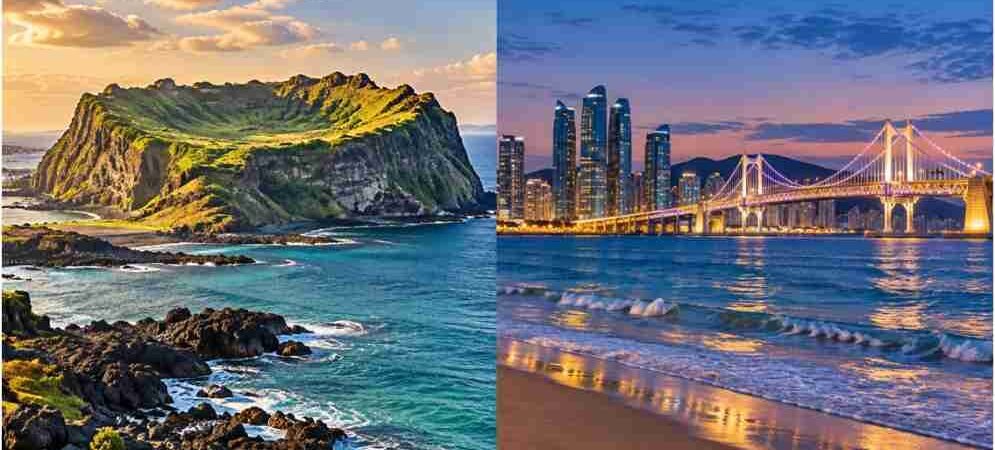
Choosing between a coastal metropolis and a volcanic island often stalls an otherwise smooth South Korea itinerary. When travelers ask me about Jeju Island vs Busan: which to visit, my answer rests on how you handle logistical friction.
Busan gives you effortless public transit, dense street-food culture, and bustling beaches framed by skyscrapers. Jeju Island demands car rentals and open highways to reach dramatic waterfalls, volcanic craters, and quiet ocean roads.
If you prefer navigating cities through dense train maps, Busan wins immediately.
The Core Trade-Off: High-Speed Metro vs. Open-Road Driving
The fundamental distinction between these destinations lies in your daily transportation. Busan operates as a high-density urban corridor linked by an immaculate subway network. Jeju functions as an expansive island where key attractions sit an hour apart.
SEOUL
/ \
/ \
(KTX) (Flight)
~2.5h ~1.2h (+2.5h airport buffer)
v v
BUSAN JEJU
[Subway] [Rental Car]
Getting to Busan: The Frictionless KTX Corridor
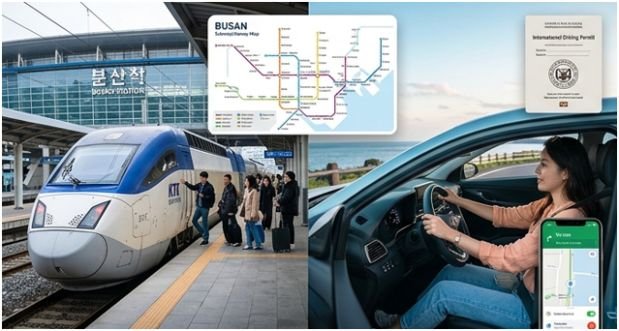
Boarding the high-speed KTX from Seoul Station directly into Busan Station eliminates almost all transit anxiety. You walk onto the train ten minutes before departure, settle into comfortable seats with reliable Wi-Fi, and step straight into Busan’s city center 2 hours and 15 minutes later.
Standard one-way tickets on the official Korail KTX Booking Portal cost roughly ₩59,800 ($45 USD). There are no liquid limits, no domestic security lines, and no baggage drop bottlenecks. Once you exit the platform, Busan Metro Line 1 sits right below your feet.
Getting to Jeju: Flights, Rental Depots, and Driving Logistics
Reaching Jeju Island requires an air-travel buffer. While the actual airborne flight from Seoul’s Gimpo Airport (GMP) to Jeju International Airport (CJU) takes only 70 minutes, your door-to-door time quickly swells to four or five hours once you factor in airport transit, domestic security screening, and shuttle buses to off-site rental agencies.
Driving on Jeju is straightforward, but it requires two critical items:
- An International Driving Permit (IDP) stamped under the 1949 Geneva Convention, obtained before leaving your home country.
- Naver Map or KakaoMap installed on your smartphone. Google Maps does not provide turn-by-turn driving directions in South Korea due to national mapping data regulations.
Public buses run across Jeju, but express routes between coastal points operate on limited timetables. Relying exclusively on buses turns a single sightseeing afternoon into hours waiting at rural roadside shelters.
| Transit Feature | Busan | Jeju Island |
| Main Transport from Seoul | KTX / SRT high-speed train | Domestic flight from Gimpo (GMP) |
| True Door-to-Door Time | 2.5 to 3 hours | 4 to 5 hours |
| Local Getting Around | Metro Lines 1–4, city buses, taxis | Rental car (IDP mandatory), private driver |
| Navigation Ease | Simple (T-Money card + Subway app) | Moderate (Requires Naver/Kakao driving GPS) |
| Weather Reliability | Operates in rain, snow, and wind | Flight delays during summer typhoon season |
Atmosphere and Scenery: Neon Skylines vs. Volcanic Shores
Both destinations front the sea, yet their visual character could not be more polarized. Busan builds upward against steep mountains; Jeju sprawls outward around an ancient shield volcano.
What Busan Does Best
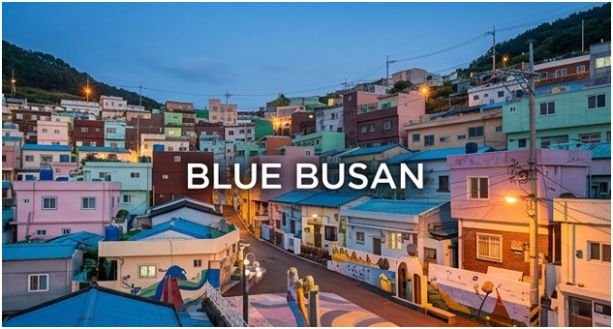
Busan merges coastal relaxation with classic Korean urban life. You can spend your morning walking through the narrow hillside alleys of Gamcheon Culture Village, your afternoon browsing fresh seafood tanks at Jagalchi Market, and your evening watching the Gwangan Diamond Bridge light up while eating grilled clams on Gwangalli Beach.
The city thrives at night. Stalls along BIFF Square stay hot with brown-sugar sunflower seed pancakes (ssiat hotteok), and traditional spas like Spa Land inside Shinsegae Centum City remain open late for full-body recovery. Busan offers high energy without the exhausting scale of Seoul.
What Jeju Island Does Best

Jeju shifts your travel clock to match daylight. The island centers on Mount Hallasan, South Korea’s highest peak, flanked by hundreds of parasitic volcanic cones known locally as oreums.
The eastern coast features the UNESCO-designated Jeju Volcanic Island and Lava Tubes, including the dramatic sunrise peak at Seongsan Ilchulbong. The southern coast exposes black basalt cliffs plunging into turquoise bays around Seogwipo.
Coastal roads weave past citrus orchards growing sweet Hallabong tangerines and seaside eateries serving prized Jeju black pork belly over charcoal fires. Beyond a few late-night spots in Jeju City, the island goes dark early, leaving you with quiet ocean breezes and clear night skies.
| Travel Dimension | Busan | Jeju Island |
| Primary Visuals | Skyscrapers, ocean suspension bridges, harbor markets | Volcanic cones (oreums), lava tubes, citrus farms |
| Evening Vibe | Bustling night markets, beach pubs, illuminated bridges | Dark-sky coastal drives, quiet village cafes |
| Signature Cuisine | Dwaeji gukbap (pork rice soup), raw seafood, ssiat hotteok | Grilled black pork belly, abalone porridge, Hallabong citrus |
| Signature Cultural Site | Haedong Yonggungsa (cliffside temple) | Haenyeo museum and dive shows (female free-divers) |
Real Travel Budgets: Three-Day Expense Breakdown

Busan consistently proves more economical for solo travelers and pairs thanks to cheap subway travel and budget-friendly guesthouses. Jeju’s baseline costs rise rapidly once you add rental car insurance, fuel, and flights, though it offers exceptional value for groups sharing vehicle expenses.
| Expense Category (Per Person) | Busan (3 Days / 2 Nights) | Jeju Island (3 Days / 2 Nights) |
| Round-Trip Travel from Seoul | ₩119,600 (Fixed KTX fare) | ₩70,000–₩180,000 (Airfare variance) |
| Local Transportation | ₩20,000–₩30,000 (T-Money card) | ₩90,000–₩150,000 (Car rental, fuel, tolls) |
| Mid-Range Accommodation | ₩180,000–₩260,000 (Haeundae/Seomyeon) | ₩220,000–₩340,000 (Seogwipo/Aewol) |
| Food & Dining | ₩90,000–₩140,000 | ₩120,000–₩190,000 |
| Sightseeing & Entry Tickets | ₩25,000–₩40,000 | ₩30,000–₩50,000 |
| Estimated Total (USD) | ~$325 – $440 USD | ~$390 – $675 USD |
How Many Days Do You Actually Need?
Time constraints should heavily guide your final itinerary.
- Busan fits neatly into 48 to 72 hours. Because trains run directly into downtown, you can arrive by 10:00 AM on a Friday and check off the major coastal sights, markets, and temples before catching an evening train back on Sunday.
- Jeju Island demands at least 4 full days. Distances between the East Coast (Seongsan), West Coast (Aewol), and South Coast (Seogwipo) turn a two-day trip into an exhausting blur of driving. Shorter visits often leave travelers stuck in airport transfers rather than enjoying the coastline.
For additional seasonal events and local festivals across both regions, verify current schedules directly with the Korea Tourism Organization.
Skip the Coin Toss: Pick Your Travel Style
Stop weighing abstract pros and cons and look directly at your transit appetite.
Book Busan if you have three days or fewer, want to step off a high-speed train straight into the action, love energetic seafood markets, and want your evenings filled with neon skylines and easy subway hops.
Book Jeju Island if you have four or more days, hold a valid International Driving Permit, crave volcanic nature trails, and want slow coastal road trips ending with charcoal-grilled black pork.
Your next step: check your home country’s auto club for an IDP appointment this week if Jeju is your pick; otherwise, open Korail’s reservation window to secure your preferred morning KTX seats into Busan Station.If your idea of unwinding mirrors scenic road trips through destinations in eastern taiwan or the wide-open spaces of hokkaido summer travel destinations, Jeju justifies the extra flight.
Frequently Asked Questions
1. Can I visit Jeju Island without renting a car?
Yes, but relying on regional buses significantly slows your pace, while private taxis or guided bus tours add substantial daily costs.
2. Is Busan or Jeju better for a first-time visitor to South Korea?
Busan is better for first-timers because the KTX connects directly from Seoul and the English-friendly subway system makes navigation effortless.
3. Can you do both Busan and Jeju in one one-week trip?
Yes, you can take the KTX from Seoul to Busan for two days, fly directly from Busan’s Gimhae Airport to Jeju for three days, and fly back to Seoul.
4. Which destination is cheaper to visit?
Busan is noticeably cheaper due to fixed train fares, dense budget accommodations, and minimal local transportation expenses on the subway.